 Tel:
Tel:  Email:
  WhatsApp:
 Description
Key Technical Specifications (For Spare Parts Verification)
- Product Model: T8451
- Manufacturer: ICS Triplex / Schneider Electric (Triconex)
- System Family: Triconex TMR Safety Instrumented System (SIS)
- Module Type: Communication (COM) module – provides chassis-to-chassis data link
- Redundancy Architecture: Triple-Modular Redundant (TMR) with hardware voting on communication paths
- Compatible Chassis: 4328A, 4329A (legacy main frames)
- Communication Protocol: Proprietary Triconex TMR peer-link protocol over coaxial or twisted-pair cabling
- Data Function: Transfers voted I/O data, status, and application variables between chassis
- Mounting: Installed in designated COM slots within Triconex chassis
- Diagnostics: Built-In Test (BIT), front-panel LEDs (POWER, OK, FAULT, SYNC), fault reporting to controller
- Safety Certification: Part of overall SIL 3 certified architecture per IEC 61508/61511
System Role and Downtime Impact
The T8451 is a critical enabler of large-scale or distributed Triconex safety applications where I/O or logic is split across multiple chassis—for example, in turbine control, boiler protection, or integrated ESD/F&G systems. It establishes a redundant, high-integrity data link that allows chassis to share real-time process values and safety states, ensuring coordinated action during emergency events. If one T8451 fails, the system may continue using the remaining two paths due to TMR design. However, if redundancy degrades further or synchronization is lost, the affected chassis may isolate itself, causing a partial safety function shutdown. In tightly coupled applications, this can cascade into a full plant trip. Because the module handles time-critical safety data, even transient communication faults can trigger nuisance trips.
Reliability Analysis and Common Failure Modes
Although built to high reliability standards, the T8451 exhibits predictable aging after 15–20 years of service. The most common failure mode involves connector and cable interface degradation, where vibration or thermal cycling causes intermittent contact in the coaxial or DB-9 field connectors—leading to sync loss or data errors. Second, internal oscillator or timing circuit drift affects synchronization accuracy, especially in units exposed to sustained high temperatures. Third, power supply filtering capacitor aging on the module’s internal rails results in noise susceptibility, causing BIT failures or unexpected resets.
A key vulnerability is its dependence on matched cabling and termination: improper impedance matching or damaged cables can mimic module failure. Additionally, diagnostic visibility is limited to local LEDs; detailed fault analysis requires access to TriStation 1131 logs.
For preventive maintenance, inspect field communication cables for kinks, corrosion, or loose shielding. Verify connector torque and shield continuity. Monitor diagnostic software for “COM Sync Loss” or “Voter Mismatch” events. Ensure cabinet temperature remains below 60°C and airflow is unobstructed. During outages, clean backplane contacts and verify module seating.
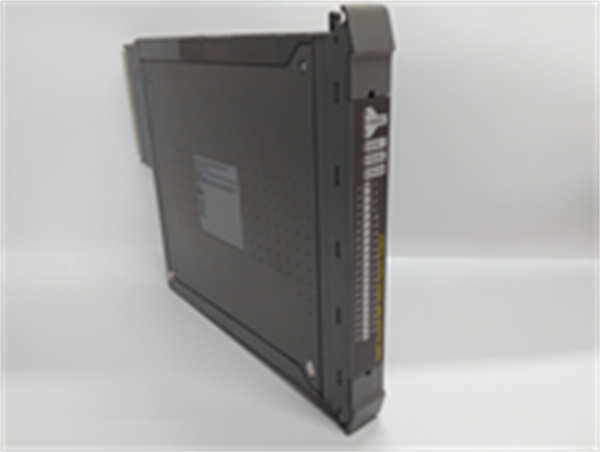
ICS Triplex T8451
Lifecycle Status and Migration Strategy
Schneider Electric has discontinued the T8451 as part of the evolution toward the Triconex eXP and eXPe platforms. No new units are produced, and official repair services are being phased out. Continued operation relies on scarce spare inventory, increasing exposure to unplanned downtime and compliance risk.
As a short-term measure, maintain at least one certified, tested spare per interconnected chassis pair. Ensure the spare matches the exact firmware and hardware revision to avoid compatibility issues. Only use units validated for full TMR synchronization under load.
For long-term sustainability, Schneider Electric’s recommended migration path is to the Triconex eXP platform, which replaces the T8451 function with modern eXP Communication Modules (e.g., 4328E COM cards) that use Ethernet-based, high-bandwidth links with enhanced diagnostics and cybersecurity features. This transition typically involves:
- Upgrading legacy chassis to eXP-compatible models
- Replacing T8451 modules with current COM equivalents
- Updating network topology and cabling (often to fiber or shielded CAT6)
- Re-validating inter-chassis data exchange logic in TriStation 1131
Given the safety-critical nature of inter-chassis communication, any change must follow a formal Management of Change (MOC) process and include functional testing under simulated fault conditions. Early consultation with a Schneider-certified Triconex integrator is strongly advised to assess feasibility, plan staged implementation, and ensure continued compliance with functional safety standards.