 Tel:
Tel:  Email:
  WhatsApp:
 Description
Key Technical Specifications (For Spare Part Verification)
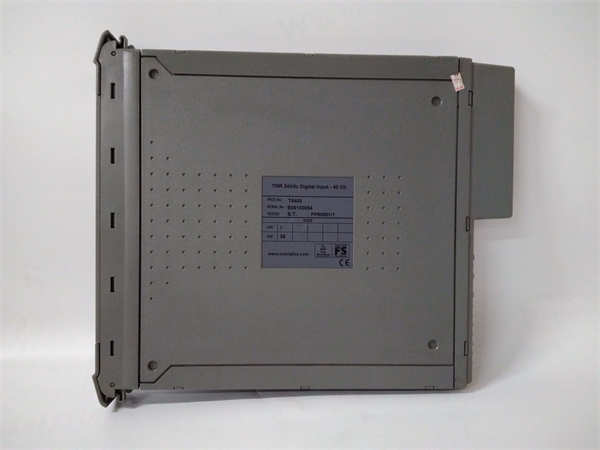
- Product Model: T8403
- Manufacturer: ICS Triplex (Schneider Electric)
- System Family: Triconex Classic (TMR architecture)
- Module Type: Main Processor (MP)
- Redundancy: Triple-modular redundant (three independent microprocessors with voting)
- Diagnostic Coverage: >99% (per IEC 61508 for SIL 3)
- Backplane Compatibility: Requires Triconex chassis with dedicated MP slot (e.g., T8300 series rack)
- Power Requirements: +5 VDC from backplane; typical consumption ~5 W
- Communication Interfaces: Proprietary Triconex bus to I/O modules; RS-232 for local diagnostics
- Firmware Dependency: Must match exact version used in existing system configuration
-

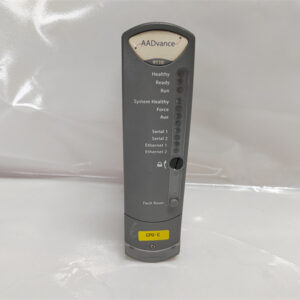
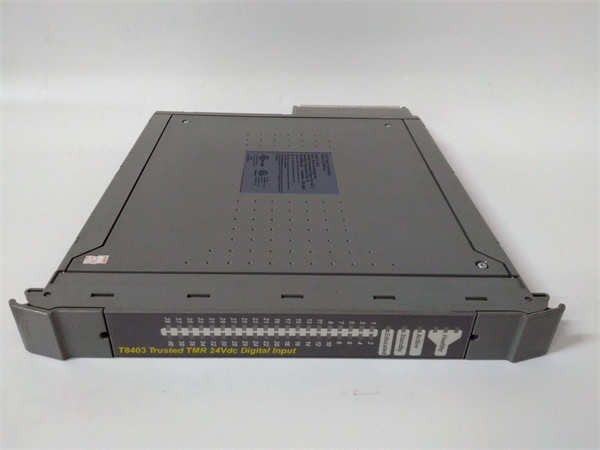
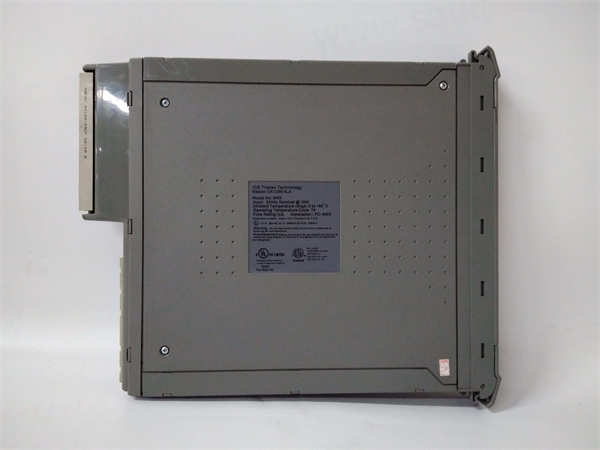
ICS Triplex T8403
- I
System Role and Downtime Impact
The T8403 serves as the central processing unit in legacy Triconex safety instrumented systems (SIS), commonly deployed in oil & gas, chemical plants, and power generation for critical functions such as emergency shutdown (ESD), burner management, and high-integrity pressure protection (HIPPS). It executes the safety application logic with continuous self-checking and cross-channel voting to detect and mask faults. If a T8403 fails—due to internal processor fault, memory corruption, or backplane communication loss—the entire Triconex chassis may enter a safe state, triggering a plant-wide trip. In non-redundant chassis configurations (single MP), failure results in immediate loss of all safety logic execution. Even in redundant MP setups, degradation to 2-out-of-3 voting increases vulnerability to subsequent faults. Given its role in life-safety and environmental protection systems, unplanned failure carries significant operational, regulatory, and reputational consequences.
Reliability Analysis and Common Failure Modes
Although designed for ultra-high reliability, the T8403 is now operating well beyond its intended service life, with several aging-related vulnerabilities:
- Battery-backed SRAM degradation: The module uses a lithium battery to retain firmware and configuration during power loss. After 15–20 years, battery depletion can cause configuration loss or boot failure.
- Electrolytic capacitor aging: Onboard power filtering capacitors dry out, leading to voltage instability and intermittent resets—often misdiagnosed as software issues.
- Backplane connector fatigue: Repeated thermal cycling causes micro-cracks in solder joints or oxidation on edge connectors, resulting in communication timeouts with I/O modules.
- Firmware corruption: Exposure to electrical noise or ESD over decades can flip bits in non-volatile memory, causing unpredictable logic behavior without triggering fault LEDs.
- Obsolescence of support tools: Older Triconex software (e.g., TriStation 1131 v4.x) may not run on modern Windows OS, hindering diagnostics or reconfiguration.
Recommended preventive actions include:
- Verifying battery voltage annually (replace if <2.8 V)
- Performing full system diagnostics via TriStation during planned outages
- Cleaning chassis backplane slots with contact enhancer
- Maintaining a complete backup of the application program and firmware images
- Avoiding unnecessary power cycling, which stresses aging components
-
ICS Triplex T8403
Lifecycle Status and Migration Strategy
Schneider Electric has formally discontinued the T8403 as part of the Triconex Classic phase-out. Official support is limited to extended maintenance contracts, and new modules are unavailable. The company’s recommended migration path is to Triconex Trident or Triconex eXtended Architecture (TXS) platforms, which offer enhanced cybersecurity, modern programming environments (TriStation 1131 v5+), and compatibility with OPC UA and Ethernet-based engineering access.
Short-term risk mitigation includes:
- Securing at least one tested spare T8403 with matching firmware revision
- Implementing external health monitoring (e.g., logging diagnostic LEDs via camera or discrete alarm)
- Isolating the Triconex system from corporate networks to reduce cyber exposure
Long-term, facilities should execute a formal SIS lifecycle review per IEC 61511 and develop a funded migration plan. A full upgrade typically involves:
- Replacing the chassis and all I/O modules
- Revalidating the safety logic in the new environment
- Retraining personnel on updated engineering workflows
Continued operation of T8403-based systems without a migration strategy exposes the asset to escalating obsolescence risk, potential non-compliance with functional safety standards, and increasing difficulty in incident investigation or regulatory audits.