 Tel:
Tel:  Email:
  WhatsApp:
 Description
Key Technical Specifications (For Spare Parts Verification)
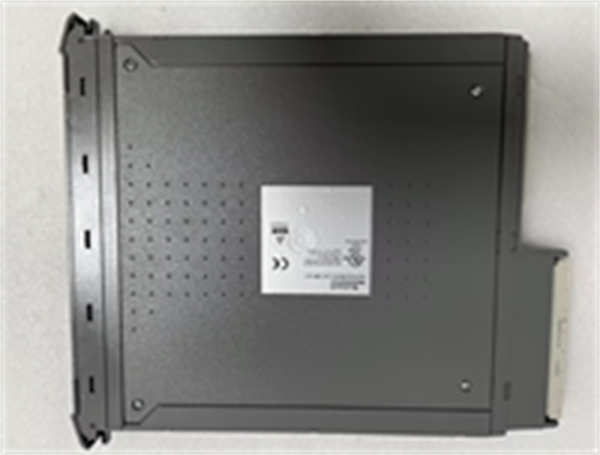
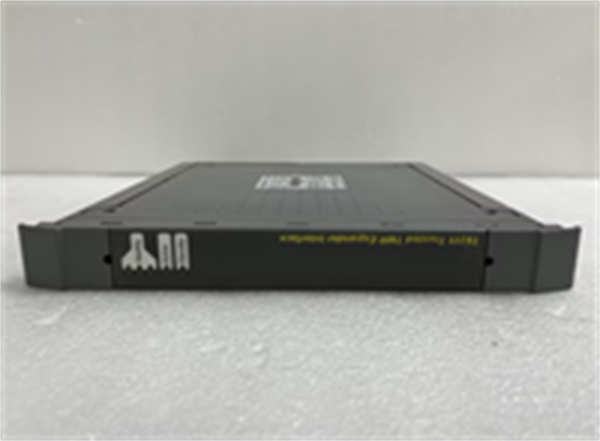
- Product Model: T8311
- Manufacturer: ICS Triplex / Schneider Electric (Triconex)
- System Family: Triconex TMR Safety Instrumented System (SIS)
- Module Type: Analog Input (AI), 16 channels
- Input Signal Range: 4–20 mA (standard), with support for 0–20 mA or 1–5 V via configuration
- Redundancy Architecture: Full Triple-Modular Redundant (TMR) with hardware voting per channel
- Resolution: 16-bit A/D conversion
- Accuracy: ±0.1% of full scale (typical)
- Isolation: Channel-to-channel and field-to-system isolation per safety standards
- Diagnostics: Continuous Built-In Test (BIT), front-panel LEDs, fault reporting to controller
- Mounting: Hot-swappable in Triconex chassis (e.g., 4328A, 4329A)
- Safety Certification: Part of overall SIL 3 system per IEC 61508 and IEC 61511
System Role and Downtime Impact
The T8311 is a critical data acquisition component in Triconex-based safety systems, commonly used to monitor high-integrity process variables such as reactor pressure, turbine vibration, boiler drum level, or flare header flow. Each of its 16 channels independently samples, digitizes, and votes on analog signals across three internal processors, ensuring fault tolerance even if one path fails. The voted values are then used by the Main Processor (e.g., T8850) to evaluate safety logic. If the T8311 fails completely—or if redundancy degrades beyond voting capability—the associated safety function may force a fail-safe state, triggering an emergency shutdown. Given its role in continuous process monitoring, unplanned failure directly impacts plant availability and regulatory compliance.
Reliability Analysis and Common Failure Modes
Despite its rugged TMR design, the T8311 is susceptible to age-related degradation after 15–20 years of service. The most common failure mode is analog front-end circuit drift, where precision resistors or operational amplifiers age due to thermal stress, causing measurement offset or nonlinearity that may not be caught by BIT. Second, terminal block corrosion or loosening—especially in humid or corrosive environments—leads to increased contact resistance, signal noise, or intermittent readings. Third, internal power supply capacitor aging affects reference voltage stability, resulting in sporadic channel faults or full module reset.
A key vulnerability lies in external factors: improper grounding, ground loops, or induced noise from nearby AC wiring can corrupt analog signals, mimicking sensor failure. Additionally, older firmware revisions may lack advanced diagnostics for subtle channel degradation.
For preventive maintenance, perform full loop calibration during scheduled proof tests per IEC 61511. Verify terminal torque and inspect for oxidation. Cross-check module readings against independent test equipment. Monitor TriStation 1131 logs for “channel deviation” or “voter mismatch” events. Ensure cabinet temperature remains below 60°C and airflow is unobstructed around the module.
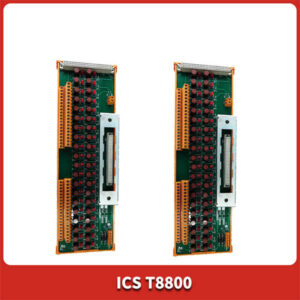
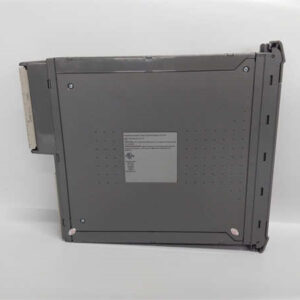
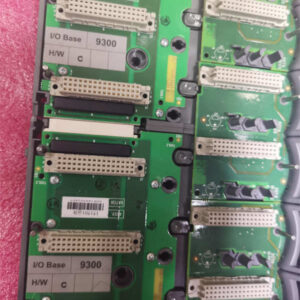
ICS TRILEX T8311
Lifecycle Status and Migration Strategy
Schneider Electric has discontinued the T8311 as part of the platform evolution toward Triconex eXP and eXPe. No new units are manufactured, and long-term repair services are being phased out. Continued reliance on this module increases exposure to obsolescence risk, with spare availability declining and pricing volatility rising.
As a short-term mitigation, maintain at least one certified, application-tested spare per critical I/O group. Ensure the spare matches the exact hardware revision and firmware version to avoid voting incompatibility.
For long-term sustainability, Schneider Electric’s recommended migration path is to the Triconex eXP platform, using modern analog input modules such as the 3701E series. This transition typically involves:
- Replacing legacy chassis with eXP-compatible models (e.g., 4328E)
- Installing new TMR analog input modules with enhanced diagnostics and cybersecurity
- Updating cabling and terminal blocks to match new I/O specifications
- Recompiling and re-validating the safety application in a current version of TriStation 1131
- Conducting full SIL verification and functional testing under fault conditions
Given the safety-critical nature of analog inputs, any migration must follow a formal Management of Change (MOC) process and involve a qualified functional safety engineer. A phased approach—starting with non-critical loops—is often the most practical way to manage risk. Early consultation with a Schneider-certified Triconex integrator is strongly advised to plan, execute, and document the upgrade while maintaining operational integrity and compliance.