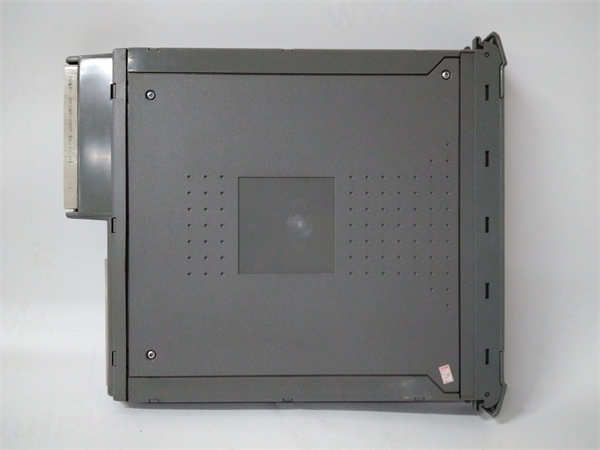
 Tel:
Tel:  Email:
  WhatsApp:
 Description
Technical Specifications (For Spare Verification)
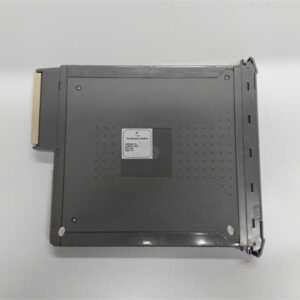
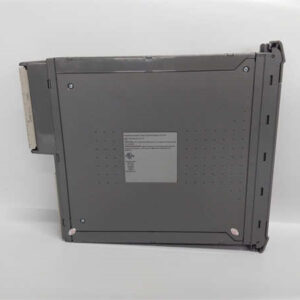
- Product Model: T8160
- Manufacturer: ICS Triplex
- System Compatibility: Triconex Tricon (v9 and earlier) safety controllers
- Input Channels: 8 isolated 4–20 mA inputs (TMR architecture: three independent channels per logical point)
- Input Range: 4–20 mA (sink mode), with open-wire detection
- Resolution: 16-bit A/D conversion per channel
- Accuracy: ±0.1% of span (typical at 25°C)
- Isolation: >500 VAC channel-to-channel and field-to-system
- Diagnostics: Built-in self-test, mismatch detection, and open-circuit alarms reported to main processor
- Form Factor: Standard Tricon I/O module (fits 4-slot or 8-slot chassis)
- Certifications: IEC 61508 SIL 3, API 670 compliant
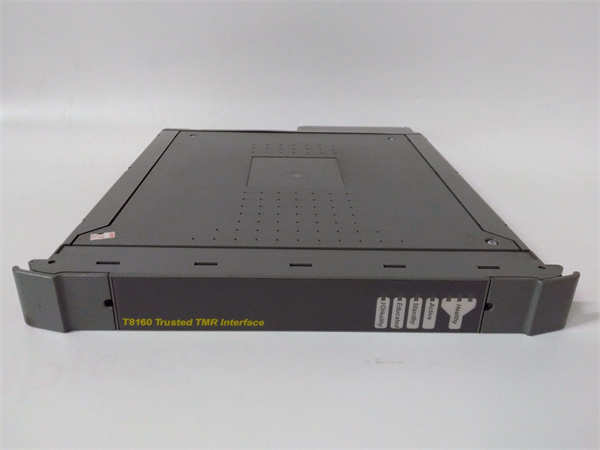
ICS Triplex T8160
System Role and Downtime Impact
The T8160 serves as a primary signal acquisition interface in safety-critical applications such as emergency depressurization, high-pressure trip, or boiler drum level protection. It digitizes analog field signals from transmitters and feeds them into the Tricon’s TMR voting logic. Because each logical input is derived from three physically separate circuits, the module ensures high fault tolerance. However, if one or more internal channels degrade—due to aging components or calibration drift—the system may flag a “channel mismatch,” forcing the affected SIF into bypass mode. In regulated environments, this degrades functional safety integrity and may require immediate operational restrictions. Complete module failure results in loss of critical process visibility, potentially triggering an automatic plant trip or preventing safe startup. Replacement requires physical swap, loop revalidation, and requalification of the SIF.
Reliability Analysis and Common Failure Modes
Despite its robust TMR design, the T8160 is vulnerable to time-dependent and environmental stressors:
- Precision resistor and op-amp drift: After 15+ years, analog front-end components exhibit parameter shift, leading to measurement offset or reduced common-mode rejection.
- Electrolytic capacitor degradation: Internal filtering capacitors dry out, increasing noise susceptibility and causing intermittent diagnostic faults.
- Terminal block corrosion: In humid or offshore installations, oxidation at screw terminals introduces resistance errors, mimicking low-current (e.g., 3.8 mA) conditions that trigger false “open wire” alarms.
- Backplane connector fatigue: Repeated thermal cycling causes micro-cracks in edge connectors, resulting in communication loss or intermittent channel dropouts.
A key weakness is that while the module performs continuous self-tests, it cannot detect gradual analog drift—only gross failures or mismatches between redundant paths.
Recommended preventive actions include:
- Performing annual loop calibration using certified mA simulators under live conditions.
- Inspecting and retorquing terminal connections during scheduled outages.
- Monitoring Triconex diagnostic logs for recurring “input deviation” or “channel fault” entries.
- Storing spares in climate-controlled, ESD-safe environments to prevent latent damage.
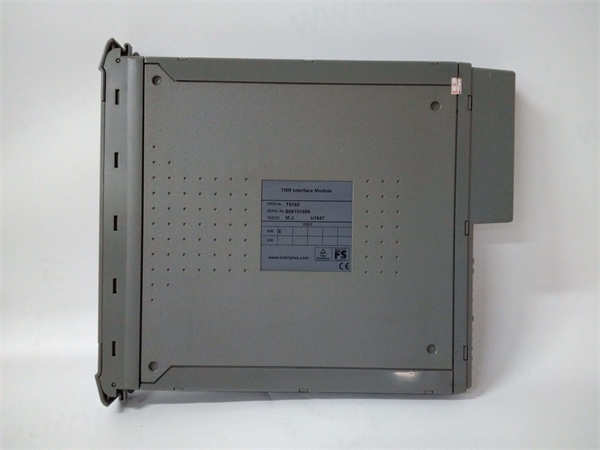
ICS Triplex T8160
Lifecycle Status and Migration Strategy
Schneider Electric has formally discontinued the T8160 as part of the end-of-life roadmap for legacy Tricon (v9) systems. No new units are available through authorized channels. Remaining inventory consists of used or refurbished modules, many with undocumented service history and uncertain remaining life. Continuing to rely on this module exposes facilities to escalating risk of unplanned downtime, regulatory non-compliance, and exorbitant secondary-market pricing.
Short-term mitigation strategies include:
- Securing at least two fully tested and calibrated spares per critical SIF loop.
- Engaging only vendors accredited under Schneider’s Authorized Repair Program for board-level refurbishment (including capacitor replacement and recalibration).
- Implementing enhanced surveillance via Triconex Enhanced Diagnostic Monitor (EDM) to detect early signs of channel degradation.
For long-term sustainability, the recommended path is migration to the Triconex v11 platform with modern TMR analog input modules such as the MP200 series or T8261, which offer:
- Higher accuracy and resolution
- Integrated HART pass-through
- Cybersecurity compliance (IEC 62443)
- Continued manufacturer support and spare availability
Migration typically involves replacing the I/O chassis, updating configuration in Triconex Enhanced Diagnostic Software (TEDS), and revalidating all associated SIFs per IEC 61511. Facilities operating critical infrastructure should initiate a formal obsolescence review immediately—delaying action increases both technical and financial exposure.