 Tel:
Tel:  Email:
  WhatsApp:
 Description
Key Technical Specifications (For Spare Part Verification)
- Product Model: PCI354-1022-38
- Manufacturer: Hybricon (Elma Electronic)
- Form Factor: 6U VME (233.35 mm × 160 mm), single-slot width
- Input Voltage: 38 V DC nominal (typically 24–40 V DC operating range)
- Output Voltages: Standard VME rails – +5 V, ±12 V, +3.3 V (exact current ratings per datasheet, e.g., +5 V @ 20 A)
- Cooling Method: Conduction-cooled (no fans); relies on chassis sidewalls for heat transfer
- Efficiency: Typically 75–85% (varies with load and age)
- Protection Features: Over-current, over-voltage, short-circuit, and thermal shutdown
- Compliance: Designed to meet MIL-STD-461 (EMI), MIL-STD-704 (power quality), and VITA 1/VITA 6 standards
- Connector Type: DIN 41612 backplane connector (Type C or compatible)
- MTBF: Originally rated >100,000 hours (at 25°C ambient)
System Role and Downtime Impact
The PCI354-1022-38 is typically deployed in rugged VME systems used in radar processing, sonar arrays, avionics test benches, or industrial real-time control. It resides in the VME chassis as the sole or redundant power source, converting a 38 V DC vehicle or platform supply into stable logic and I/O voltages for CPU, I/O, and communication boards. Because these systems often operate in remote or inaccessible environments (e.g., naval vessels, airborne platforms), a power supply failure can lead to total system blackout with no local recovery option. In non-redundant configurations, this causes immediate mission abort or production halt. Even in redundant setups, loss of one supply increases stress on the remaining unit, raising the risk of cascading failure. Recovery requires physical replacement—often during scheduled maintenance windows—making spare availability critical.
Reliability Analysis and Common Failure Modes
Despite its rugged design, the PCI354-1022-38 is vulnerable to long-term component aging:
- Electrolytic capacitors in the output filtering stage dry out over time, especially under continuous thermal cycling, leading to increased ripple voltage, instability, or complete output dropout.
- Power MOSFETs and diodes degrade due to repeated high-current switching, increasing on-resistance and causing localized overheating.
- Thermal interface material between the module baseplate and chassis sidewalls hardens or cracks, reducing heat transfer efficiency and triggering thermal shutdown at lower loads.
- Backplane connector pins suffer from fretting corrosion in high-vibration environments, causing intermittent power delivery or voltage sags.
A key design limitation is the absence of health monitoring—no PMBus or telemetry output to report temperature, load, or fault history. Preventive maintenance should include periodic thermal imaging of the chassis during operation, measurement of output ripple with an oscilloscope, and verification of hold-up time under load. Any spare unit must undergo full burn-in and load testing before being placed into service, as “new old stock” often exhibits capacitor leakage or solder joint fatigue.
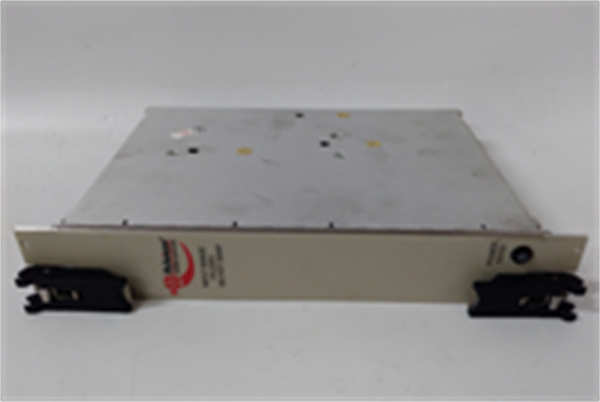
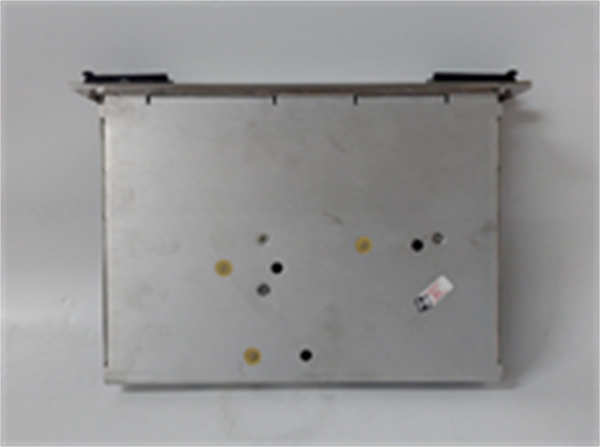
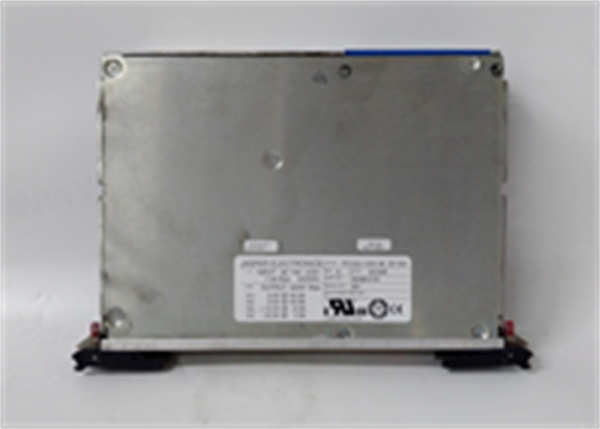
PCI354-1022-38 HYBRICON
Lifecycle Status and Migration Strategy
Hybricon (under Elma) has discontinued the PCI354 series, with no direct replacement offered. The broader VME ecosystem is in decline, replaced by VPX (VITA 46/65) and CompactPCI Serial architectures. Continuing to operate on this platform carries significant risk: spares are untested, counterfeit units are common, and repair services are scarce.
As a temporary measure, qualified vendors can perform board-level refurbishment—replacing all electrolytic capacitors, reapplying thermal paste, and reflowing critical solder joints. Maintaining at least two tested spares per system is strongly advised.
For long-term sustainability, migration to a modern VPX or CompactPCI Serial platform is recommended. Elma offers VPX power supplies (e.g., 6U VPX 3-phase AC/DC or 28 V DC input units) with digital monitoring via IPMI or PMBus. However, this requires a full system redesign: replacing backplanes, CPU boards, and I/O modules, along with software revalidation. Alternatively, some operators retrofit commercial off-the-shelf (COTS) conduction-cooled power supplies with compatible mechanical and electrical interfaces—but this demands rigorous environmental and EMI requalification. Early engagement with system integrators experienced in legacy-to-modern transitions is essential to minimize lifecycle extension risks.