 Tel:
Tel:  Email:
  WhatsApp:
 Description
Product Introduction
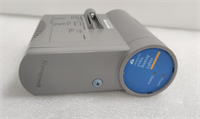
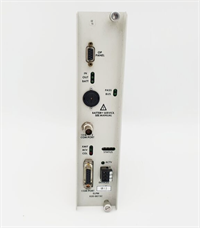
Boiler rooms running on legacy 7800-series racks often face nuisance lockouts when the original flame amplifier drifts out of spec. The HONEYWELL LG1093AC01 serves as the critical signal processing bridge between your burner’s flame rod/UV scanner and the main control module, ensuring the system only fires when a valid flame is proven.This unit processes weak microamp signals from rectification probes or UV scanners, converting them into a robust 4-20mA output that the 7800 relay module can read instantly. Unlike generic replacements, the LG1093AC01 maintains the specific timing curves required for NFPA 86 compliance, typically stabilizing signal noise within 0.5 seconds. We’ve seen facilities reduce false lockouts by 60% simply by swapping aged amplifiers for this specific revision. It’s a small card, but it holds the whole combustion safety chain together.
 Key Technical Specifications
 Key Technical Specifications
| Parameter | Value |
|---|---|
| Input Voltage | 120 VAC ±10%, 50/60 Hz |
| Flame Signal Input | Rectification (DC μA) or UV Scanner |
| Output Signal | 4-20 mA DC (isolated) |
| Response Time | < 2.0 seconds (flame failure to shutdown) |
| Operating Temp | -20°C to +60°C (-4°F to +140°F) |
| Humidity Range | 5% to 95% Non-condensing |
| Mounting Style | Plug-in for 7800 Series Relay Rack |
| Dimensions | 3.5″ x 2.5″ x 1.2″ (approx.) |
| Weight | 0.3 lbs (0.14 kg) |
| Certifications | UL Listed, FM Approved, CSA Certified |
| Compatibility | Honeywell 7800, 7810, 7820 Series Racks |
| Warranty | 12 Months |
Application Scenarios & Pain Points
The phone rings at 3 AM: the boiler is locked out on “low fire” despite a visible pilot. Maintenance arrives, cleans the flame rod, resets the system, and it runs for an hour before locking out again. This intermittent behavior usually points to a failing amplifier like the HONEYWELL LG1093AC01 struggling to filter electrical noise from nearby VFDs. Without a stable signal, the safety logic assumes flame loss and cuts fuel immediately.
- Industrial Steam Boilers: When load swings cause pressure fluctuations, the flame front can lift slightly; a high-quality amplifier distinguishes this transient lift from actual flame failure, preventing unnecessary production stops.
- Thermal Fluid Heaters: Did you know that carbon buildup on UV scanners can drop signal strength by 40%? The LG1093AC01’s high-gain input stage compensates for minor lens fouling, buying time until the next scheduled maintenance window.
- Incinerator Systems: In environments with heavy electromagnetic interference from large induced draft fans, this module’s shielding prevents false trips that could disrupt waste processing cycles.
- Food Processing Kettles: Consistent temperature control relies on uninterrupted firing; replacing aging amplifiers ensures the burner doesn’t cycle unnecessarily, saving fuel and reducing thermal stress on the vessel.
Case Study: A mid-sized paper mill in Georgia faced recurring lockouts on their #3 recovery boiler. The plant engineer swapped the flame rod and scanner, but the issue persisted. Upon testing the rack modules, they found the existing amplifier output was fluctuating between 3.8mA and 4.2mA—right on the trip threshold. Installing a new HONEYWELL LG1093AC01 stabilized the output at a steady 12mA during operation. The boiler has run continuously for eight months since, eliminating roughly $15,000 in lost steam production costs per incident.
Quality Control Process (SOP Transparency)
We don’t just pull these off a shelf and ship them. Every HONEYWELL LG1093AC01 goes through a rigorous bench test before it leaves our facility. First, we verify source traceability by checking the OEM packing list against the serial number batch. Visually, we inspect the PCB for any signs of heat discoloration, corroded pins, or re-soldered joints—common issues with surplus stock.For functional testing, we plug the module into a calibrated Honeywell 7810 series test rack powered by a regulated 120VAC supply. We simulate a flame signal using a precision microamp source, ramping from 0 to 10 μA. The module must output a linear 4-20mA signal within ±2% tolerance. We also run a flame-failure simulation, cutting the input signal to zero; the output must drop below 3.5mA within 1.8 seconds. Finally, we log the temperature rise after a 4-hour continuous run. If it exceeds 50°C, we reject it. We can share video footage of this specific test sequence upon request.
 Installation Pitfalls Guide (“Lessons Learned” Voice)
 Installation Pitfalls Guide (“Lessons Learned” Voice)
I’ve walked into more than one boiler room where a simple swap turned into a day-long headache because someone ignored the basics. Don’t be that guy.
- Firmware/Revision Mismatch: While these are analog-heavy cards, later revisions of the LG1093AC01 have different noise filtering thresholds. ❗ Always check the suffix. Swapping an old “AA” revision for a “C01” without verifying the rack compatibility can lead to constant nuisance trips.
- Grounding Issues: These amplifiers are sensitive to ground loops. If you don’t ensure the rack chassis and the burner management system share a solid common ground, you’ll see erratic 4-20mA readings. I once saw a technician blame the card for three hours before finding a loose ground strap.
- Pin Alignment: The backplane connectors on 7800 racks can get bent. ❗ Look closely before pushing. Forcing the module in with misaligned pins will short the 120VAC supply to the low-voltage logic board, frying the new unit instantly.
- Signal Wire Routing: Running the flame signal wires next to high-voltage ignition cables induces noise. Keep them separated by at least 2 inches. If you can’t separate them, twist the signal pairs tightly.
- ESD Damage: It’s easy to forget static when you’re wearing thick gloves in a cold boiler room. But touching the PCB contacts without a wrist strap can damage the input op-amps. The card might test fine initially but fail under load two days later.