 Tel:
Tel:  Email:
  WhatsApp:
 Description
Key Technical Specifications
| Parameter | Specification |
|---|---|
| Model Number | FW-23-13 |
| Series | 13 Type Ultra-Miniature |
| Technology | Piezoresistive (Monolithic) |
| Full Scale Output | 1.5 mV/V typical |
| Excitation | 10 VDC typical (Range: 5 to 15 V) |
| Non-Linearity | ±0.25% to ±0.5% FS |
| Hysteresis | ±0.25% to ±0.5% FS |
| Operating Temp | -40°C to 125°C (-40°F to 257°F) |
| Storage Temp | -40°C to 150°C |
| Materials | 316 Stainless Steel Diaphragm |
| Output Impedance | 350 Ω (Nominal) |
Product Introduction
I’ve seen a lot of sensors come and go, but the Honeywell 13 Type series, specifically the FW-23-13, is a solid choice for those damned “tight spots” in a machine. As a Senior Field Engineer, I appreciate that this thing is small enough to fit where the mechanical design wouldn’t allow a standard load cell, yet it doesn’t skimp on the build quality. It’s machined from solid 316 stainless steel with a single diaphragm, which Honeywell claims gives it a low deflection profile. That means when you apply a load, the sensor deflects very little, making it great for high-frequency response applications like robotic end-of-arm tooling or precision assembly equipment. The ±0.8% full-scale accuracy is respectable for a sensor in this size class, and the temperature compensation built into the lead wires helps keep the readings stable when the ambient temperature swings around the factory floor.
 Quality SOP & Tech Pitfalls
 Quality SOP & Tech Pitfalls
The Quality Check (SOP):
Before I ship this out, I run it through a gauntlet to ensure it’s not a lemon. First, I visually inspect the stainless steel housing for any scratches or dings that might compromise the seal. Then, I hook it up to a 10V excitation source and measure the output voltage to verify it’s within the 1.5 mV/V typical range. I check the insulation resistance with a megohmmeter to ensure there’s no leakage to ground, which is critical in noisy industrial environments. Finally, I log the specific serial number and firmware version (if applicable) to prove it’s a genuine Honeywell part and not a knockoff. It goes out in anti-static packaging with a “New Original” sticker slapped on it.The Tech Pitfalls (The Reality Check):
Here is the harsh truth: Do not cut or splice the lead wires. The balance module for temperature compensation is located in the cable assembly, not inside the sensor head. If you hack the wires, you break the calibration, and the sensor becomes useless. I’ve seen techs try to “fix” a shorted wire only to realize they killed the sensor’s ability to compensate for temperature changes, leading to massive drift. Also, be aware that this sensor has a relatively low stiffness compared to larger models. If you’re using it in a high-impact application, you might need to add some mechanical stops to prevent over-travel, or you risk plastically deforming the diaphragm and losing accuracy permanently.
Installation & Configuration Guide
1. Pre-Installation (Safety First)
- Power down the machine and bleed off any hydraulic/pneumatic pressure connected to the sensor.
- Take a clear photo of the current wiring harness and connector pinout. The FW-23-13 uses a specific cable assembly, so you must match the pinout exactly.
- Note the position of any mounting screws or brackets.
2. Removal
- Carefully disconnect the cable from the sensor head.
- Remove the mounting hardware. Because this sensor is so small, it often relies on friction or tiny set screws—don’t lose these parts.
3. Installation
- Mount the new FW-23-13 in the exact same orientation as the old one.
- Reconnect the cable. This is the critical step. Ensure the connector is fully seated and locked. Since the electronics are in the cable, a bad connection here will give you erratic readings.
Power-On & Testing
- Apply power and check the output voltage. You should see around 1.5 mV/V of the excitation voltage.
- Apply a known load (if possible) and verify the output voltage increases proportionally.
- If the machine has a calibration routine, run it to zero the sensor out.
Compatible Replacement Models
Drop-in Compatible:
- Honeywell 13 Type Series: FW-23-13 is part of a family. Other ranges (e.g., FW-23-130 for 1000lb) may physically fit if the diameter matches, but you must verify the electrical output scaling.
- Vishay / Kyowa: Some miniature S-beam sensors can replace this if you have the space, but they are typically not hermetically sealed like the Honeywell.
Software/Scaling Compatible:
- No direct drop-in: Because of the specific temperature compensation in the cable, you cannot simply swap the hardware and expect the PLC/Controller to work without recalibrating the scaling in the logic.
Hardware Mods Required:
- Any sensor with a different form factor: If your mounting holes don’t align, you will need to fabricate an adapter plate. The small size of the 13 Type makes it difficult to adapt without introducing compliance issues that affect accuracy.
Frequently Asked Questions (FAQ)
 Frequently Asked Questions (FAQ)
Q: Can I use this sensor in a high-temperature oven?
A: Honeywell rates it for 125°C, but that’s the operating limit. I wouldn’t recommend using it in a 200°C oven. The adhesive bonding the strain gauges could fail, or the stainless steel could yield. If you must go that hot, look for a high-temp ceramic or sapphire sensor.Q: Is this a digital sensor?
A: No, it’s an analog sensor. It outputs a millivolt signal that is proportional to the applied force. You will need a DAQ module or instrumentation amplifier to read it. The signal is very low-level, so keep the wires short and twisted to avoid noise pickup.Q: What happens if I exceed the 1000lb range?
A: You will likely damage the sensor. The diaphragm is thin, and exceeding the limit can cause permanent deformation or cracking. It’s a good idea to install a mechanical stop or use a larger sensor with a safety margin.Q: How accurate is it really?
A: The spec sheet says ±0.8% FS, but in the real world, you need to account for non-linearity and hysteresis, which can add up to another 0.5% or so. If you need absolute precision, you will have to calibrate it against a known standard in your setup.Q: Is this the same as the older 12 Type?
A: No. The 13 Type is smaller and lighter. The mounting dimensions and electrical characteristics are different, so you cannot swap them without modifying the hardware or firmware.
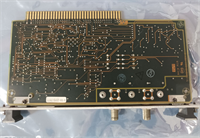
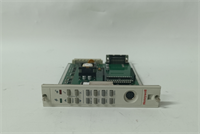
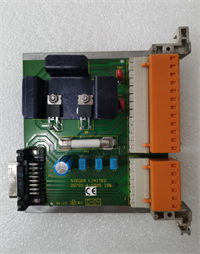
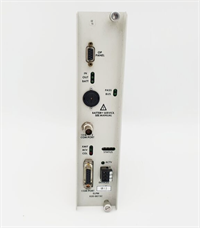
Honeywell FW-23-13 Force Sensor