 Tel:
Tel:  Email:
  WhatsApp:
 Description
Technical Specifications (For Spare Part Verification)
- Product Model: 810-370141-001
- Manufacturer: Honeywell
- System Family: TDC 3000 / Total Plant Solution (TPS)
- Module Type: Analog Input (AI), High-Level (HLAI)
- Input Channels: 16 differential channels
- Input Signal Range: ±10 V DC or 4–20 mA (configurable via jumpers)
- Isolation: Channel-to-channel and field-to-system isolation
- Backplane Interface: Compatible with TPS LCN (Local Control Network) I/O chassis
- Power Requirement: Supplied via TPS backplane (+5V, ±15V)
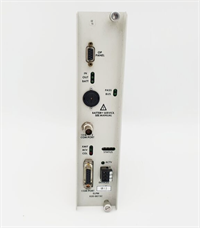
- Diagnostic Indicators: Front-panel LEDs for module status and channel faults
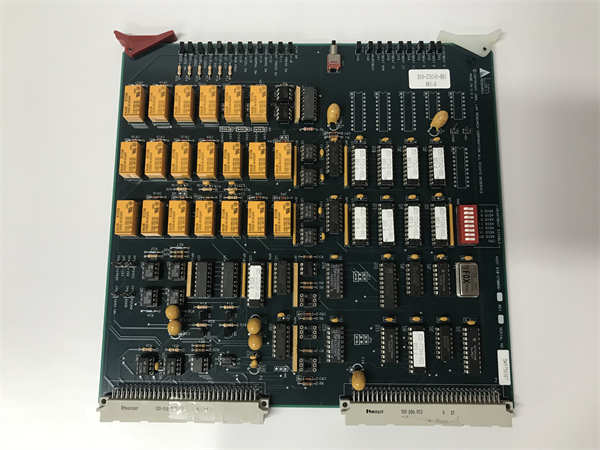
- Physical Form Factor: Standard TPS I/O card (approx. 160 mm x 240 mm)
System Role and Downtime Impact
The 810-370141-001 serves as a high-density analog input interface in Honeywell TPS systems, typically installed in remote I/O cabinets near process units. It digitizes critical field signals—such as reactor temperature, boiler drum level, or compressor discharge pressure—and transmits them to TPS controllers (HPM or HPM/SM) for closed-loop regulation. A failure of this module directly compromises up to 16 control loops simultaneously. In continuous-process industries like oil refining or chemical production, such a fault can trigger cascading alarms, force manual overrides, or even initiate emergency shutdowns if redundant paths are unavailable. Given that many TPS sites operate without full redundancy due to age, this module represents a single point of failure with potentially plant-wide consequences.
Reliability Analysis and Common Failure Modes
Despite its robust original design, the 810-370141-001 is now vulnerable due to component aging. The most frequent failure mode involves degradation of electrolytic capacitors on the power regulation circuitry, leading to intermittent operation or complete power dropout under thermal stress. Additionally, the opto-isolators used for signal conditioning can drift over time, causing measurement inaccuracies that manifest as process instability—often mistaken for sensor faults. A known design weakness is the reliance on volatile RAM backed by a lithium battery for calibration coefficients; if the battery depletes (typical life: 5–7 years), the module loses its scaling parameters and outputs invalid data.
For maintenance teams, proactive measures are essential. We recommend:
- Inspecting the module’s front-panel LEDs for flickering or “FAULT” indications during routine rounds
- Verifying battery voltage annually (if accessible) and replacing it preventively every 5 years
- Cleaning dust from ventilation slots in I/O cabinets to reduce thermal cycling stress
- Performing loop calibration checks more frequently than standard schedules, especially on safety-critical loops
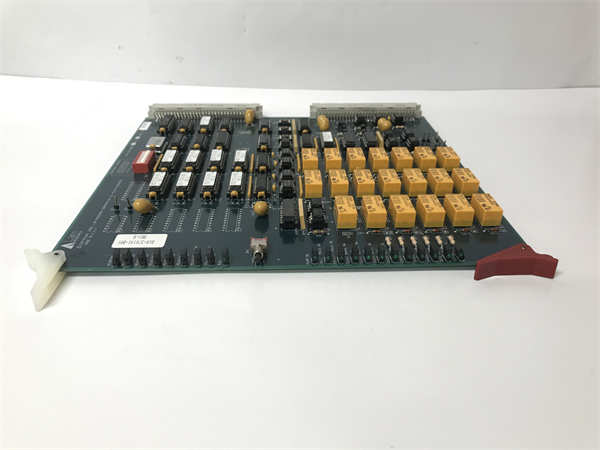
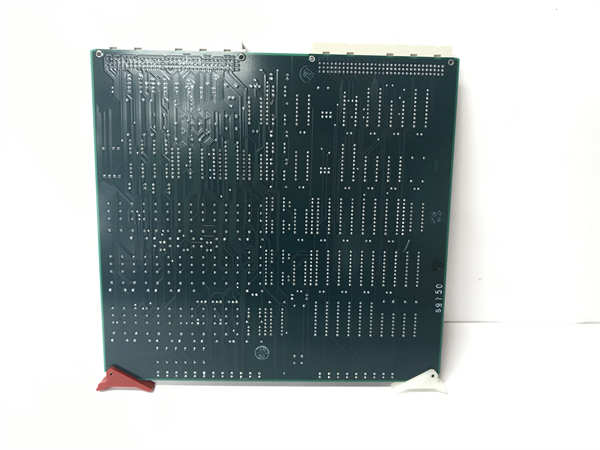
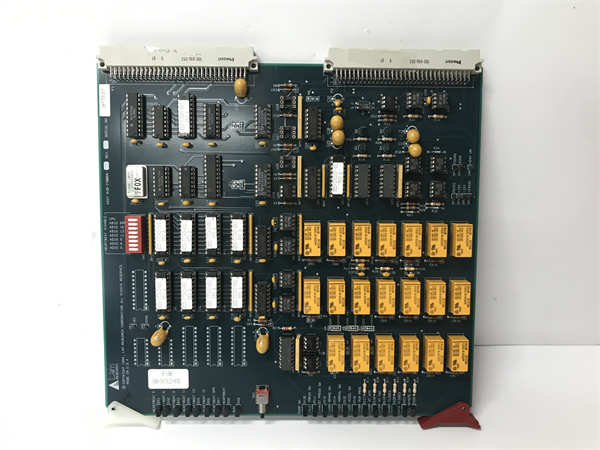
HONEYWELL 810-370141-001
Lifecycle Status and Migration Strategy
Honeywell formally discontinued the TPS platform, including the 810-370141-001, and no longer provides factory-new units or official repair services. Continued use carries significant risk: spare parts are scarce, lead times unpredictable, and counterfeit or improperly refurbished units increasingly circulate in secondary markets. While temporary solutions include sourcing tested surplus stock or engaging specialized third-party repair vendors capable of capacitor replacement and recalibration, these are stopgap measures at best.
The strategic path forward is migration to Experion PKS. Honeywell’s recommended upgrade route involves replacing TPS controllers and I/O with C300 controllers and FTE (Fault Tolerant Ethernet)-based I/O subsystems such as the I/O Link or Remote I/O (RIO) platforms. For analog inputs, the functional equivalent would be modules like the AI-HART series (e.g., 51304247-100). This migration requires re-engineering I/O wiring, updating control strategies in Experion Studio, and retraining operations staff—but it eliminates obsolescence risk and unlocks modern capabilities like asset diagnostics, cybersecurity, and cloud integration. For facilities not ready for full migration, implementing a “hot spare” inventory of verified 810-370141-001 modules, coupled with enhanced predictive monitoring, can extend operational life while planning the transition.