 Tel:
Tel:  Email:
  WhatsApp:
 Description
Key Technical Specifications (For Spare Part Verification)
- Product Model: K9203A
- Manufacturer: HIMA Paul Hildebrandt GmbH
- System Compatibility: HIMax classic architecture (e.g., CEs/CPs CPU modules with K-bus backplane)
- Input Channels: 16 isolated digital inputs
- Signal Type: 24 VDC (current-sourcing or -sinking, configurable via wiring)
- Input Voltage Range: 18–30 VDC (nominal 24 VDC)
- Diagnostic Coverage: >99% for dangerous failures (per original FMEDA)
- Redundancy Support: Fully integrated into HIMax’s 1oo2D or 2oo3 voting architecture
- Response Time: <10 ms typical (from field signal change to internal logic update)
- Isolation: Channel-to-channel and channel-to-backplane per IEC 61508
- Mounting: Hot-pluggable in HIMax I/O chassis (K-series slot)
- LED Indicators: Per-channel status (ON/OFF), module OK, and fault indication
System Role and Downtime Impact
The K9203A is a critical component in HIMA-based Safety Instrumented Systems (SIS), widely used in oil & gas, chemical, and power industries for emergency shutdown (ESD), fire & gas (F&G), and turbine protection. It reads binary status signals—such as “valve closed,” “pump running,” or “manual trip pressed”—and delivers them to the HIMax safety logic solver with full diagnostic coverage. Because it operates within a certified SIL 3 architecture, any undetected failure could compromise the integrity of a safety function. A faulty K9203A may either cause a spurious trip (leading to costly unplanned downtime) or, more critically, fail to detect a real hazard, potentially resulting in equipment damage, environmental release, or personnel injury. In regulated environments, such events may trigger regulatory investigations under IEC 61511.
Reliability Analysis and Common Failure Modes
Despite its robust design, the K9203A is susceptible to age-related degradation common to industrial I/O modules from the early-to-mid 2000s. The most frequent failure mode is optocoupler aging in the input isolation circuitry, leading to increased propagation delay, reduced noise immunity, or complete channel dropout. Terminal block corrosion—especially in humid or corrosive atmospheres—can introduce contact resistance, causing intermittent signal loss that may not immediately trigger diagnostics. Additionally, internal fuse degradation (used for short-circuit protection) can result in open circuits under fault conditions, disabling entire channel groups.
A known limitation is the lack of field-replaceable components; the entire module must be swapped. Units subjected to frequent voltage transients or ground loops show accelerated wear on input clamping diodes.
Recommended preventive actions include:
- Performing periodic proof tests that validate both “0” and “1” state detection per channel
- Measuring input leakage current during maintenance to detect early optocoupler drift
- Ensuring proper shield grounding and surge suppression on field wiring
- Monitoring HIMax PASvisu or HIMA Configurator logs for “input deviation” or “diagnostic fault” alarms
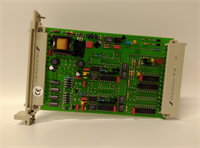
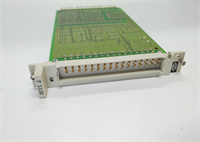
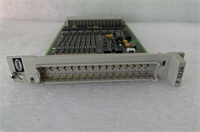
HIMA K9203A
Lifecycle Status and Migration Strategy
HIMA has officially discontinued the K9203A as part of the legacy HIMax platform phase-out. No new units are manufactured, and factory repair services are no longer available. Continued use increases exposure to supply shortages and compliance risks during functional safety audits.
Short-term risk controls include:
- Securing multiple tested spares with matching hardware and firmware revisions
- Validating hot-swap behavior and diagnostic reporting in a test rack
- Maintaining detailed wiring and channel assignment documentation
For long-term continuity, HIMA recommends migration to the HIMax X platform. The functional equivalent is the DI-X216, a 16-channel digital input module with enhanced diagnostics, higher channel density, and support for PROFINET and OPC UA. Migration entails:
- Replacing the HIMax CPU and I/O chassis with HIMax X equivalents
- Using adapter terminal blocks or re-terminating field wiring to new modules
- Revalidating all safety logic, response times, and proof test procedures under IEC 61511
- Upgrading engineering tools to HIMA Safety Suite
While requiring investment, this transition restores access to manufacturer support, cybersecurity features, and extended lifecycle assurance—essential for facilities operating beyond 2030. A phased, risk-prioritized migration plan is strongly advised to maintain safety and operational continuity.