 Tel:
Tel:  Email:
  WhatsApp:
 Description
Key Technical Specifications
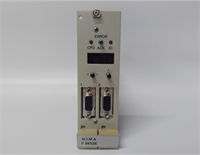
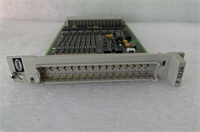
- Product Model: F8652
- Manufacturer: HIMA
- System Family: HIMax / H41q Safety Controller Platform
- Module Type: Fail-safe Digital Input Module
- Input Channels: 16 isolated, 24 V DC (sinking)
- Safety Rating: Certified to IEC 61508 SIL 3 and IEC 61511
- Diagnostic Coverage: >99% per channel (via internal test pulses)
- Mounting: Hot-swappable in H41q backplane chassis
- Connector Type: 37-pin D-sub or screw terminal (depending on baseplate)
- LED Indicators: Per-channel status, module OK, fault indication
- Redundancy: Operates in dual-channel (1oo2 or 2oo2) architecture within HIMax system
System Role and Downtime Impact
The F8652 is a foundational component in HIMA’s legacy HIMax safety systems, widely deployed in oil & gas, chemical processing, and rail applications where functional safety is mandated. It interfaces directly with safety-critical field devices such as emergency shutdown buttons, guard door switches, and flame detectors. Each input is continuously monitored for short circuits, open circuits, and cross-wiring faults.
A failure of this module—whether due to hardware fault or loss of diagnostic capability—typically forces the associated safety group into a safe state, which may trigger a plant-wide emergency shutdown. Because HIMax systems are often integrated with process control via hardwired or OPC interfaces, such an event can cascade into production stoppages lasting hours or days. In regulated industries, unplanned safety system downtime may also require formal incident reporting to authorities.
Reliability Analysis and Common Failure Modes
Despite its robust safety design, the F8652 is subject to age-related degradation after 10–15 years of service. The most common failure mode involves the optocouplers used for input isolation, which degrade under repeated electrical stress, leading to reduced switching margins or complete channel dropout. This is often preceded by intermittent “diagnostic fault” alarms that clear on reset but recur under load.
Another known weakness is the reliance on precise internal current sources for test pulse generation. Over time, resistor drift or capacitor aging in these circuits reduces diagnostic effectiveness, potentially allowing undetected dangerous failures—contradicting the module’s SIL 3 claim. Additionally, the D-sub connectors or terminal blocks are prone to corrosion in humid or saline environments, increasing contact resistance and causing false open-circuit indications.
Preventive maintenance should include:
- Performing periodic proof tests per IEC 61511 requirements, including full loop validation
- Inspecting connector pins for oxidation or mechanical wear during scheduled outages
- Monitoring diagnostic logs in PASvisu or HIMA Engineering Tool for recurring channel errors
- Verifying power supply stability to the I/O chassis, as voltage sags can mimic input faults
- Storing spare modules in climate-controlled, ESD-safe conditions and powering them annually
Lifecycle Status and Migration Strategy
HIMA has discontinued the F8652 as part of the evolution from the H41q platform to the newer H51q and HIMax X architectures. Official support, including firmware updates and repair services, is no longer available. Continuing to operate with this module carries significant risk: genuine spares are scarce, and untested units from third parties may lack valid safety certification documentation—posing compliance and insurance liabilities.
As an interim measure, some users implement external relay-based signal duplication to maintain redundancy, though this adds complexity and is not SIL-certified. Others engage specialized firms for board-level refurbishment using modern equivalent components, but this voids original certification unless revalidated—a costly and time-consuming process.
The recommended migration path is upgrading to HIMA’s H51q platform, which supports backward-compatible logic design via the same Safetymatic Studio engineering environment. The newer F8652 successor modules (e.g., F8652E or F8652X variants) offer enhanced diagnostics, PROFINET connectivity, and extended lifecycle support. Migration typically involves chassis replacement, I/O rewiring, and revalidation of safety functions—but preserves much of the original application logic. Given the regulatory implications of safety system obsolescence, planning for transition should be prioritized well before critical spares are exhausted.