 Tel:
Tel:  Email:
  WhatsApp:
 Description
Technical Specifications (For Spare Part Verification)
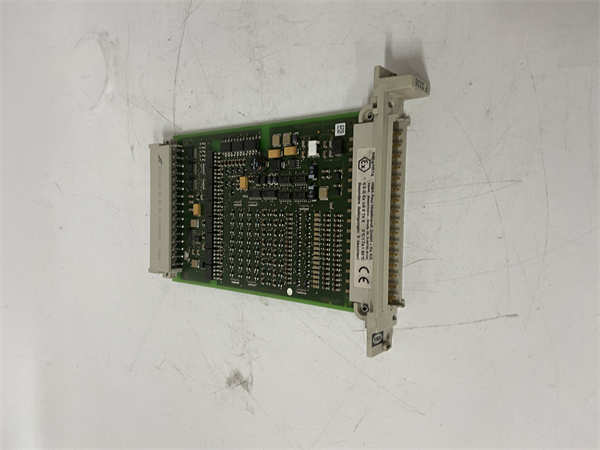
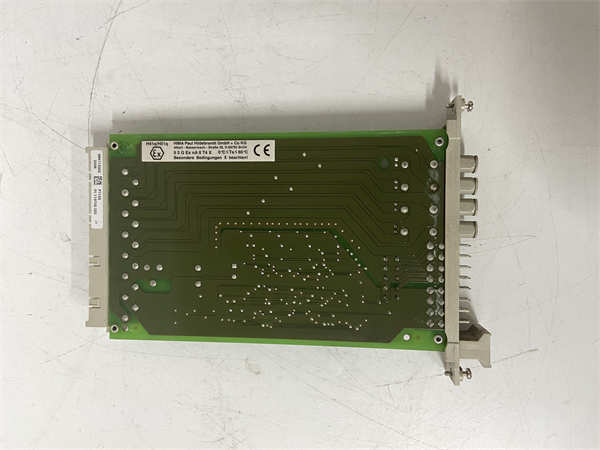
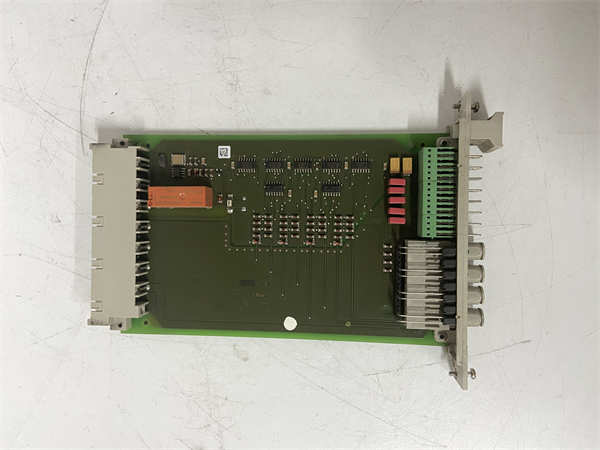
- Product Model: F7133
- Manufacturer: HIMA
- System Family: HIMax (Classic platform, pre-HIMax X series)
- Input Channels: 16 isolated digital inputs
- Input Type: Dry contact or powered contact (typically 24 VDC)
- Safety Certification: Certified per IEC 61508 up to SIL 3
- Redundancy Support: Designed for use in 2oo3 or TMR configurations within HIMax chassis
- Diagnostic Coverage: >99% via continuous online diagnostics (wire break, short circuit, cross-wiring detection)
- Isolation: Channel-to-channel and channel-to-backplane isolation (≥500 VAC)
- Backplane Interface: Proprietary HIMax bus (requires compatible F7xxx series carrier/backplane)
- LED Indicators: Power, OK, Fault, and per-channel status (green/red)
- Operating Temperature: 0°C to +60°C
System Role and Downtime Impact
The HIMA F7133 serves as a foundational input module in legacy HIMax safety systems deployed in refineries, chemical plants, and offshore platforms where functional safety is mandated. It interfaces directly with field-initiated shutdown commands—such as manual ESD activation or high-high level switch triggers—and feeds these signals into the redundant logic solver. In a 2oo3 architecture, the system requires two out of three channels to agree before actuating a trip. If an F7133 fails undetected (e.g., due to latent wire-break fault), it may compromise voting integrity, leading to either a dangerous failure (no trip during demand) or a safe but costly spurious trip. Given its role in SIL 3 loops, unavailability of a verified spare exposes the facility to regulatory non-compliance and operational vulnerability during unplanned failures.
Reliability Analysis and Common Failure Modes
Although designed for high reliability, the F7133 is subject to aging effects after decades of continuous operation. The most prevalent failure mode is degradation of optocoupler components used for input isolation, which can lead to signal drift, reduced noise immunity, or complete channel dropout. Internal diagnostic circuits may also become less sensitive over time, failing to detect subtle wiring faults. Additionally, electrolytic capacitors on the power regulation section dry out, causing voltage instability that affects multiple channels simultaneously. Environmental stressors—such as sustained high ambient temperature or humidity—accelerate these mechanisms.
Key design vulnerabilities include:
- Dependence on stable 24 VDC field supply; brownouts can cause intermittent input errors
- Limited tolerance for inductive kickback from unshielded relay coils without external suppression
- No built-in surge protection on field terminals—susceptible to lightning-induced transients
Preventive maintenance recommendations:
- Perform annual loop validation by simulating each input and verifying system response
- Measure input impedance and leakage current to detect early optocoupler degradation
- Inspect terminal blocks for corrosion, especially in marine or coastal installations
- Store spares in static-shielded, climate-controlled packaging with desiccant
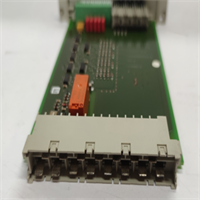
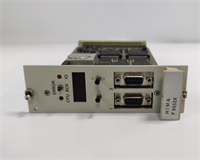
HIMA F7133
Lifecycle Status and Migration Strategy
HIMA officially discontinued the F7133 as part of the phase-out of the classic HIMax platform, with end-of-life announced in the late 2010s. No new units are manufactured, and existing inventory consists of refurbished or surplus modules with uncertain service history. Continuing to operate on this hardware carries significant risk: lack of factory support, inability to obtain calibration certificates, and increasing mean time to repair (MTTR) during failures.
As an interim measure, facilities may:
- Acquire and functionally test 1–2 spares under full load and diagnostic conditions
- Implement enhanced monitoring of input signal health via HIMax Engineering Tool (if accessible)
- Enforce strict handling protocols (ESD control, anti-static storage) to preserve remaining assets
For long-term sustainability, HIMA recommends migration to the HIMax X platform. The functional equivalent is the F-XDI16 digital input module, which offers:
- Higher channel density and improved diagnostics
- Native support for PROFINET and OPC UA for seamless integration with modern control layers
- Extended lifecycle commitment through 2035+
Migration involves:
- Replacing the entire HIMax chassis with a HIMax X system
- Rewiring field cables to new terminal bases (often feasible via marshalling cabinets)
- Recompiling safety logic in the updated PASconfig engineering environment
- Revalidating all safety instrumented functions (SIFs) per IEC 61511
A phased approach during planned turnarounds allows operators to eliminate obsolescence risk while maintaining compliance with functional safety standards and ensuring uninterrupted protection of personnel and critical assets.