 Tel:
Tel:  Email:
  WhatsApp:
 Description
Technical Specifications (For Spare Parts Verification)
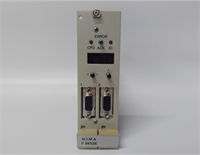
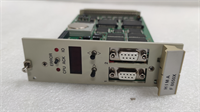
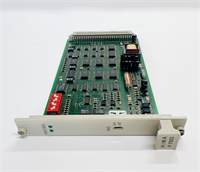
- Product Model: F60/MI/24/01
- Manufacturer: HIMA Paul Hildebrandt GmbH (Germany)
- System Family: HIMax F60 Safety Controller (part of the legacy HIMax series)
- Input Type: 24 VDC digital (dry contact or powered)
- Number of Channels: 16 isolated inputs
- Input Voltage Range: 18–30 VDC (nominal 24 VDC)
- Diagnostic Coverage: High – includes wire break detection, short-circuit monitoring, and channel-level diagnostics
- Safety Certification: Certified per IEC 61508 up to SIL 3, EN 5012x for railway applications
- Redundancy Support: Designed for use in 1oo2 or 2oo3 redundant HIMax architectures
- Mounting: Plug-in module for F60 backplane (requires compatible carrier board)
- LED Indicators: Per-channel status and module fault indication
System Role and Downtime Impact
The HIMA F60/MI/24/01 is a foundational I/O component within the HIMax F60 safety control system, commonly deployed in oil & gas, chemical plants, and power generation facilities for emergency shutdown (ESD), fire & gas (F&G), and burner management functions. It interfaces directly with field devices such as limit switches, pressure switches, and manual trip buttons, converting their discrete states into fail-safe digital signals processed by the HIMax CPU for safety logic execution. In a redundant architecture, multiple F60/MI/24/01 modules operate in parallel to ensure fault tolerance. However, if a module fails in a non-redundant loop—or if redundancy is compromised due to lack of spares—the associated safety function may be degraded or disabled entirely. This poses a direct risk to personnel, assets, and environmental compliance, and may force operators to run in bypass mode, which is often prohibited by regulatory authorities.
Reliability Analysis and Common Failure Modes
Despite HIMA’s reputation for robust safety hardware, the F60/MI/24/01 is subject to aging effects common in early-2000s industrial electronics. The primary failure mechanism is electrolytic capacitor degradation in the internal DC/DC isolation circuits, leading to voltage instability, increased leakage current, or complete loss of channel functionality. A secondary issue is corrosion or fretting at the backplane connector pins, especially in high-humidity environments, causing intermittent communication errors that trigger false diagnostics or module dropout. Additionally, the module’s dense PCB layout makes it vulnerable to latent damage from electrostatic discharge (ESD) during handling or maintenance, which may not manifest immediately but reduces long-term reliability.
Recommended preventive actions include annual functional testing under simulated field conditions, visual inspection of module edge connectors for oxidation, and monitoring of diagnostic logs for recurring channel faults. Modules installed in uncooled cabinets or exposed to process area contaminants should be prioritized for proactive replacement.
Lifecycle Status and Migration Strategy
HIMA has officially discontinued the F60/MI/24/01 as part of the broader phase-out of the HIMax F60 platform. No direct replacement exists within the current HIMA product line, and new-unit procurement is impossible through official channels. Continued operation relies on dwindling secondary-market inventory, which carries significant risk due to unknown usage history, potential counterfeit parts, and absence of manufacturer support.
Short-term mitigation includes implementing strict spare parts pooling across sites, conducting board-level repairs by certified third parties (where feasible), and enhancing diagnostic monitoring to detect early signs of degradation. However, these are temporary measures.
HIMA’s recommended migration path is a full transition to the HIMax X or H51q safety platform, which offers modern I/O modules with equivalent or enhanced functionality (e.g., H51q-DI24). This migration requires re-engineering of I/O wiring, re-validation of safety logic, and re-certification of the entire SIS—typically executed during major turnarounds or plant revamps. Early planning is essential, as lead times for new safety systems and engineering resources are substantial. Facilities still operating F60 systems should initiate a formal obsolescence management plan immediately to avoid forced operational compromises.