 Tel:
Tel:  Email:
  WhatsApp:
 Description
Key Technical Specifications (For Spare Parts Verification)
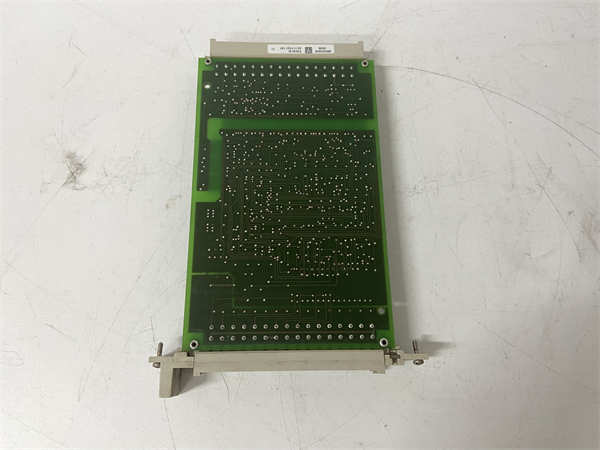
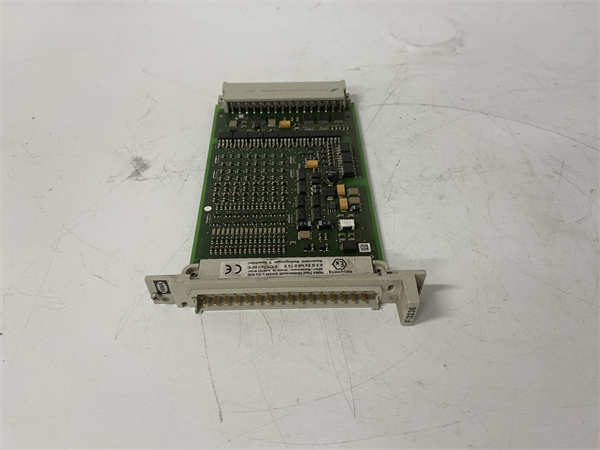
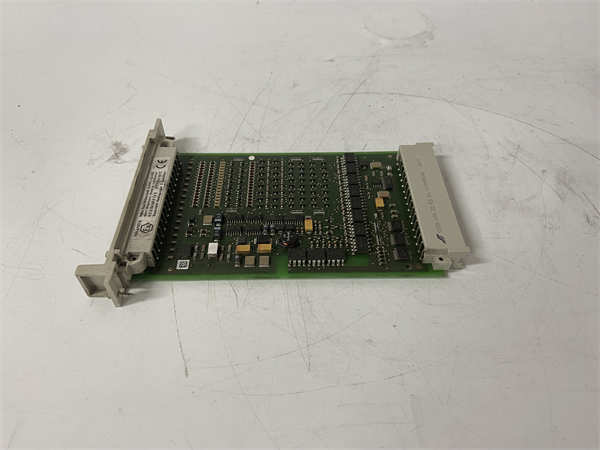
- Product Model: F3236
- Manufacturer: HIMA
- System Family: H51q / HIMax Safety Controller Platform
- Output Type: 8-channel, electromechanical relay outputs (normally open, changeover options depending on variant)
- Contact Rating: Typically 2 A @ 250 VAC / 30 VDC (resistive load)
- Switching Voltage: Up to 250 VAC / 125 VDC
- Diagnostic Coverage: Continuous monitoring of contact status, coil integrity, and cross-wire faults
- Redundancy Architecture: Supports 1oo2 or 2oo3 voting when used in redundant configurations
- Certification: Certified per IEC 61508 up to SIL 3, IEC 61511, ATEX, FM
- Form Factor: Standard HIMA module for H51q and early HIMax chassis
- Backplane Interface: Proprietary connector with redundant power and data paths
- Operating Temperature: 0°C to +60°C
System Role and Downtime Impact
The F3236 is commonly deployed in high-integrity applications such as emergency isolation valves in pipelines, firewater pump activation, compressor trip circuits, and burner shutdown systems. Unlike solid-state outputs, its electromechanical relays provide galvanic isolation and direct switching capability—making it suitable for interfacing with legacy field equipment that requires dry contacts.
In a safety instrumented function (SIF), the F3236 receives a command from the logic solver and physically opens or closes a circuit to initiate a safe state. If the module fails:
- Fail-dangerous: Contacts weld shut or fail to operate during a trip demand—leaving the process in an unsafe condition
- Fail-safe: Module enters fault state and forces de-energization—causing a spurious but safe shutdown
Because it acts as the final link between logic and physical action, its reliability is paramount. A single undetected failure can invalidate the entire SIF, potentially violating regulatory requirements under OSHA PSM or EPA RMP.
Reliability Analysis and Common Failure Modes
Despite robust construction, the F3236 is subject to wear mechanisms inherent to electromechanical components:
- Contact welding: Repeated switching under inductive or high-current loads causes arcing, leading to welded contacts that cannot open—creating a dangerous failure mode.
- Coil burnout: Overvoltage transients or prolonged energization degrade the relay coil insulation, resulting in open circuits.
- Mechanical fatigue: After thousands of operations, spring tension weakens, increasing contact bounce or causing incomplete closure.
- Backplane communication loss: Corrosion or vibration-induced loosening disrupts status feedback to the controller, masking actual output state.
Design limitations include finite mechanical life (typically rated for 100,000–500,000 operations) and sensitivity to voltage spikes from inductive loads without proper suppression. For preventive maintenance, technicians should:
- Perform annual proof tests that verify both electrical continuity and mechanical operation under load
- Inspect for discoloration, burnt smell, or pitting on relay terminals
- Install external snubber circuits or varistors on inductive loads to reduce contact erosion
- Monitor HIMA diagnostic logs for “Output Mismatch” or “Relay Fault” alarms
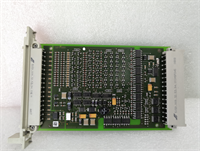
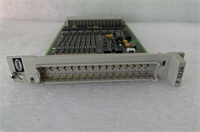
HIMA F3236
Lifecycle Status and Migration Strategy
HIMA has discontinued the F3236 as part of its strategic shift toward the HIMax X platform. Manufacturing ceased years ago, and official repair or calibration services are no longer available outside grandfathered support contracts. Continued reliance on this module introduces escalating risk: no access to new spares, inability to validate performance post-failure, and growing difficulty meeting IEC 61511 audit requirements for spare parts availability.
As a short-term mitigation, facilities may:
- Source units exclusively from HIMA-authorized refurbishers who provide full operational and diagnostic verification
- Maintain at least two tested spares per critical safety loop
- Implement external contact supervision relays to detect welded or stuck contacts (subject to SIL revalidation)
For long-term resolution, HIMA recommends migrating to the HIMax X architecture, using modern equivalents such as the F-XDO8-R relay output module. This transition typically involves:
- Replacing the controller rack and I/O modules
- Retaining existing field wiring where voltage and current ratings are compatible
- Revalidating all SIFs with updated failure rate data and PFD calculations
- Utilizing the PASmikro engineering environment for enhanced diagnostics and remote monitoring
Given its role as the final actuation point in safety-critical sequences, the obsolescence of the F3236 represents a high-severity asset risk. Proactive management through formal sparing or system modernization is essential to ensure ongoing process safety and regulatory compliance.