 Tel:
Tel:  Email:
  WhatsApp:
 Description
Key Technical Specifications (For Spare Parts Verification)
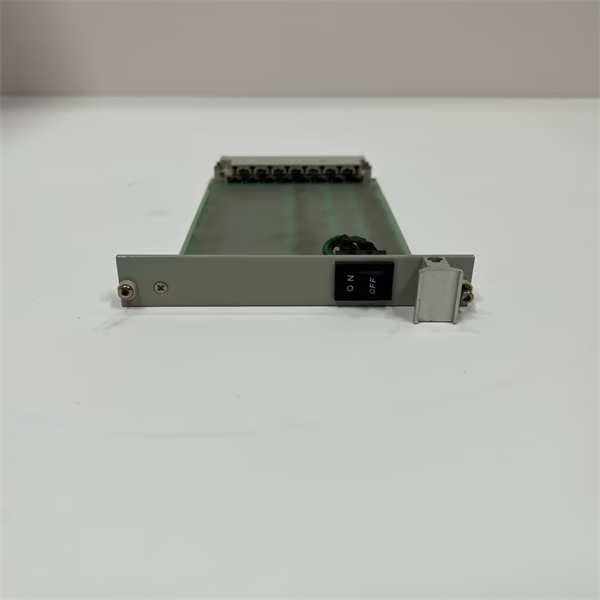
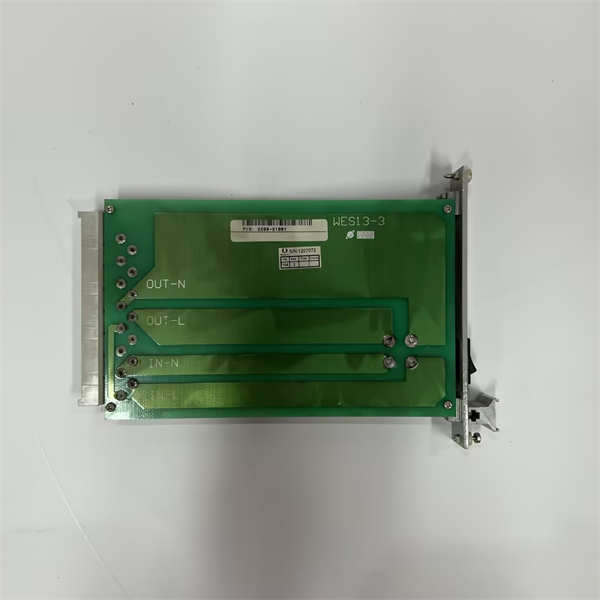
- Product Model: WEA13-13
- Part Number: 2508-21001
- Manufacturer: General Electric (GE)
- System Family: WEA13 Series Static Excitation System
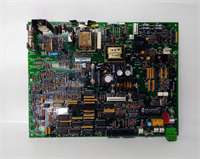
- Module Type: SCR Power Control / Firing Card
- Function: Controls gate firing of high-power thyristors to regulate DC field current
- Input Signals: Analog firing command from regulator (e.g., PAVR or EX2000), synchronization from AC potential transformers
- Output Interface: Gate drive signals to SCR bridges (typically 6-pulse or 12-pulse configuration)
- Power Supply: Requires isolated low-voltage DC (e.g., ±15 V, +5 V) from system power supplies
- Diagnostic Indicators: Limited onboard LEDs for power and fault status (varies by revision)
- Mounting: Panel-mounted or rack-integrated within excitation cubicle
System Role and Downtime Impact
The WEA13-13 (2508-21001) is a critical component in GE’s legacy static excitation systems, commonly deployed on large synchronous generators in power plants and industrial facilities. It translates the automatic voltage regulator’s (AVR) control signal into precisely timed gate pulses for high-current SCRs that modulate rotor field current. Stable excitation is essential for maintaining terminal voltage, reactive power support, and transient stability during grid disturbances. If the WEA13-13 fails—due to gate driver malfunction, sync loss, or internal short—it can cause uncontrolled field current, leading to over-excitation, under-excitation, or complete loss of generator synchronism. In most protection schemes, such anomalies trigger a generator trip, resulting in immediate loss of generation capacity. In islanded or critical infrastructure grids, this may cascade into broader outages.
Reliability Analysis and Common Failure Modes
As an analog power electronics module from the 1980s–1990s era, the WEA13-13 is vulnerable to several degradation mechanisms:
- Thyristor gate driver IC failure due to thermal stress from repeated switching cycles
- Electrolytic capacitor drying in local power filtering circuits, causing voltage ripple and erratic firing
- PCB trace delamination or solder joint cracking near high-current paths from thermal cycling
- Optocoupler degradation in isolation circuits, leading to timing jitter or false zero-crossing detection
- Contamination buildup (dust, oil mist) on high-impedance analog traces, causing signal drift or noise
A key weakness is the lack of comprehensive self-diagnostics; many faults only manifest during dynamic operation or under load. Additionally, the board uses obsolete discrete components (e.g., bipolar transistors, custom hybrids) that are no longer available, making repairs highly dependent on donor boards or reverse engineering.
Recommended preventive actions:
- Perform infrared thermography during operation to detect hot spots on SCRs or driver circuits
- Measure gate pulse timing accuracy using oscilloscope during maintenance outages
- Clean board surfaces with approved flux removers to prevent conductive contamination
- Verify input signal integrity from the AVR and PT sources
- Maintain spare units in dry, temperature-stable storage with conformal coating inspection
GE WEA13-13 2508-21001
Lifecycle Status and Migration Strategy
GE has long since discontinued the WEA13 platform, including the 2508-21001 module. No new units are available from GE Vernova, and original technical documentation is scarce. Remaining inventory exists only through third-party surplus dealers or decommissioned sites, often at inflated prices and without functional testing certification. Support from GE is effectively limited to paid legacy service contracts with no hardware backup.
Short-term mitigation includes:
- Securing multiple tested spares from reputable industrial electronics recyclers
- Engaging specialized firms for board-level repair and component substitution
- Implementing external monitoring (e.g., field current waveform analysis) to detect early anomalies
The recommended long-term solution is a full excitation system modernization—typically upgrading to GE’s EX2000 or EX2100e digital excitation platforms. These systems offer microprocessor-based control, built-in diagnostics, IEEE-compliant PSS, and remote connectivity via Ethernet. Migration involves replacing the entire power and control section, rewiring field connections, and re-commissioning protection functions—a significant but necessary investment to restore reliability, improve grid compliance, and eliminate dependency on obsolete hardware. Planning should begin well before the last known spare fails.