 Tel:
Tel:  Email:
  WhatsApp:
 Description
Key Technical Specifications (For Spare Part Verification)
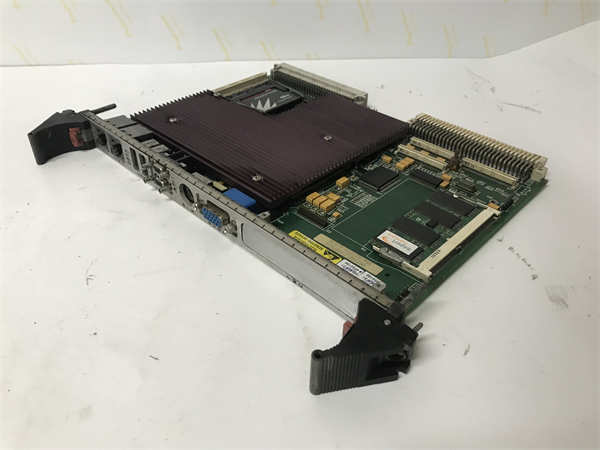
- Product Model: VMIVME-7750
- Full Part Number: VMIVME-7750-834 (also labeled as 350-027750-834 A)
- Manufacturer: GE Intelligent Platforms
- Bus Architecture: VME64x (32/64-bit, 3U/6U compatible)
- Processor: Freescale (formerly Motorola) PowerPC MPC7448, 1.0–1.4 GHz
- Onboard Memory: Up to 2 GB DDR2 SDRAM (soldered or SO-DIMM, depending on revision)
- Storage Interface: SATA, IDE, and CompactFlash options
- Operating System Support: VxWorks, Linux, QNX, LynxOS (real-time OS environments)
- I/O Interfaces: Dual Gigabit Ethernet, USB 2.0, serial ports, PMC/XMC site for expansion
- Conformal Coating: Optional for harsh environments (verify via suffix codes)
- Diagnostic Features: Watchdog timer, temperature sensor, front-panel status LEDs
System Role and Downtime Impact
The VMIVME-7750 serves as the computational core in embedded VME systems where deterministic performance and long-term reliability are required—commonly found in turbine control, radar signal processing, and substation automation. It runs real-time applications that interface with VME I/O modules (e.g., analog/digital acquisition, motion control) and communicates with supervisory systems via Ethernet or serial links.
In such architectures, this SBC is not merely a “computer”—it is an integral part of the control loop. If it fails or experiences uncorrectable memory errors, the entire system loses its ability to sample inputs, execute logic, or drive outputs. Unlike commercial IT systems, these platforms often lack redundancy, meaning a single-point failure can result in complete operational shutdown of critical infrastructure. Recovery requires not only hardware replacement but also precise reinstallation of the real-time OS image and application binaries—processes that can take days if backups or engineering support are unavailable.
Reliability Analysis and Common Failure Modes
Despite ruggedized design, the VMIVME-7750 exhibits predictable aging issues tied to its early-2000s semiconductor technology. The most prevalent failure mode is DDR2 memory bit errors due to solder fatigue or cosmic-ray-induced soft errors—especially in high-altitude or unshielded installations. These may manifest as sporadic application crashes or boot failures without clear error logs.
PowerPC processor thermal stress is another concern; units operated near maximum clock speed in poorly ventilated chassis show accelerated degradation of the onboard voltage regulators, leading to brownout resets. Additionally, CompactFlash or SATA storage wear-out—common in systems using disk-based OS images—can cause unrecoverable boot loops after years of write cycles.
A key vulnerability lies in firmware and software dependency: the board relies on specific versions of U-Boot, BSPs (Board Support Packages), and OS kernels. If original build environments are lost, restoring functionality on a replacement unit becomes highly complex. Corrosion on the VME edge connector fingers—particularly in coastal or high-humidity sites—can also disrupt backplane communication, mimicking CPU faults.
Recommended preventive measures include:
- Implementing periodic memory integrity checks via application-level diagnostics
- Using industrial-grade, SLC-based storage with wear leveling for OS partitions
- Maintaining complete, version-controlled system images (including U-Boot and kernel)
- Inspecting VME connector alignment and cleaning during scheduled maintenance
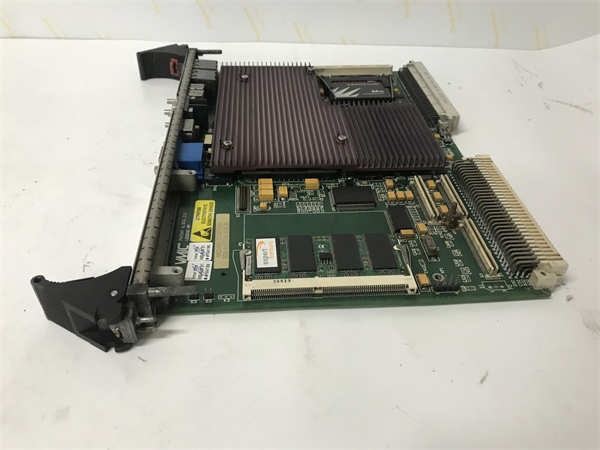
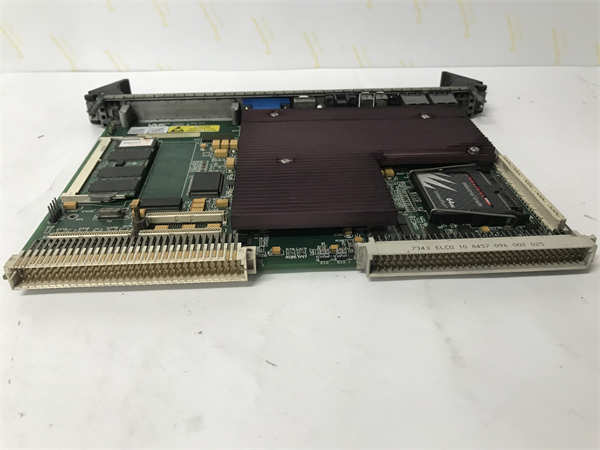
GE VMIVME-7750 VMIVME-7750-834 350-027750-834 A
Lifecycle Status and Migration Strategy
GE Intelligent Platforms (now under Emerson) has officially obsoleted the VMIVME-7750 series. No new units are manufactured, and factory repair services have been terminated. Continued use carries significant risk due to component obsolescence at the silicon level (e.g., MPC7448 processor), making even third-party repairs increasingly impractical.
Short-term mitigation includes:
- Securing multiple tested spares with matching BIOS/BSP revisions
- Creating full disk and firmware backups using bit-for-bit imaging tools
- Documenting jumper settings, PMC carrier compatibility, and cooling requirements
For long-term continuity, migration paths fall into two categories:
- Form-Fit-Function Replacement: Use modern VME SBCs from vendors like Abaco Systems (e.g., SBC627) or Curtiss-Wright (e.g., VPX3-133), which offer PowerPC or Intel alternatives with VME64x compatibility. This typically requires OS requalification and driver updates but preserves existing chassis and I/O.
- Architecture Modernization: Transition to VPX, CompactPCI Serial, or industrial PC platforms with equivalent real-time performance. While more disruptive, this enables access to multi-core processing, enhanced cybersecurity, and long-term supply assurance.
Emerson and authorized partners may provide legacy sustainment programs, including extended warranty pools or custom refurbishment, for critical national infrastructure. A phased, application-by-application migration—paired with rigorous regression testing—ensures operational resilience while managing technical debt in long-life industrial systems.