 Tel:
Tel:  Email:
  WhatsApp:
 Description
Technical Specifications (For Spare Parts Verification)
- Model: VMIVME-7750
- Manufacturer: GE Intelligent Platforms
- System Architecture: VME64x (6U form factor, 2eSST capable)
- Processor: Freescale (formerly Motorola) MPC7448 PowerPC, typically 1.0–1.4 GHz
- Onboard Memory: 512 MB to 2 GB DDR2 SDRAM (soldered or SO-DIMM, depending on revision)
- Storage Interface: Onboard SATA and/or CompactFlash socket
- I/O Interfaces: Dual Gigabit Ethernet, USB 2.0, serial ports, PMC/XMC site for mezzanine expansion
- Operating Temperature: Commercial (0°C to +55°C) or extended (-40°C to +70°C) variants exist
- Firmware: U-Boot or VxWorks-compatible bootloader stored in flash
- Power Consumption: ~25–35 W typical, dependent on load and expansion modules
System Role and Downtime Impact
The VMIVME-7750 functions as the primary embedded controller in VME-based systems widely deployed in defense test equipment, aerospace ground support systems, industrial automation, and scientific instrumentation. It typically runs real-time operating systems such as VxWorks or Linux, managing data acquisition from VME I/O cards, executing control algorithms, and interfacing with host PCs or networks. Because it occupies a critical slot in the VME chassis (often slot 1), its failure renders the entire system inoperable—halting mission-critical testing, flight validation, or production line diagnostics. Recovery requires not only hardware replacement but also precise matching of firmware version, MAC address, and OS image to avoid integration issues or licensing conflicts.
Reliability Analysis and Common Failure Modes
Despite its rugged design, the VMIVME-7750 is susceptible to age-related failures common in high-density embedded computing hardware. The most prevalent issues include:
- Memory degradation – soldered DDR2 chips develop intermittent faults due to thermal cycling, leading to unexplained crashes or boot failures.
- Power regulator wear-out – voltage regulators on the board degrade over time, causing brownouts under load.
- Flash memory corruption – the onboard boot flash can lose data after 10+ years, especially if frequently rewritten during development or updates.
- Connector fatigue – the P0/P1/P2 VME connectors suffer from pin oxidation or mechanical stress, resulting in intermittent backplane communication.
A key vulnerability is the lack of redundant storage or error-correcting code (ECC) memory in most configurations, increasing susceptibility to silent data corruption. For preventive maintenance, operators should:
- Perform annual burn-in tests under full thermal load
- Backup original firmware and OS images
- Inspect VME edge connectors for tarnish or bent pins
- Monitor system logs for uncorrectable memory errors (if supported by OS)
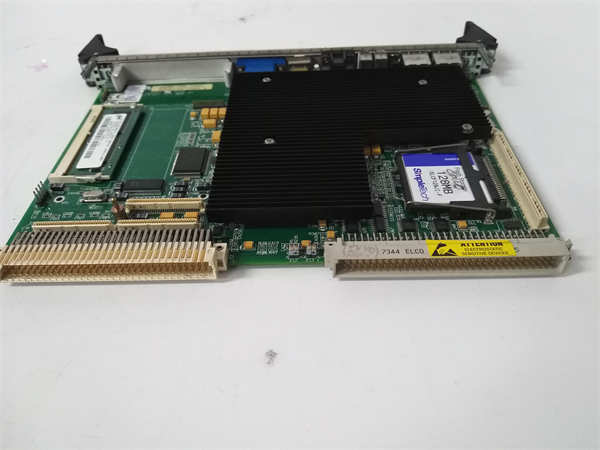
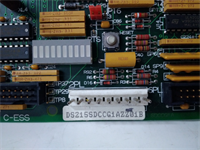
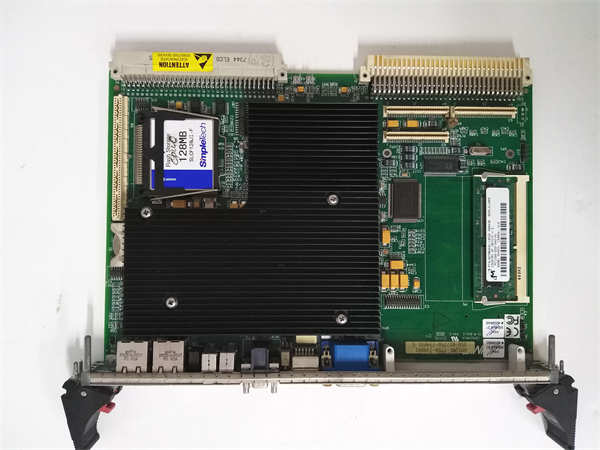
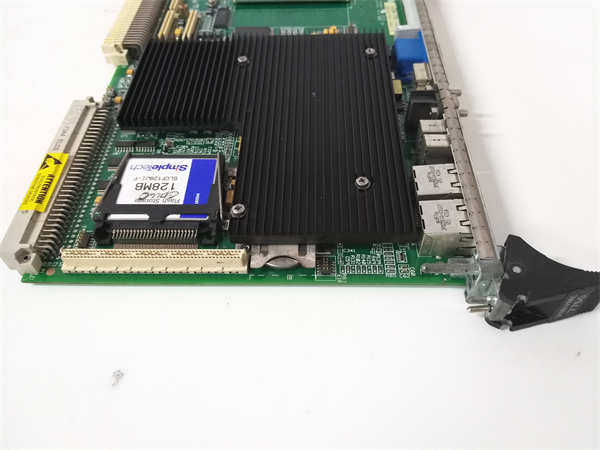
GE VMIVME-7750-734001350-027750-734001 G VMIVME-7750
Lifecycle Status and Migration Strategy
GE officially ended production and support for the VMIVME-7750 years ago. No direct replacements exist within the VME ecosystem, and new units are unavailable through authorized channels. Continuing to operate systems with this SBC carries escalating risk: spare units are scarce, often sold without test reports, and may originate from decommissioned military assets with unknown usage history.
As an interim solution, facilities may acquire tested units from specialized surplus vendors—but each must be validated for:
- Correct hardware revision (e.g., -734001 suffix denotes specific memory/flash config)
- Boot integrity and network functionality
- Compatibility with existing software stack
For long-term sustainability, migration to modern architectures is essential. Options include:
- VME-to-VPX transition: Replace the entire chassis with an OpenVPX system using current Power Architecture or x86 SBCs (e.g., Abaco or Curtiss-Wright). This preserves some software investment but requires significant re-engineering.
- Emulation or bridge solutions: Use FPGA-based VME master cards in PCIe systems to interface with legacy VME I/O, while moving control logic to a modern PC.
- Full system redesign: Re-architect around compact industrial PCs or COM Express modules with PCIe/USB-based DAQ, offering better performance and support but requiring complete software rewrite.