 Tel:
Tel:  Email:
  WhatsApp:
 Description
Technical Specifications (For Spare Parts Verification)
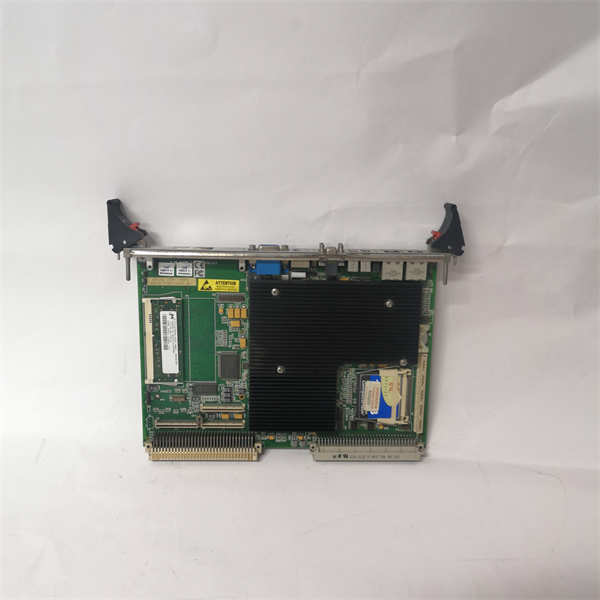
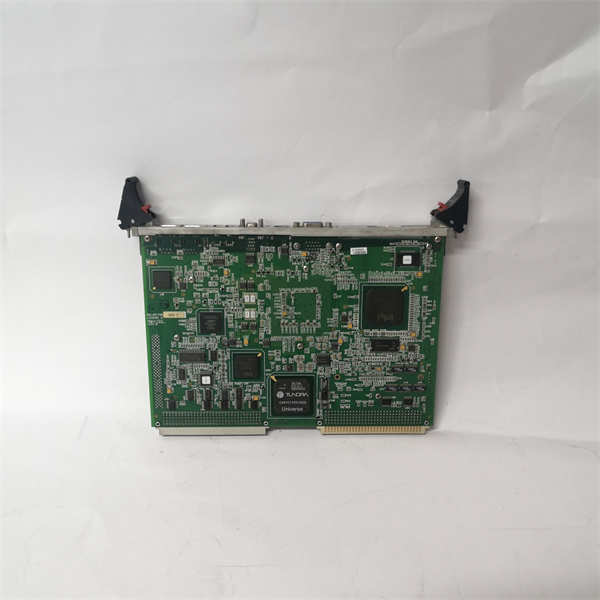
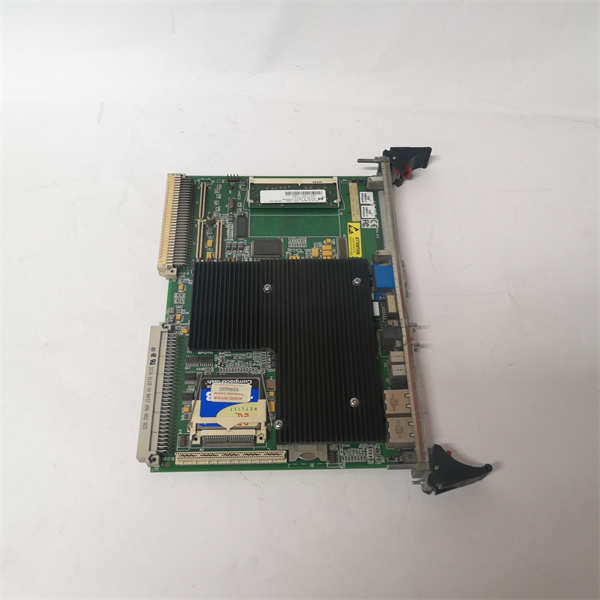
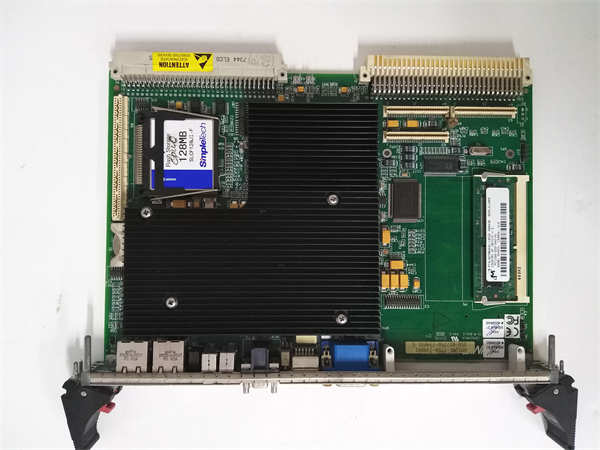
- Model: VMIVME-7750
- Manufacturer: GE Intelligent Platforms (VMIC product line)
- System Architecture: VME64x (32/64-bit, 32-bit data path, 6U form factor)
- Processor: IBM/Motorola PowerPC 750 (G3), typically 300–400 MHz
- Onboard Memory: 128 MB or 256 MB soldered SDRAM (non-expandable)
- Storage Interface: Onboard ATA/IDE for CompactFlash or 2.5″ IDE drive; optional PMC site for additional storage
- I/O Interfaces: Dual 10/100 Mbps Ethernet, serial ports (RS-232/422), PMC expansion site, front-panel USB (optional)
- Operating Temperature: Commercial (0°C to +55°C) or extended (-40°C to +70°C) variants available
- Firmware: VxWorks BSP or Linux-ready; boots from onboard flash or IDE device
- Power Consumption: ~15–20 W typical (depends on clock speed and peripherals)
- Mechanical Format: 6U VME (233.35 mm × 160 mm), conforms to IEEE 1101.1/10
System Role and Downtime Impact
The GE VMIVME-7750 served as the primary compute engine in embedded VME systems across industries such as power generation, aerospace test stands, rail signaling, and military platforms. It executed real-time control logic, data logging, or communication gateway functions—often in environments requiring deterministic performance and long-term reliability.
Because it integrates CPU, memory, and core I/O onto a single VME card, its failure disables the entire application running on that chassis. In non-redundant systems—common in legacy installations—this leads to immediate and total loss of functionality. For example, in a turbine protection system or a particle accelerator control rack, a VMIVME-7750 fault could trigger a safety shutdown or halt scientific operations for days until a verified replacement is sourced and validated.
Reliability Analysis and Common Failure Modes
Despite its rugged design, the VMIVME-7750 is susceptible to age-related degradation, particularly given its widespread deployment in the early 2000s.
Common failure modes include:
- Electrolytic capacitor aging on the power regulation circuitry, causing boot failures or spontaneous resets.
- Solder joint fatigue under thermal cycling, especially around the PowerPC BGA package or memory chips, leading to intermittent crashes.
- IDE interface corrosion or connector wear, resulting in storage access errors or failure to boot from CompactFlash.
- Firmware corruption in the onboard flash memory due to uncontrolled power loss over time.
Design weaknesses include reliance on aging IDE storage technology and limited error reporting—most faults manifest only as “no boot” or “hang during initialization” with minimal diagnostic feedback.
Preventive maintenance recommendations:
- Replace onboard electrolytic capacitors proactively if the unit is over 15 years old.
- Migrate boot media to industrial-grade CompactFlash with enhanced wear leveling.
- Maintain backup configuration images and verified firmware copies.
- Perform periodic power-cycle tests to detect latent boot issues before they cause field failure.
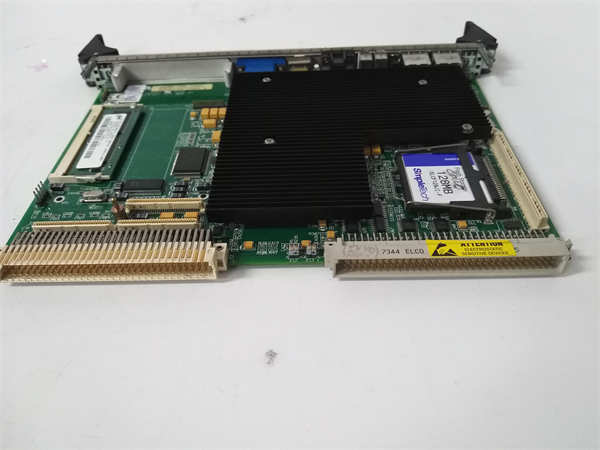
GE VMIVME-7750
Lifecycle Status and Migration Strategy
GE Intelligent Platforms (now Emerson) has long since discontinued the VMIVME-7750, with no direct replacement offered in the current product portfolio. The broader VME ecosystem remains active in niche markets, but new PowerPC-based VME SBCs are scarce and costly.
Continued use carries significant risk: spare units are untested, counterfeit parts exist in the supply chain, and software toolchains (e.g., older VxWorks versions) face compatibility issues with modern development environments.
Short-term mitigation options include:
- Securing functionally tested spares from certified embedded computing suppliers.
- Implementing board-level repair services for known failure points (e.g., capacitor replacement).
- Deploying redundant VME chassis where feasible to isolate single-point failures.
For sustainable operation, migration to a modern embedded platform is strongly advised. Viable paths include:
- VME-to-VPX transition: Upgrade to a VPX-based PowerPC or Intel system (e.g., Curtiss-Wright or Abaco) if the chassis can be replaced.
- Form-fit-function replacement: Use a compatible VME SBC with similar I/O and performance (e.g., SYMC-7750 from third-party vendors), though software requalification is required.
- Architectural modernization: Replace the entire VME system with a CompactPCI Serial, PCIe/104, or industrial PC platform running real-time Linux or modern RTOS.
Such a migration typically requires recompiling application code, updating drivers, and revalidating timing-critical functions—but it restores access to long-term supply, cybersecurity updates, and technical support. A staged approach, beginning with non-critical subsystems, allows organizations to manage risk while extending operational life in compliance with regulatory and safety standards.