 Tel:
Tel:  Email:
  WhatsApp:
 Description
Key Technical Specifications (For Spare Part Verification)
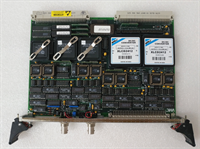
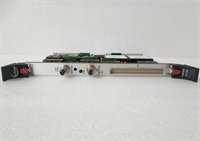
- Product Model: VMIVME-4140
- Form Factor: Standard 6U VME (233.35 mm × 160 mm), single-slot
- Bus Interface: VME64 (P1/P2 connectors), A24/D16 or A24/D32 slave interface
- Serial Ports: 4 independent channels, each software-configurable per port:
- RS-232: Up to 115.2 kbps (DB-9 or screw-terminal)
- RS-422/485: Up to 1 Mbps (differential, isolated options on some revisions)
- UART Controller: Typically dual 16C554 or SC28L198 quad-UART chips with 64-byte FIFOs
- Interrupt Handling: Supports VME IRQ levels 1–7, individually maskable per channel
- Address Mapping: Base address set via DIP switches or jumper blocks
- Driver Support: VxWorks, Linux (PPC/x86), QNX, LynxOS (via custom BSP or generic
ttydrivers) - Power Consumption: ~5–8 W (+5 V dominant)
- Operating Temperature: Commercial (0°C to +60°C); extended-temp versions rare
- Front Panel I/O: DB-9 connectors or removable terminal blocks (varies by revision)
System Role and Downtime Impact
The VMIVME-4140 was commonly deployed in industrial control, power generation, rail signaling, and defense test systems where VME-based controllers needed to interface with multiple legacy serial devices. Typical applications include:
- Communicating with protective relays (Modbus RTU over RS-485) in substation automation
- Connecting to turbine governors or boiler controllers via RS-232
- Aggregating data from flow meters, pH sensors, or RTUs in water/wastewater plants
- Providing debug/console access to multiple embedded subsystems
Because serial communication is often asynchronous and non-redundant, a failure of the VMIVME-4140 can result in:
- Loss of remote device visibility (e.g., breaker status, analog readings)
- Inability to send control commands (e.g., pump start/stop)
- Cascading alarms due to communication timeouts
In systems without redundant communication paths, this module becomes a single point of failure—especially problematic when it serves safety-related devices.
Reliability Analysis and Common Failure Modes
After 15–25 years in service, the VMIVME-4140 is prone to several age-related failures:
- UART chip degradation: Causes framing errors, missed interrupts, or complete port lockup
- Level shifter/transceiver failure (e.g., MAX232, SN75176): Leads to signal distortion or no output on RS-232/485 lines
- Oxidation of front-panel connectors or terminal blocks: Increases contact resistance, causing intermittent communication
- Capacitor aging on local power rails: Results in unstable UART clocking or reset glitches
- Firmware-less design: No self-diagnostics; faults manifest only as application-level timeouts
Environmental stressors like humidity, electrical noise, and ground loops (common in industrial plants) accelerate transceiver wear. Recommended preventive actions include:
- Periodic loopback testing of each serial port
- Monitoring error counters in the host OS (e.g.,
ttySoverrun/parity errors in Linux) - Using opto-isolators externally to reduce ground-loop stress
- Maintaining tested spares with verified port functionality
GE VMIVME-4140
Lifecycle Status and Migration Strategy
Following VMIC’s acquisition by GE Fanuc (2003) and later integration into Emerson (2019), the VMIVME-4140 was fully discontinued. No official replacement exists, and driver support has vanished from modern BSPs.
Short-term mitigation:
- Source units from reputable surplus vendors with functional test reports
- Use generic VME multi-serial boards (e.g., from Condor Engineering or SBS) if software can be adapted
- Implement external USB-to-serial or Ethernet-to-serial gateways as workarounds (adds latency and complexity)
Long-term migration path:
- Replace VME system with modern VPX or CompactPCI Serial platform featuring integrated high-speed serial or PCIe UART cards
- Consolidate serial traffic using protocol converters (e.g., Modbus TCP gateways) to reduce dependency on native serial ports
- Virtualize legacy VME software on rugged servers with PCIe-VME bridges and USB/serial adapters (for non-hard-real-time tasks)
- Adopt time-triggered Ethernet (e.g., TSN, PROFINET IRT) to eliminate serial dependencies entirely
Given its role in critical infrastructure, continued reliance on the VMIVME-4140 poses significant operational and cybersecurity risks (lack of encryption, outdated protocols). A formal obsolescence management plan—including spare inventory audit, software abstraction layer development, and phased hardware modernization—is strongly recommended.