 Tel:
Tel:  Email:
  WhatsApp:
 Description
Technical Specifications (For Spare Part Verification)
- Product Model: VMICPCI-7806-211000 / 350-657806-211000L
- Manufacturer: GE Intelligent Platforms (acquired VMIC product line)
- Product Family: VMIC Reflective Memory (RFM) Series 7800
- Bus Interface: 32-bit/33 MHz PCI (5V signaling)
- Onboard Memory: 128 MB DRAM (shared reflective memory space)
- Interconnect Type: Fiber optic (ST connectors), supports ring or star topology
- Data Rate: Up to 170 MB/s sustained throughput
- Node Capacity: Supports up to 256 nodes in a single RFM network
- Operating System Support: VxWorks, Linux, Windows (with legacy drivers)
- Physical Form Factor: Standard full-length PCI card
- Power Consumption: ~15 W typical
System Role and Downtime Impact
The VMICPCI-7806-211000 serves as a high-speed data-sharing backbone in tightly coupled real-time computing environments. It is commonly deployed in defense test ranges, power system simulators, and aerospace HIL (Hardware-in-the-Loop) rigs where microsecond-level determinism is required across multiple controller or simulation nodes. If this module fails, the entire synchronized data network collapses—halting all dependent processes. In a power grid simulator, for example, failure would freeze real-time load-flow calculations, forcing an immediate shutdown of the test scenario. In military applications, it could disable live radar tracking or missile guidance emulation, resulting in mission-critical downtime with significant operational and financial consequences.
Reliability Analysis and Common Failure Modes
Despite its age, many VMICPCI-7806 units remain in service due to the stability of their fiber-based architecture and lack of viable drop-in replacements. However, several inherent vulnerabilities contribute to field failures. The most common issue is degradation of the onboard electrolytic capacitors, especially in systems with poor airflow or continuous 24/7 operation—leading to power rail instability and spontaneous reboots. The PCI edge connector is also prone to oxidation or mechanical wear after repeated insertions, causing intermittent bus errors. Additionally, the module relies on volatile DRAM with no battery backup; any unexpected power loss results in complete data wipe, requiring full system reinitialization. As a maintenance best practice, operators should inspect capacitors for bulging or leakage every 18–24 months, clean the PCI slot with contact enhancer, and ensure stable, filtered 5V power delivery. Keeping a powered spare in a warm-swap bay can also mitigate recovery time during outages.
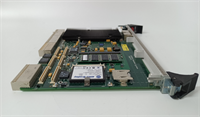
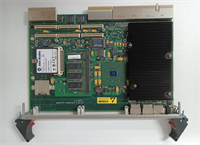
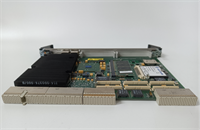
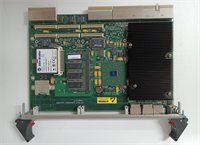
VMICPCI-7806-211000 350-657806-211000L GE
Lifecycle Status and Migration Strategy
GE officially discontinued the VMICPCI-7806 series years ago, with no direct replacement offered under the GE brand. Continued use carries substantial risk: spare parts are scarce, pricing is volatile, and driver support for modern operating systems is nonexistent. In the short term, organizations can extend life through rigorous preventive maintenance, strategic stockpiling of tested spares, or third-party board-level repair services specializing in legacy RFM hardware. For long-term sustainability, migration to modern reflective memory alternatives is strongly advised. The industry-standard path is transition to VMIC/GeckoSystems RFM6xx or RFM7xx series (now supported by Curtiss-Wright), which offer PCIe interfaces, larger memory (up to 4 GB), and backward-compatible APIs. However, this requires chassis upgrades (from PCI to PCIe), OS/driver updates, and potentially application code modifications to handle new memory mapping schemes. A full migration study—including data throughput validation and latency benchmarking—is essential before committing to replacement.