 Tel:
Tel:  Email:
  WhatsApp:
 Description
Key Technical Specifications (For Spare Parts Verification)
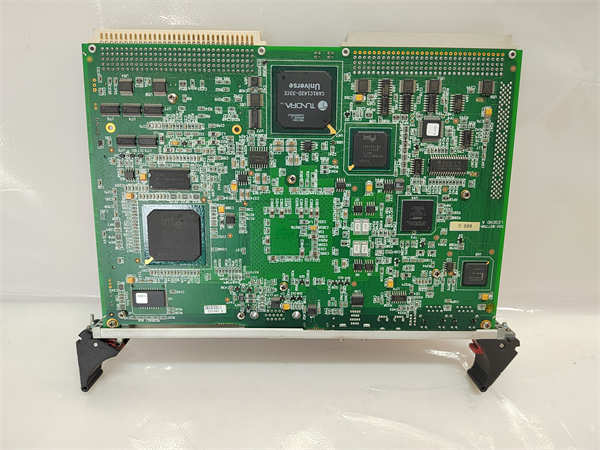
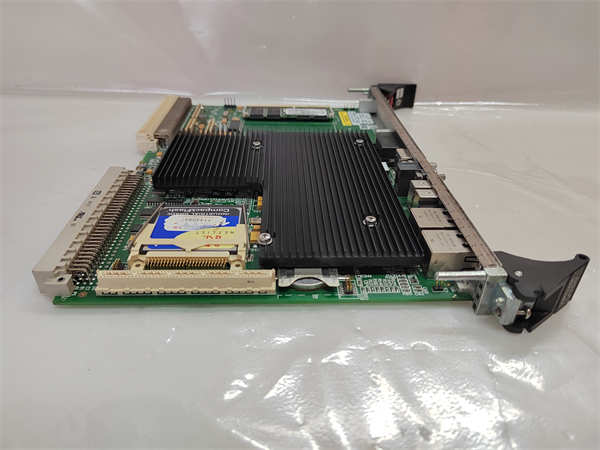
- Product Model: VMIVME-7750 / VMIVME-7750-746001 / 350-027750-746001P
- Manufacturer: GE Intelligent Platforms (acquired from VMIC)
- System Family: VME64x/VMEbus-based embedded control systems
- Processor: PowerPC 750 (G3-class), typically 400–500 MHz
- Bus Interface: VME64x, 32/64-bit data path, supports A24/A32 addressing
- Memory: Onboard SDRAM (typically 128 MB or 256 MB, non-expandable)
- Storage: Boot flash (4–8 MB); no rotating media
- OS Support: VxWorks, Linux, LynxOS (real-time operating environments)
- Form Factor: 6U VME (233.35 mm × 160 mm)
- Power Requirements: Standard VME +5V, ±12V rails; typical power draw ~15–20W
System Role and Downtime Impact
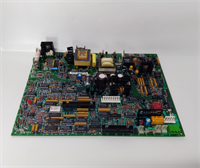
The VMIVME-7750 serves as the primary compute engine in legacy VME-based control racks, commonly deployed in defense test equipment, radar signal processors, or industrial process controllers from the early 2000s. As a central processing module, its failure halts all real-time data acquisition, logic execution, and communication functions within the chassis. In mission-critical applications—such as flight simulators or power plant monitoring—this can lead to full operational downtime with safety or regulatory implications. Replacement is not plug-and-play due to firmware, driver, and OS dependencies, making unplanned failures particularly disruptive.
Reliability Analysis and Common Failure Modes
These boards were built for rugged environments but are now well beyond their designed service life. The most frequent failure modes include degradation of onboard electrolytic capacitors (leading to voltage instability), corruption of boot flash memory due to charge leakage over time, and intermittent VME connector contact caused by thermal cycling and mechanical wear. A critical design weakness is the reliance on battery-backed SRAM for configuration or calibration data in some system integrations—these batteries often leak after 10+ years, damaging nearby traces. Additionally, the PowerPC 750 processor is sensitive to power supply transients, which older VME backplanes may no longer adequately suppress.
Preventive maintenance should focus on: visual inspection for capacitor bulging or PCB corrosion, reseating the module to clean edge connectors, verifying backup battery voltage (if present), and performing periodic cold-boot validation to detect latent memory errors. Environmental controls—stable temperature and low humidity—are essential to extend remaining service life.
Preventive maintenance should focus on: visual inspection for capacitor bulging or PCB corrosion, reseating the module to clean edge connectors, verifying backup battery voltage (if present), and performing periodic cold-boot validation to detect latent memory errors. Environmental controls—stable temperature and low humidity—are essential to extend remaining service life.
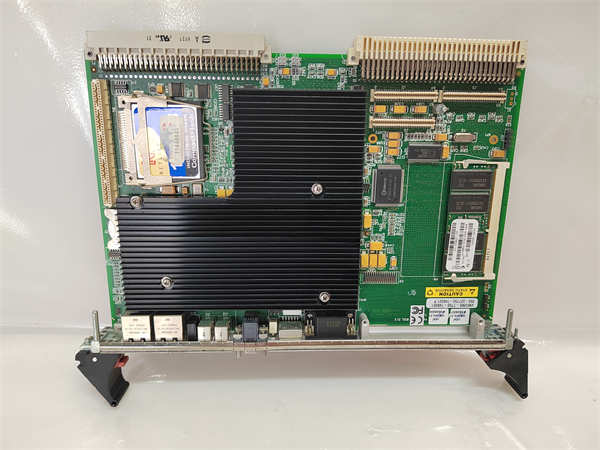
VMIVME-7750 VMIVME-7750-746001 350-027750-746001P GE
Lifecycle Status and Migration Strategy
GE officially discontinued the VMIVME-7750 series over a decade ago, with end-of-life notices issued in the late 2000s. No factory support, firmware updates, or warranty services remain available. Continued use carries significant risk: spare units are scarce, often sourced from decommissioned systems, and may have unknown usage history. Prices on the gray market can exceed original cost by 3–5×.
As a temporary measure, organizations may engage specialized third-party repair services for board-level rework (e.g., capacitor replacement, flash reprogramming) or maintain a “hot spare” under controlled storage.
For long-term sustainability, migration to modern alternatives is strongly advised. GE’s historical upgrade path recommended transition to the SBS Pinnacle series (e.g., SBS G400 or G450) or Abaco Systems’ (which acquired GE’s embedded business) PPC10A or ESD860 VME boards—though this requires OS porting, I/O driver adaptation, and potentially chassis requalification. A more future-proof approach involves migrating off VME entirely to VPX or CompactPCI Serial platforms, though this entails substantial re-engineering effort.
As a temporary measure, organizations may engage specialized third-party repair services for board-level rework (e.g., capacitor replacement, flash reprogramming) or maintain a “hot spare” under controlled storage.
For long-term sustainability, migration to modern alternatives is strongly advised. GE’s historical upgrade path recommended transition to the SBS Pinnacle series (e.g., SBS G400 or G450) or Abaco Systems’ (which acquired GE’s embedded business) PPC10A or ESD860 VME boards—though this requires OS porting, I/O driver adaptation, and potentially chassis requalification. A more future-proof approach involves migrating off VME entirely to VPX or CompactPCI Serial platforms, though this entails substantial re-engineering effort.