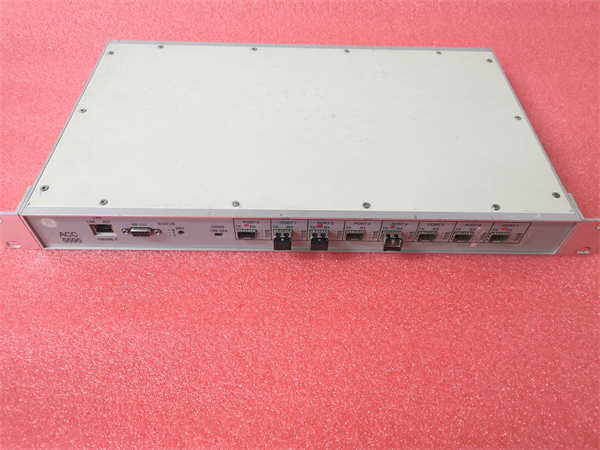
 Tel:
Tel:  Email:
  WhatsApp:
 Description
Key Technical Specifications (For Spare Parts Verification)
- Model Number: VMIACC-5595-208
- Manufacturer: GE Power (now GE Vernova)
- System Family: Mark VI / Mark VIe Speedtronic™ Turbine Control System
- Card Type: VMEbus I/O carrier (backplane interface)
- Compatible Terminal Boards: TBAI (analog input), TBCI (contact input), TBSI (solenoid output), etc.
- Form Factor: 6U VME (233.35 mm × 160 mm), single-slot width
- Bus Interface: Conforms to IEEE 1014-1987 (VME64) standard
- Power Distribution: Provides +5 V, ±15 V, and +24 V to mounted terminal boards via edge connectors
- Connector Type: DIN 41612 backplane connector (Type C) for chassis interface
- Diagnostic Features: No active electronics; passive routing only – relies on upstream controller for fault detection
- Mounting: Secured via front panel screws into VME subrack (e.g., VMIC-7750-based chassis)
System Role and Downtime Impact
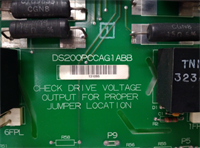
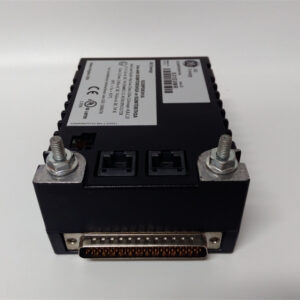
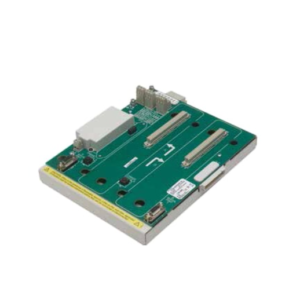
The VMIACC-5595-208 is a passive but essential hardware component in GE’s Mark VI turbine control architecture, widely deployed in gas and steam turbine installations at power plants worldwide. It serves as the physical and electrical interface between field wiring (via terminal boards) and the VME-based controller cards (such as VCMI or VPRO). While it contains no active logic, it routes hundreds of critical signals—including vibration, speed, pressure, valve position, and trip solenoid commands—between the plant floor and the control processor.
If this carrier card fails due to mechanical damage, cracked traces, or connector degradation, all I/O channels on its associated terminal boards become electrically isolated from the control system. In a non-redundant I/O configuration, this can result in loss of critical sensor feedback or inability to energize trip solenoids, potentially triggering an automatic turbine shutdown (trip) or—more critically—creating a latent failure where protective functions are silently disabled. Given that Mark VI systems often control multi-hundred-megawatt units, such a failure can lead to lost generation revenue exceeding $100,000 per hour during forced outages.
Reliability Analysis and Common Failure Modes
As a passive PCB assembly, the VMIACC-5595-208 is generally reliable but vulnerable to long-term environmental and mechanical stress:
- PCB trace cracking: Thermal cycling over 15–25 years causes fatigue in high-current power planes, especially near voltage regulator modules on adjacent terminal boards, leading to intermittent power loss.
- DIN 41612 connector wear or oxidation: Repeated insertion/removal of terminal boards or humidity exposure results in increased contact resistance, causing signal noise or complete channel dropout.
- Mechanical warping: Improper handling or overtightening of front mounting screws can distort the card, misaligning it with the backplane and damaging pins.
- Contamination buildup: Dust and oil mist in turbine control rooms can accumulate on the card surface, creating leakage paths between high-density traces.
Design limitations include lack of conformal coating in early revisions and reliance on precise mechanical tolerances for reliable mating. For preventive maintenance, site engineers should:
- Inspect the card for visible cracks, discoloration, or bent pins during scheduled outages
- Measure continuity and resistance on critical power nets using a multimeter
- Clean DIN connectors with ESD-safe contact cleaner before reseating
- Ensure proper torque on front panel screws to avoid board flexure
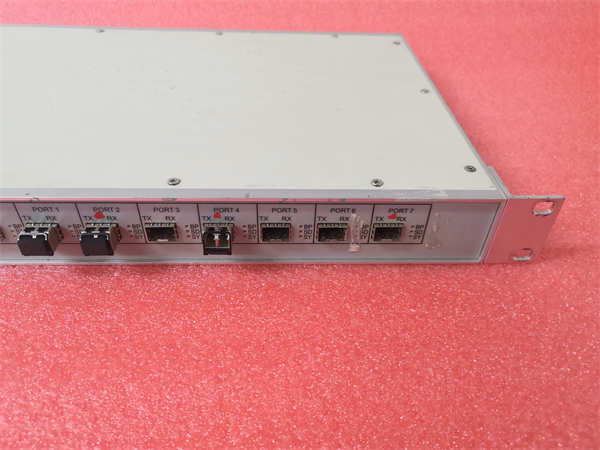
GE VMIACC-5595-208
Lifecycle Status and Migration Strategy
GE has discontinued the VMIACC-5595-208 as part of the broader Mark VI platform phase-out, with focus shifted to the Mark VIe and now the Advanced Controls Platform (ACP). No new units are produced, and factory repair services are restricted. Continued operation depends on existing spares or refurbished inventory, introducing supply chain fragility.
As an interim measure, operators may:
- Secure tested, functional units from certified surplus suppliers with full visual and continuity reports
- Implement redundant I/O paths where feasible (e.g., dual-channel vibration sensors on separate carriers)
- Perform periodic “tap tests” during operation to detect intermittent connections
For strategic migration, GE Vernova recommends upgrading to the Mark VIe or Mark VIeS platform, which replaces VME-based I/O with Ethernet-based Smart I/O (SIO) modules. This transition involves:
- Replacing the entire VME chassis with a new Mark VIe I/O pack
- Rewiring field cables to new terminal blocks (though often using the same marshalling junction boxes)
- Recommissioning all I/O tags and revalidating protection logic per API 670
- Retraining personnel on ToolboxST software
Given the VMIACC-5595-208’s role as a silent enabler of turbine safety functions, its obsolescence represents a latent operational risk that warrants proactive sparing or inclusion in a formal control system modernization roadmap.