 Tel:
Tel:  Email:
  WhatsApp:
 Description
Key Technical Specifications (For Spare Part Verification)
- Product Model: VMIACC-5595-208
- Manufacturer Part Number: 350-805595-208J
- Manufacturer: General Electric (GE Power / GE Energy)
- System Platform: Mark VI / Mark VIe (legacy I/O variant)
- Input Type: IEPE/ICP® accelerometer (constant current excitation)
- Input Channels: Typically 4 per module (configuration-dependent)
- Output Signal: ±10 V DC proportional to vibration velocity or acceleration
- Excitation Current: 4–8 mA (programmable)
- Frequency Response: 0.5 Hz to 5 kHz (typical)
- Mounting: DIN-rail or chassis-mounted within Mark VI I/O cabinet
- Operating Temperature: 0°C to +60°C
- Compliance: CE, UL, applicable IEC standards for industrial control
System Role and Downtime Impact
The VMIACC-5595-208 serves as a front-end signal conditioner in GE’s Mark VI turbine control and protection architecture. It interfaces directly with accelerometers mounted on critical bearings of gas or steam turbines, converting high-impedance sensor outputs into low-impedance, noise-resistant analog signals used by the Mark VI’s vibration monitoring software (e.g., VMAC or TDM). These signals feed into both operational trending and hardwired trip logic.
Loss of this module—whether due to failure or unavailability—compromises real-time vibration assessment. In many configurations, missing or invalid vibration inputs can force the turbine into a “derate” mode or trigger a protective shutdown to prevent catastrophic mechanical damage. Given its role in machinery integrity, prolonged unavailability may result in extended outage durations during planned or forced maintenance events, especially in combined-cycle or peaking power plants where turbine availability is revenue-critical.
Reliability Analysis and Common Failure Modes
Units in service beyond 10–15 years commonly exhibit failures linked to component aging and environmental stress. The most frequent issue is drift or complete loss of constant-current excitation, caused by degradation of internal current source circuits—often tied to aging operational amplifiers or failing surface-mount resistors. This leads to intermittent or zero sensor output, falsely indicating “low vibration” even during actual fault conditions.
Electrolytic capacitors on the power regulation subcircuit are another weak point; their drying out causes voltage ripple, leading to noisy outputs or module reset behavior. Additionally, the terminal blocks and PCB traces are vulnerable to corrosion in humid or sulfur-rich environments (common in coastal or industrial sites), resulting in open circuits or ground loops.
Design limitations include minimal self-diagnostics (no channel-level health reporting) and reliance on external fusing for overvoltage protection—making it susceptible to transient damage from nearby lightning or switching surges.
Recommended preventive actions:
- Conduct quarterly calibration checks using a precision vibration calibrator
- Monitor excitation current and bias voltage at terminals during routine rounds
- Inspect for discoloration or bulging on onboard capacitors during cabinet maintenance
- Ensure proper shielding and grounding of sensor cabling to reduce EMI-induced errors
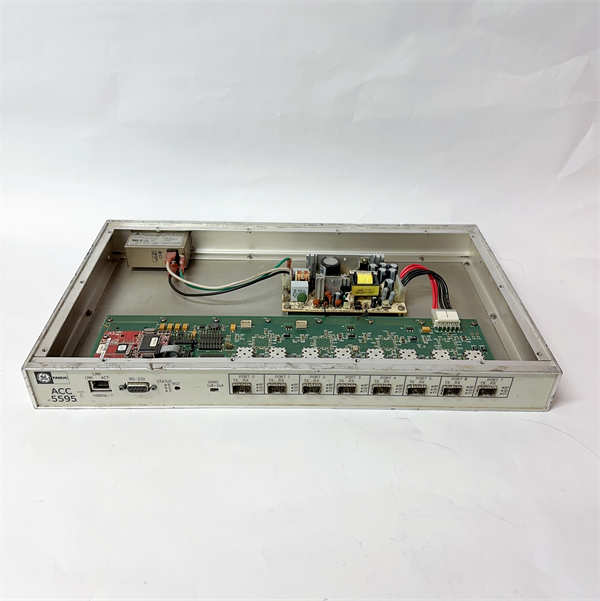
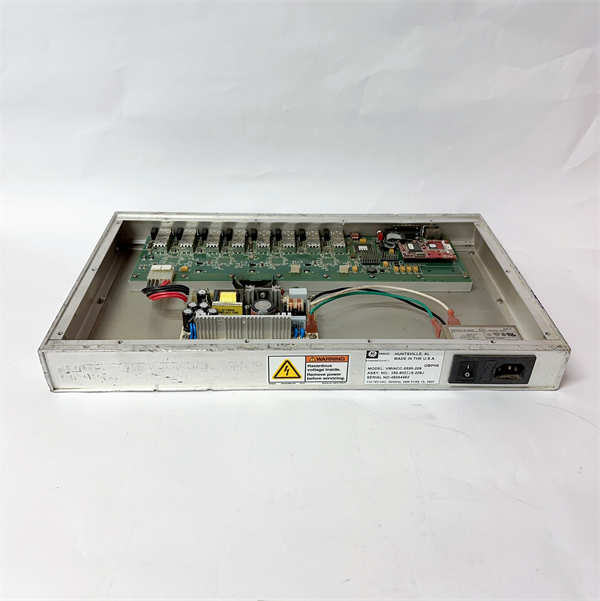
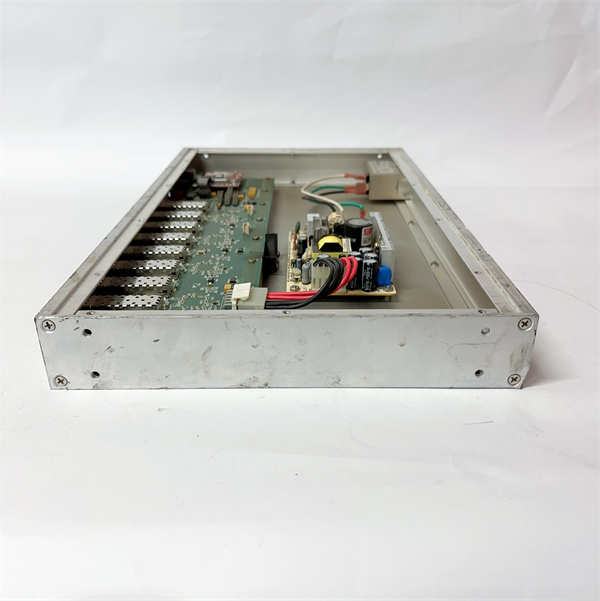
GE VMIACC-5595-208 350-805595-208J
Lifecycle Status and Migration Strategy
GE has discontinued the VMIACC-5595-208 (350-805595-208J) as part of its broader phase-out of legacy Mark VI discrete I/O modules. Official support, including repairs and firmware updates, is no longer available. New units are unavailable through GE channels; the secondary market offers only used or refurbished stock at premium prices (often 6,000 per module), with uncertain remaining service life.
Short-term mitigation includes maintaining a strategic spare inventory or engaging specialized third-party firms for board-level reconditioning (e.g., capacitor replacement and recalibration). However, such repairs do not restore original OEM certification and may void compliance in regulated environments.
Long-term, migration to the Mark VIe platform is the recommended path. The equivalent functionality is now integrated into the VMM (Vibration Monitoring Module) or handled via Smart I/O packs with built-in diagnostics, digital communication (via IONet), and compatibility with GE’s OpStar or Bently Nevada System 1 asset management tools. Migration requires I/O re-engineering, software reconfiguration, and re-validation of protection logic—but delivers enhanced reliability, remote diagnostics, and alignment with current cybersecurity and functional safety standards (IEC 62443, IEC 61508).