 Tel:
Tel:  Email:
  WhatsApp:
 Description
Technical Specifications (For Spare Parts Verification)
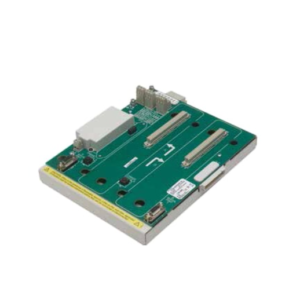
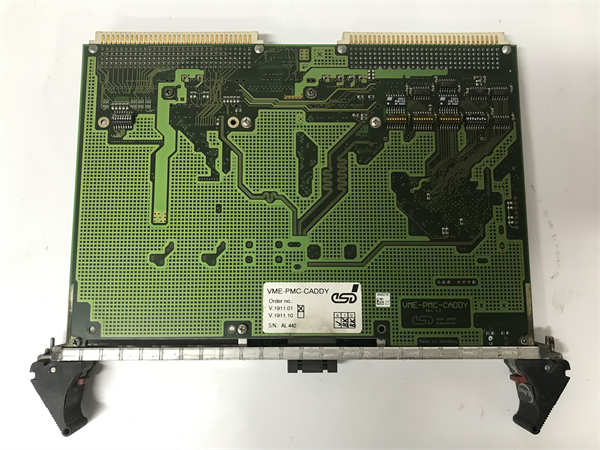
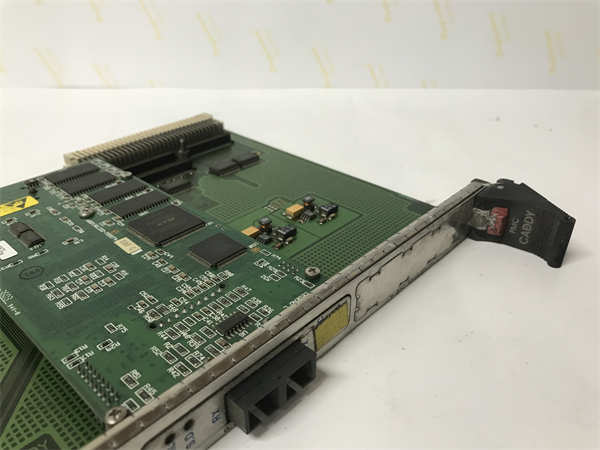
- Product Model: VME-PMC-CADDY
- Manufacturer: GE Fanuc Embedded Systems
- System Family: GE VME Series (VME64 / VME64x compatible)
- Form Factor: 6U VME (233.35 mm x 160 mm) with integrated PMC site
- PMC Standard Compliance: IEEE P1386.1 (mechanical), IEEE 1386 (electrical)
- VME Bus Interface: Full 32-bit, 33 MHz VME64 with P0–P2 connectors
- PMC Site: Single PMC slot with 32-bit/33 MHz PCI interface
- Power Delivery: Supplies +5V, +3.3V, ±12V to PMC per VITA standards
- Cooling: Conduction-cooled or air-cooled variants (verify by label/sticker)
- Mounting: Standard VME card guides and front panel handle
- Backplane Compatibility: Requires VME chassis with full P0–P2 connector support
System Role and Downtime Impact
The VME-PMC-CADDY serves as an essential bridge between standardized PMC modules and the VME backplane. In legacy systems—such as naval combat systems, airborne mission computers, or turbine test stands—it enables the use of high-performance, application-specific PMCs (e.g., for avionics bus simulation, real-time FFT, or custom protocol handling). The caddy itself contains no active logic, but its failure (e.g., due to cracked PCB traces, damaged PMC connector, or power delivery fault) renders the entire PMC non-functional. Because these PMCs often implement irreplaceable proprietary functions, loss of the caddy can disable a critical subsystem. In a power plant test rig, for example, this might halt all performance validation activities; in a military system, it could degrade mission readiness. Recovery is complicated by the lack of direct drop-in replacements.
Reliability Analysis and Common Failure Modes
Although passive in design, the VME-PMC-CADDY is susceptible to mechanical and environmental wear due to its role as an interposer between two high-density connectors. Common issues include:
- PMC connector fatigue: Repeated insertion/removal of PMCs causes wear on the caddy’s female PMC socket, leading to intermittent contact or open circuits on critical PCI signals.
- PCB delamination: Thermal cycling in industrial or mobile environments can separate internal copper layers, especially around high-current power vias.
- Corrosion on edge fingers: Exposure to humidity or salt air (in marine applications) oxidizes the VME P1/P2 edge connectors, increasing contact resistance and causing communication errors.
- Mechanical stress cracks: Improper handling or chassis vibration can fracture solder joints at the PMC mounting posts or VME connector anchors.
Recommended preventive actions:
- Inspect PMC socket pins for bending or tarnish during maintenance outages
- Clean VME edge connectors with approved contact cleaner and lint-free swabs
- Verify continuity of all power and ground paths using a multimeter before installing a new PMC
- Store spares in static-shielded, dry containers with desiccant
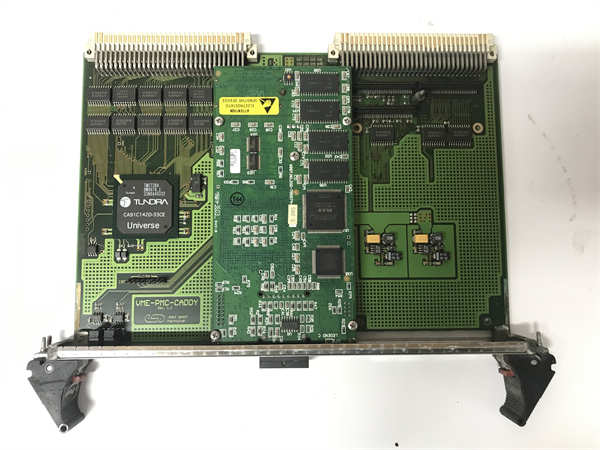
GE VME-PMC-CADDY
Lifecycle Status and Migration Strategy
GE discontinued the VME-PMC-CADDY in the mid-2000s as VME adoption declined in favor of CompactPCI, VPX, and later, embedded PC architectures. Emerson provides no official replacement, repair service, or updated documentation. Continued reliance on this component introduces supply chain fragility—especially since many original PMCs are also obsolete.
Interim Mitigation Measures:
- Acquire multiple verified units from reputable surplus vendors and perform incoming inspection (visual, continuity, insulation resistance)
- Use conformal coating on stored units to prevent moisture ingress
- Avoid unnecessary PMC swaps to minimize socket wear
Long-Term Migration Path:
Modern alternatives depend on the host system architecture:
- For new designs: Transition to VPX (VITA 46/48) platforms, which natively support XMC/PMC modules without carriers
- For VME retrofits: Consider PMC-to-PCIe carrier cards installed in industrial PCs, coupled with VME-to-PCIe bridge hardware (e.g., from EKF or Elma)
- For minimal disruption: Some third-party vendors offer functionally equivalent caddies under new part numbers, though long-term availability remains uncertain
Because the caddy is a mechanical enabler rather than a computational element, migration planning should focus first on the PMC’s functionality—determining whether its role can be replicated in software (e.g., via FPGA IP cores on modern SOMs) or replaced with off-the-shelf Ethernet-based I/O. Early engagement with embedded systems integrators is strongly advised to avoid unplanned downtime.