 Tel:
Tel:  Email:
  WhatsApp:
 Description
Key Technical Specifications (For Spare Part Verification)
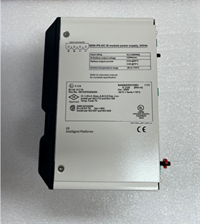
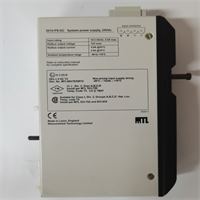
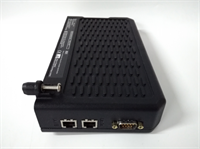
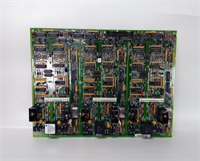
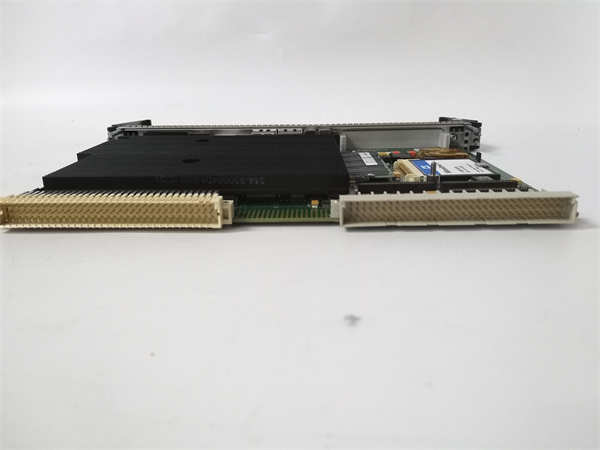
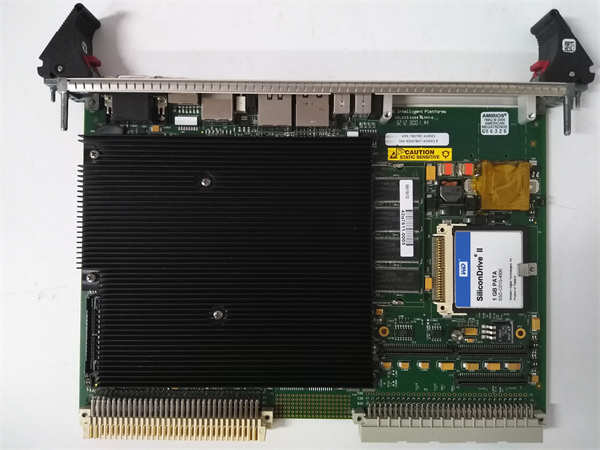
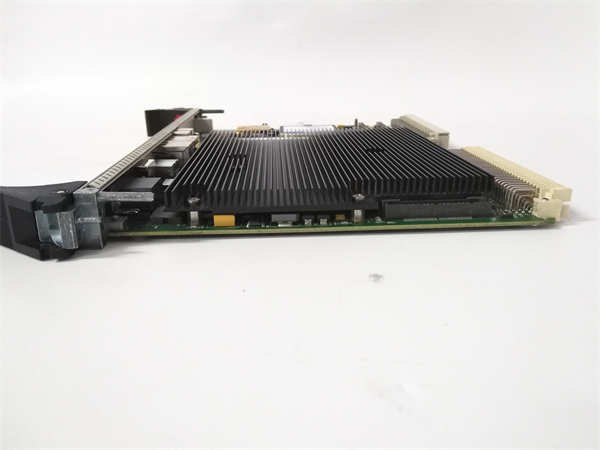
- Product Model: VME-7807RC-410001350-93007807-410001
- Manufacturer: GE Fanuc (now part of Emerson following acquisition of GE Intelligent Platforms)
- System Family: Series 90-70 PLC platform
- Bus Type: VME64 backplane interface
- Processor: Motorola 68030-based, 25 MHz
- User Memory: 1 MB RAM (battery-backed), expandable via memory modules
- Logic Scan Time: Approx. 0.4 ms per 1K Boolean instructions
- Battery Type: BR2330 or equivalent lithium backup battery (user-replaceable)
- Power Consumption: ~5 V @ 2.5 A from backplane
- Firmware Revision: Embedded in ROM; version must match project configuration
- Physical Dimensions: Standard 6U VME form factor (233.35 mm x 160 mm)
System Role and Downtime Impact
The VME-7807RC is the master CPU in a GE Series 90-70 rack. It executes all ladder logic, handles I/O scanning, manages communication with HMIs and other controllers, and maintains real-time system integrity. In continuous-process industries—such as power generation, water treatment, or chemical plants—failure of this module halts all controlled equipment connected to its rack. Because the 90-70 architecture typically uses a single CPU per chassis, there is no redundancy unless explicitly engineered. A sudden fault can lead to unplanned plant shutdowns lasting hours or days, depending on spare availability and technician response time.
Reliability Analysis and Common Failure Modes
Despite its robust industrial design, the VME-7807RC exhibits predictable aging patterns after 15–25 years of service. The most frequent failure mode is loss of user program due to battery depletion. The onboard lithium battery (typically rated for 5–7 years) powers the SRAM when main power is off. Once exhausted, the logic program vanishes on next power cycle—a catastrophic but preventable event.
Other common issues include:
- Corrosion or oxidation on VME edge connectors, causing intermittent communication or boot failures.
- Capacitor degradation on the power regulation circuitry, leading to voltage instability and random resets.
- Firmware corruption from power surges or EMI in unshielded environments, especially in older installations lacking modern surge protection.
Preventive maintenance should focus on:
- Replacing the backup battery every 4 years, regardless of voltage reading.
- Cleaning VME connector fingers with contact enhancer during scheduled outages.
- Verifying firmware checksums annually using Proficy Machine Edition or Logicmaster 90 software.
- Maintaining at least one tested, configured spare unit in climate-controlled storage.
GE VME-7807RC-410001350-93007807-410001 K GE
Lifecycle Status and Migration Strategy
GE officially discontinued the Series 90-70 product line over a decade ago. Technical support, repair services, and firmware updates are no longer available from the manufacturer. Continued operation carries significant risk: spare units are scarce, prices have risen 300–500% since 2015, and counterfeit or misrepresented parts increasingly appear in the secondary market.
As an interim measure, facilities may:
- Source tested, pre-configured spares from reputable industrial surplus vendors with full functional verification.
- Partner with specialized third-party firms offering board-level repair and reconditioning.
- Implement strict change control to avoid unnecessary rack reboots that stress aging components.
For long-term sustainability, migration is strongly advised. Emerson (current owner of the technology) recommends transitioning to the PACSystems RX3i or RX7i platform. This path preserves much of the existing I/O wiring through adapter modules (e.g., IC695ACC600), though logic conversion is required. Alternatively, some users opt for open-platform replacements like Beckhoff CX51xx or Siemens S7-1500 with custom gateway solutions—but these demand full re-engineering.
A structured migration study—covering I/O count, scan time requirements, communication protocols, and safety functions—is essential before committing to any path. Delaying action only increases exposure to operational and financial risk.