 Tel:
Tel:  Email:
  WhatsApp:
 Description
Product Introduction
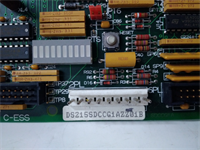
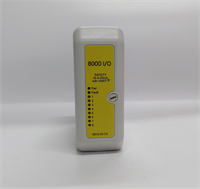
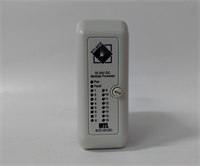
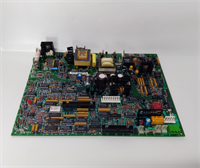
When a substation upgrade requires monitoring extra breaker statuses without replacing the main UR relay, the GE UR8LM slides into the empty slot to solve the I/O shortage immediately. This module acts as a dedicated expansion card, giving engineers eight additional isolated logic inputs that integrate directly into the UR platform’s protection scheme.We’ve seen projects stall because the main relay lacked just three extra points; adding this unit avoids a costly hardware swap. It handles voltage ranges from 24 VDC up to 250 VAC, which covers almost any auxiliary contact scenario you’ll encounter in the field (though always verify your specific control voltage before ordering). Honestly, the hot-swap capability is a lifesaver during energized maintenance windows where shutting down the whole bay isn’t an option.
 Key Technical Specifications
 Key Technical Specifications
| Parameter | Value |
|---|---|
| Compatible Platform | GE Multilin UR Series (e.g., UR 7SR, 8SR, 9SR) |
| Input Channels | 8 Independent Discrete Inputs |
| Operating Voltage | 24 – 250 VDC / 24 – 240 VAC (Auto-ranging) |
| Input Impedance | Approx. 15 kΩ (varies by voltage level) |
| Logic Threshold | Programmable via UR Software (FlexLogic™) |
| Isolation Voltage | 2.5 kV RMS (Channel to Bus) |
| Response Time | < 2 ms (typical at nominal voltage) |
| Hot-Swap Support | Yes (Live insertion/removal supported) |
| Operating Temp | -40°C to +60°C (-40°F to +140°F) |
| Humidity Range | 5% to 95% Non-condensing |
| Certification | UL Listed, CSA Certified, CE Marked |
| Slot Requirement | One standard UR I/O slot |
Application Scenarios & Pain Points
 Application Scenarios & Pain Points
The alarm went off at 3 a.m. because a critical breaker status wasn’t being read—the main relay ran out of physical input points. Instead of waiting weeks for a new chassis, the team installed a GE UR8LM into the spare slot, wired the missing contacts, and updated the FlexLogic™ equations remotely. The station was back to full visibility within two hours.
- Hydroelectric Plants: Need to monitor gate positions and turbine speeds across distant panels? If your main relay is maxed out, why risk running long cables to a remote PLC when you can expand locally?
- Transmission Substations: In a 230 kV switchyard, losing visibility on a disconnect switch position can delay isolation procedures by hours. This module adds those missing points instantly.
- Industrial Power Systems: Steel mills with harmonic-rich environments often see false trips; the high isolation rating (2.5 kV) here keeps noise from corrupting your logic inputs.
- Water Treatment Facilities: When pump status feedback exceeds the base controller count, adding an expansion card costs a fraction of upgrading the entire SCADA interface.
- Pharmaceutical Backup Power: Generators require precise monitoring of multiple transfer switch states; missing one signal could prevent automatic start-up during a grid failure.
Field Case Note:
A regional utility in the Pacific Northwest faced a compliance audit requiring additional event recording for their recloser controls. Their existing UR relays had zero free inputs. Rather than scheduling a costly outage to replace the relays, they deployed eight GE UR8LM units across three substations during a planned maintenance window. The engineer on site noted that the “plug-and-play” recognition by the UR software cut the commissioning time in half. No reboots were needed for the main CPU—just a quick logic download.❗ Installation Pitfalls Guide
- Firmware Version Mismatch: The main UR relay firmware must be recent enough to recognize the UR8LM hardware ID. We once saw a v4.x relay fail to detect a newer batch of modules until we upgraded the main CPU firmware. Check your version first.
- DIP Switch / Configuration Errors: These modules don’t have DIP switches, but the slot configuration in the software must match the physical installation. If you plug it into Slot 3 but configure it for Slot 4, nothing happens. Take a photo of the slot layout before pulling anything.
- Wiring Polarity on DC Circuits: While the input is auto-ranging, some legacy wiring schemes rely on specific polarity for ground fault detection loops. Reversing leads might work for simple status but break complex ground-fault logic. Cross-check your schematic against the terminal diagram.
- Power Supply Undersizing: Adding an I/O module increases the backplane current draw. If your UR power supply is already running at 90% load, adding this card could cause brownouts during inrush. Calculate the total rack load with a 20% headroom buffer.
- ESD Damage: Don’t touch the connector pins. We had a technician skip the wrist strap on a dry winter day, and the module failed the self-test immediately upon insertion. Ground yourself before handling the card edges.