 Tel:
Tel:  Email:
  WhatsApp:
 Description
Key Technical Specifications (For Spare Parts Verification)
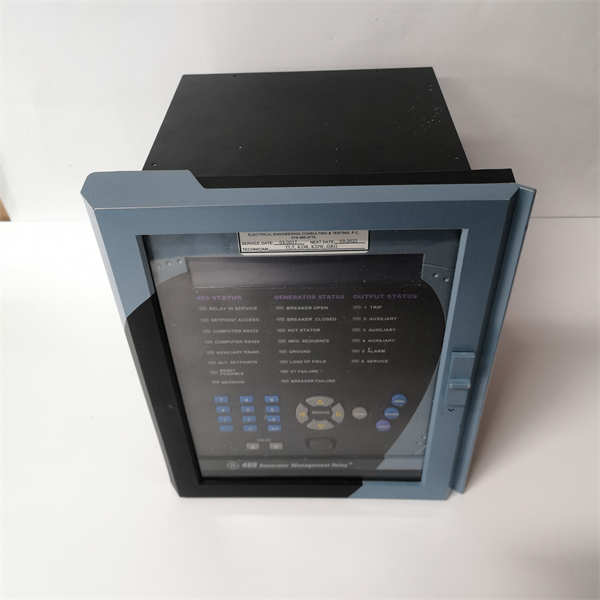
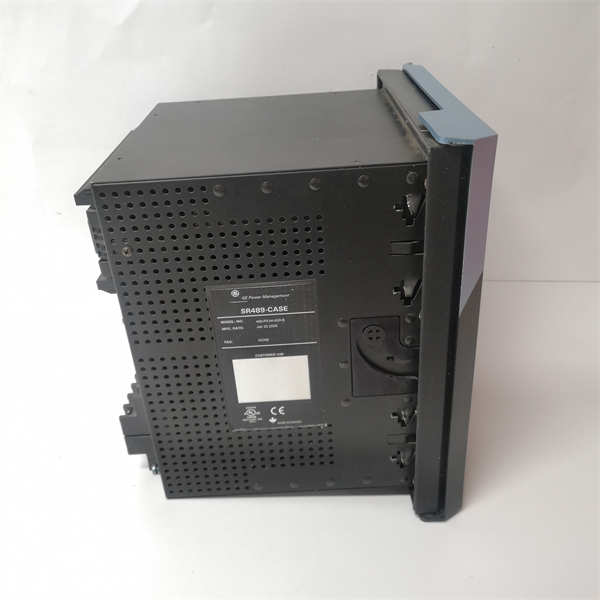
- Product Model: SR489-P5-HI-A20-E
- Manufacturer: GE Multilin (General Electric)
- Product Family: SR489 Motor Management Relay
- Protection Functions: Thermal overload, phase imbalance, ground fault, stall, jam, undercurrent, phase loss, RTD monitoring
- Current Inputs: 5 A nominal (P5), with HI (High Impedance) input option for external CTs
- Auxiliary Power: 125 VDC (A20 suffix)
- Communication: Built-in Ethernet (E suffix) supporting Modbus TCP and DNP3
- I/O: 8 digital inputs, 4 digital outputs (form C relays), 2 analog outputs
- RTD Support: Up to 6 RTD inputs for direct winding temperature monitoring
- Mounting: Flush or panel mount, 7″ x 7″ footprint
- Firmware Dependency: Configuration tied to specific firmware revision; backup .CFG file required for replacement
System Role and Downtime Impact
The GE SR489-P5-HI-A20-E is a high-end motor protection relay deployed in critical applications such as pumps, compressors, and fans in power generation, water treatment, and industrial facilities. It not only provides comprehensive electrical fault detection but also monitors thermal conditions via RTDs embedded in motor windings. In many installations, it serves as the sole protective layer between the motor and the control system. If the relay fails—due to power supply issues, firmware corruption, or hardware fault—the motor may continue to run without protection, risking insulation breakdown, bearing seizure, or fire. In automated plants, loss of Ethernet communication can also trigger SCADA alarms or force manual operation, reducing operational efficiency and increasing safety exposure.
Reliability Analysis and Common Failure Modes
Despite its robust design, the SR489 series exhibits known aging vulnerabilities. The most common failure mode is power supply capacitor degradation, particularly in units exposed to elevated ambient temperatures or continuous operation beyond 15 years. This leads to intermittent resets, display anomalies, or complete power loss. A second frequent issue is Ethernet port failure due to ESD events or ground potential differences in poorly bonded installations, resulting in loss of remote monitoring. Additionally, RTD input circuitry can drift over time, causing false overtemperature trips.
Design weaknesses include reliance on internal lithium battery (in older firmware versions) for configuration retention and sensitivity to voltage transients on the 125 VDC auxiliary supply. For maintenance teams, key actions include:
- Verifying auxiliary power quality (ripple < 5%) during routine checks
- Backing up relay configuration files (.CFG) and firmware images annually
- Inspecting RTD wiring for continuity and shield integrity
- Replacing units showing unexplained resets or communication dropouts before catastrophic failure
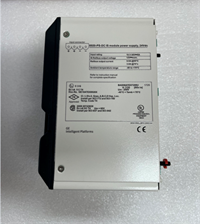
GE SR489-P5-HI-A20-E
Lifecycle Status and Migration Strategy
GE Multilin officially discontinued the SR489 product line, with support now managed under Emerson’s portfolio. No new SR489-P5-HI-A20-E units are manufactured. Continued use carries risk of extended downtime due to parts scarcity and lack of factory repair services.
As a temporary measure, operators may source and test surplus relays, ensuring configuration compatibility and performing full functional validation. However, the recommended long-term path is migration to the Emerson Multilin™ 740 Motor Management Relay, which offers full backward compatibility in form, fit, and function, supports the same CT/RTD wiring, and includes enhanced cybersecurity (IEC 62443), native IEC 61850, and improved diagnostics. Migration typically requires only hardware swap and configuration import—no rewiring or logic changes. For facilities standardizing on other platforms, alternatives like the SEL-710-5 or Siemens 7SK80 may be considered, though these require re-engineering of protection settings and I/O integration.