 Tel:
Tel:  Email:
  WhatsApp:
 Description
Key Technical Specifications (For Spare Parts Verification)
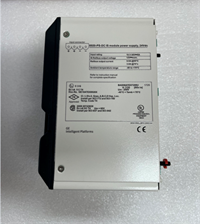
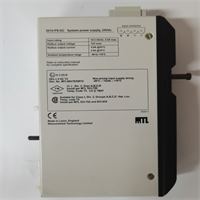
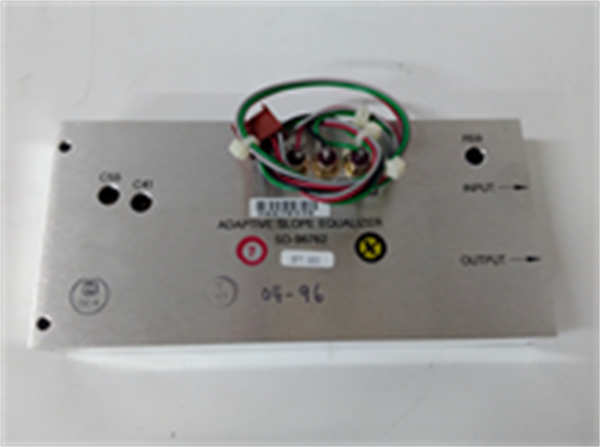
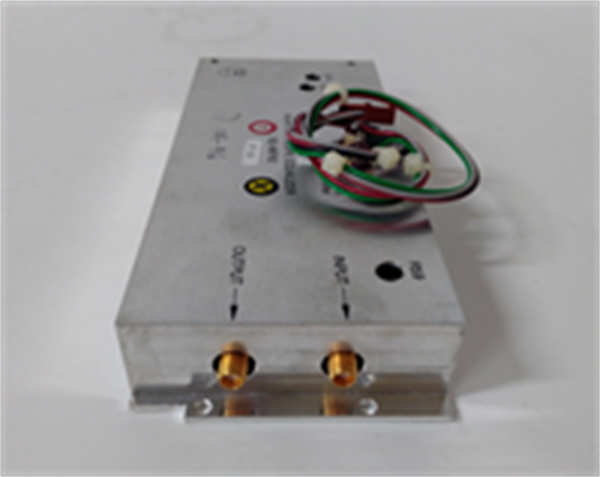
- Product Model: SD-98762
- Manufacturer: GE (General Electric / GE Fanuc)
- System Family: Standalone signal conditioning module (often used in GE 90-30, VersaMax, or third-party DCS/PLC panels)
- Input Signal: 4–20 mA (loop-powered, two-wire)
- Output Channels: Dual isolated 4–20 mA outputs
- Power Supply: Loop-powered (no external power required)
- Isolation Voltage: 1500 V RMS between input, outputs, and ground
- Accuracy: ±0.1% of span
- Operating Temperature: 0°C to +60°C
- Mounting: DIN rail (standard 35 mm)
- Enclosure Rating: IP20 (for indoor panel mounting)
System Role and Impact of Failure
The GE SD-98762 is a passive, loop-powered signal splitter commonly installed in marshalling cabinets of legacy industrial control systems. Its primary role is to take a single 4–20 mA signal from a field transmitter—such as a pressure or temperature sensor—and distribute it to two independent destinations, for example, a DCS analog input card and a standalone safety recorder or local display. While not a controller itself, its failure silently degrades system integrity: one output may drop to zero or drift, causing mismatched readings between systems. In safety-critical applications (e.g., boiler drum level monitoring), this can lead to incorrect operator decisions, failed regulatory audits, or even trip events if redundant logic detects signal divergence. Because it requires no external power, faults are often discovered only during routine calibration or after an incident.
Reliability Analysis and Common Failure Modes
The SD-98762 was widely deployed due to its simplicity and loop-powered design, eliminating the need for auxiliary power supplies. However, decades of service have exposed inherent vulnerabilities:
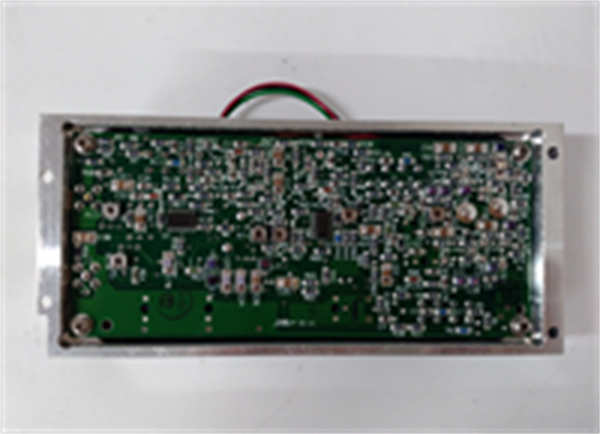
- Internal transformer/isolation barrier degradation: The magnetic components used for galvanic isolation can suffer insulation breakdown over time, especially in high-humidity or high-temperature environments, leading to ground loops or complete signal loss.
- Precision resistor drift: Onboard shunt and gain-setting resistors age under continuous current flow, causing output offset or span errors that fall outside the ±0.1% spec.
- Terminal block corrosion: Screw terminals are prone to oxidation, increasing contact resistance and inducing signal noise or intermittent drops.
- Susceptibility to surge events: Despite basic protection, the module lacks robust transient suppression; nearby lightning strikes or VFD switching can damage internal electronics without visible signs.
Preventive maintenance should include annual loop calibration checks comparing both outputs against a reference standard, visual inspection for discoloration or burnt smell, and torque verification of terminal screws. Keeping a known-good spare on hand is essential, as field replacement is typically the only recovery option.
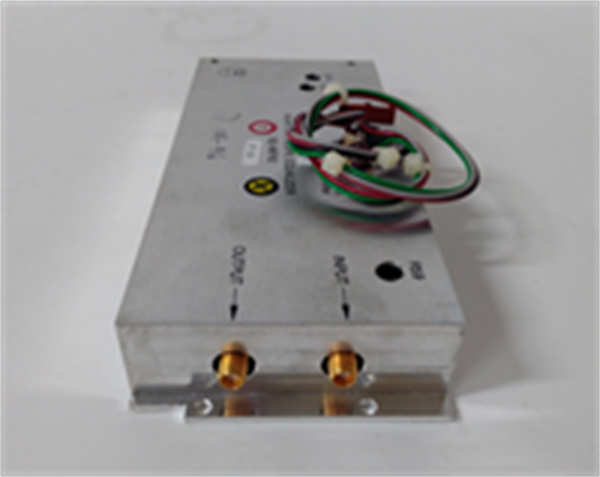
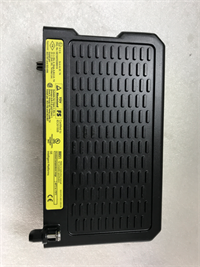
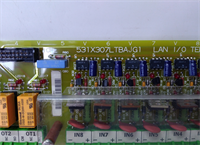
GE SD-98762
Lifecycle Status and Migration Strategy
GE has long since discontinued the SD-98762, with no direct active replacement in its current product portfolio (now under Emerson). No new units are manufactured, and existing inventory consists solely of New Old Stock (NOS) or refurbished units—supply is unpredictable and pricing can spike unexpectedly.
As a short-term measure, facilities may:
- Source tested units from specialized obsolescence management suppliers
- Implement board-level repair (though custom components limit success)
- Temporarily rewire to bypass the splitter (sacrificing redundancy)
For a sustainable solution, migration to modern, externally powered signal conditioners is recommended. Industry-standard alternatives include:
- Phoenix Contact MINI MCR-2-I-I (dual-channel isolator, 24 V DC powered, ±0.05% accuracy)
- Weidmüller ACT20M-2AI-2AO (programmable signal duplicator with HART pass-through)
- Moore Industries SST series (high-reliability splitters with enhanced surge protection)
These replacements require adding a 24 V DC power supply but offer superior accuracy, diagnostics, and long-term availability. For plants planning broader DCS upgrades (e.g., from GE 90-30 to Emerson PACSystems), integrating signal splitting into smart I/O or using software-based duplication in the controller can eliminate the need for discrete hardware altogether—turning an obsolescence challenge into an opportunity for system modernization.