 Tel:
Tel:  Email:
  WhatsApp:
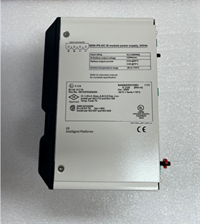
 Description
Key Technical Specifications (For Spare Part Verification)
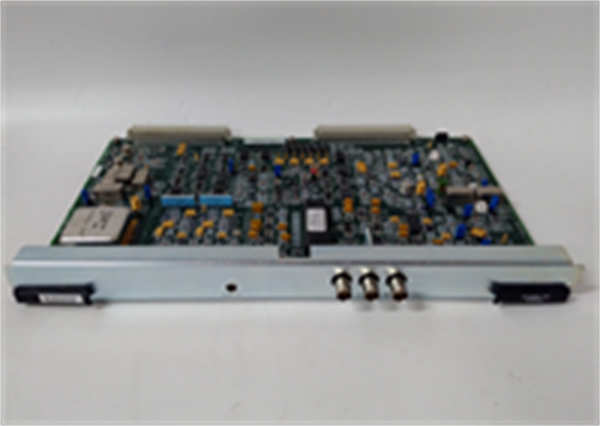
- Product Model: SD-108542
- Manufacturer: GE Fanuc Intelligent Platforms
- System Platform: GE VersaMax (IC200 series) PLC system
- Number of I/O Slots: 8
- Compatible Modules: IC200xxx series digital, analog, specialty I/O modules
- Power Input: +24 VDC via removable terminal block (supports redundant power with optional jumper)
- Communication Interface: Connects to CPU (e.g., IC200CPU001/CPU005) via serial I/O bus cable (typically RJ45 or MDI)
- Mounting: Standard 35 mm DIN rail (TS-35)
- Dimensions: 220 mm (W) × 90 mm (H) × 70 mm (D)
- Operating Temperature: 0°C to +60°C
- Backplane Current Capacity: Up to 4 A per slot at 5 V (total shared supply from power supply module)
System Role and Impact of Failure
The GE SD-108542 is the foundational carrier module in VersaMax I/O expansion racks. It provides both the physical mounting platform and the electrical backplane that distributes power and data between the CPU and up to eight I/O modules (such as digital inputs, analog outputs, or specialty cards). In distributed control architectures—common in water/wastewater, packaging, and small manufacturing lines—multiple SD-108542 bases may be deployed remotely from the main controller. If this base unit fails due to internal trace damage, power regulation fault, or connector degradation, all I/O modules installed on it become electrically isolated. This typically results in a complete loss of field signals (valves not actuating, sensors unreadable), which often triggers safety interlocks or forces a production line halt. Because the base itself contains no active intelligence, faults can be difficult to diagnose without swapping hardware, making it a silent but critical point of failure.
Reliability Analysis and Common Failure Modes
While the SD-108542 is a passive backplane with no microprocessor, it is not immune to failure. The most frequent issues stem from power-related stress: repeated thermal cycling can fatigue solder joints around the power terminals or internal copper traces, especially if the system operates near its current limit. Corrosion on the DIN rail contact points or oxidation of the I/O module edge connectors may cause intermittent voltage drops, leading to module resets or communication errors. Additionally, mechanical wear from frequent module insertion/removal can loosen the guide slots or damage the backplane fingers, resulting in poor contact. Although the unit has no battery or firmware, its reliability is heavily dependent on clean, stable 24VDC power and proper grounding. As a preventive measure, maintenance teams should inspect terminal tightness annually, clean module edge connectors with contact cleaner during outages, and avoid overloading the base beyond recommended I/O current totals. Keeping a tested spare base on hand is essential, as replacement lead times can exceed several months.
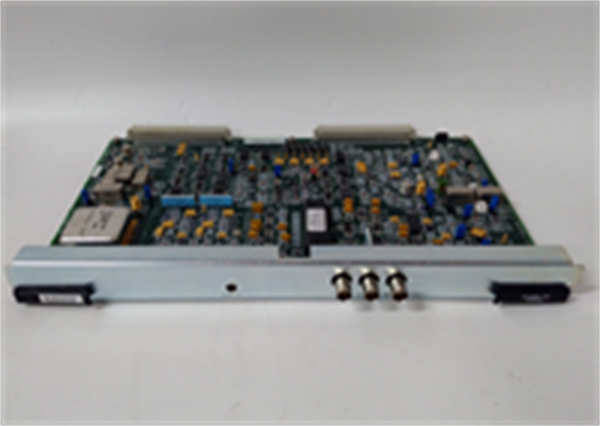
GE SD-108542
Lifecycle Status and Migration Strategy
GE officially discontinued the entire VersaMax (IC200) product line, including the SD-108542, as part of its portfolio rationalization under Emerson ownership. No new units are being manufactured, and remaining factory inventory has been depleted. Continuing to operate systems with this hardware carries tangible risk: spare parts are increasingly sourced from brokers or decommissioned equipment, with no guarantee of prior usage or testing. In the short term, facilities can extend system life by implementing rigorous preventive maintenance, stocking verified spares, and using redundant I/O configurations where possible. For long-term sustainability, the recommended migration path is to ABB AC500-S PLC platform or Emerson PACSystems RX3i, both of which offer comparable I/O density and programming environments. Alternatively, some integrators support direct replacement with IC200-compatible third-party I/O bases, though compatibility must be validated. A full migration typically involves re-racking I/O, updating wiring terminations, and reprogramming logic—but eliminates exposure to obsolescence risk and unlocks modern features like Ethernet/IP, web diagnostics, and enhanced cybersecurity. Engineering assessments can help define a cost-effective, phased transition plan that aligns with capital budgets and operational windows.