

 Tel:
 Email:
 WhatsApp:
Description
Key Technical Specifications
| Parameter | Specification |
|---|---|
| Manufacturer | GE / Reuter-Stokes |
| Product Type | Flame Detector / Flame Scanner |
| Common Cross Reference | 362A1052P404 (verify per site BOM) |
| Detection Principle | Ultraviolet (UV) flame detection using SiC photodiode |
| Typical Response Time | <100 ms (some references cite ~25 ms for SiC variants) |
| Power Supply | 24 VDC or 115/230 VAC, depending on configuration |
| Output Signal | Analog current/voltage or relay contact, depending on amplifier/interface |
| Environmental Rating | IP54 / IP65 depending on housing and installation |
| Operating Temperature | Approximately -20 °C to +70 °C |
| Storage Temperature | Approximately -40 °C to +85 °C |
| Installation | Flange or threaded mounting; cooling air or purge options may apply |
| Self-Diagnostics | Optical channel health and window fouling monitoring typical for FlameTracker family |
Product Introduction
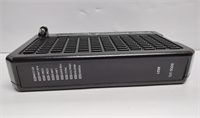
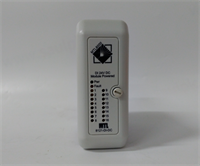
Flame detectors do not fail during a clean startup. They fail when a boiler is cycling, the sight glass is dirty, and the combustion management system cannot decide whether the burner is lit or just glowing hot refractory. The RS-FS-9001 is the device that sits between “maybe” and “trip.”This is a Reuter-Stokes flame detector, typically used on gas turbines, utility boilers, and industrial burners. It uses a silicon carbide UV sensor to detect flame radiation while rejecting background infrared glow from hot surfaces. That SiC element is the important part. Older sulfide-cell scanners drift. The RS-FS-9001 is built to stay stable in steam-heavy, low-NOx, or high-background environments. I have seen plants keep these in service for years because the flame signal stays clean, but the real risk today is not the sensor itself. It is buying the wrong amplifier, cable, or cross-reference.
Quality SOP & Tech Pitfalls
The Lab Report (SOP)
- Visual inspection: check housing, lens/window, connector, label, and mechanical damage.
- Cross-reference check: confirm RS-FS-9001 matches the site part number such as 362A1052P404.
- Insulation check: verify no shorted pins or damaged connector shell with a Fluke 115 or equivalent.
- Power-up test: apply correct supply voltage per the installed amplifier/interface.
- Output verification: confirm flame signal response and fault indication on the test setup.
- Lens/window inspection: check for cracking, coating damage, or contamination.
- Mechanical check: verify flange/thread fit and sealing surface condition.
- Anti-static packaging: seal with ESD-safe bag, desiccant, and test record.
The Engineer’s Warning (Pitfalls)
- Do not treat RS-FS-9001 as a generic “GE Multilin relay.” It is a Reuter-Stokes flame detector. Mixing it into a Multilin I/O list is a procurement mistake.
- The amplifier matters. The scanner may be correct, but if the flame amplifier, cable, or connector does not match, the flame signal will be unstable.
- Window fouling kills more flame detectors than actual sensor failure. If the replacement reads low but the old one was also marginal, check the sight tube and cooling air first.
- I once saw a plant replace an RS-FS-9001 during a boiler outage. The new detector was genuine, but the cooling air line had been capped during previous maintenance. The scanner worked for two days, then drifted low every time load increased. The fix was not another detector. It was restoring purge air.
Installation & Configuration Guide
1. Pre-Installation ⚠️
- Confirm the exact model, cross-reference, and amplifier type.
- Photograph existing mounting, wiring, cooling/purge connections, and sight tube condition.
- Verify combustion management system status and obtain hot-work or burner entry permits.
- Ensure the burner is secured, isolated, and cooled before removal.
2. Removal
- Disconnect power to the flame amplifier if required by site procedure.
- Label all wiring and signal cables.
- Disconnect cooling air or purge lines carefully.
- Remove the detector from the flange or threaded fitting without damaging the sight tube.
3. Installation
- Inspect the sight tube and refractory opening.
- Clean or replace the sight glass if fouled.
- Install the RS-FS-9001 with the correct gasket or seal.
- Reconnect cooling air or purge lines to the specified flow.
- Reconnect wiring exactly as labeled. Polarity and shielding matter.
4. Power-On & Testing
- Apply power and verify amplifier initialization.
- Check flame signal during a controlled light-off.
- Compare flame signal level against the approved baseline.
- Verify trip logic, flame failure response, and alarm indications.
- Do not return the burner to automatic service until flame stability has been confirmed across the expected operating range.

Compatible Replacement Models
| Compatibility | Model | Notes |
|---|---|---|
| ✅ Drop-in Replacement | RS-FS-9001 (same configuration) | Match amplifier, cable, and mounting. |
| ⚠️ Cross-Reference Match | RS-FS-9001 / 362A1052P404 | Confirm exact cross with current GE Vernova documentation. |
| ⚠️ System Alternative | Reuter-Stokes FlameTracker scanner per OEM recommendation | May require amplifier or calibration adjustment. |
| ❌ Not a Direct Replacement | GE Multilin I/O module | Wrong product family; not a flame detector. |
| ❌ Not a Direct Replacement | Generic UV/IR flame detector | Combustion safety systems require validated compatibility. |
Frequently Asked Questions (FAQ)
Q1: Is RS-FS-9001 a PLC or relay module?
No. It is a flame detector for combustion systems. It connects to a flame amplifier or combustion controller, not directly as a PLC CPU.Q2: What does 362A1052P404 mean?
It is a commonly referenced GE material number associated with RS-FS-9001 flame detectors. Always confirm the cross-reference against the installed unit and current OEM documentation.Q3: Can I replace it without shutting down the burner?
No. Flame detectors are part of the combustion safety system. Replacement should follow lockout, burner isolation, and site safety procedures.Q4: Why does the new detector read lower than the old one?
It could be a dirty sight tube, incorrect mounting depth, wrong amplifier setting, or a marginal cooling air supply. Do not assume the detector is defective until the optical path is verified.Q5: Does it work on oil, gas, and coal burners?
RS-FS-9001 is typically used for UV-visible flame detection in gas and oil-fired applications. Coal or complex multi-fuel burners may require a different FlameTracker scanner. Confirm with the OEM.Q6: Is this still available new?
Availability depends on the current GE Vernova product status. Some Reuter-Stokes flame detection items have transitioned or been superseded. Verify before purchasing.Q7: Can I use any flame amplifier with it?
No. The amplifier, cable, and detector must be compatible. Mismatched components can cause false flame loss or failure to detect flame loss.