 Tel:
Tel:  Email:
  WhatsApp:
 Description
Key Technical Specifications (For Spare Part Verification)
- Product Model: R-TPD3
- Manufacturer: General Electric (GE Power)
- Product Type: Redundant Trip Distribution module for turbine protection systems
- System Compatibility: Primarily used in GE Mark V and early Mark VI turbine control systems
- Input Signals: Multiple 125 V DC trip request signals from protective relays, logic solvers, or manual trip buttons
- Output Configuration: Drives dual-channel trip solenoids (typically 125 V DC) with vote logic (e.g., 2-out-of-3)
- Redundancy Architecture: Triple-modular redundant (TMR) compatible; provides isolated, fail-safe output paths
- Mounting: DIN-rail or chassis-mounted within turbine protection panel
- Electrical Rating: 125 V DC nominal; relay contacts rated for inductive solenoid loads
- Diagnostic Features: Limited LED indication for power and channel status; no digital communication
- Certification: Designed to meet IEEE C37.90 and ANSI/ISA S84.01 (SIL2/3 capable in system context)
System Role and Downtime Impact
The R-TPD3 resides in the final output stage of GE’s turbine emergency trip chain. It receives trip commands from the Mark V/VI protection logic and validates them across redundant channels before energizing the hydraulic dump valves that shut off steam or fuel. This module is not a logic solver—it is the last electromechanical barrier between control logic and physical shutdown. If the R-TPD3 fails in a “safe” state (no output), the turbine cannot be tripped remotely, requiring manual intervention—a dangerous delay during an overspeed event. If it fails “dangerously” (stuck closed), it could cause an unintended trip, leading to a costly forced outage. In either case, regulatory compliance (NERC, FERC) may be compromised, and insurance liabilities increase.
Reliability Analysis and Common Failure Modes
The R-TPD3’s primary vulnerability lies in its electromechanical relays and aging power components. Over time, relay contacts degrade due to arcing when switching inductive solenoid loads, leading to increased contact resistance or welding. The internal DC/DC converters and filtering capacitors are prone to electrolytic drying, especially in high-temperature turbine enclosures, causing intermittent resets or loss of channel synchronization. A critical design limitation is the lack of self-diagnostics—there is no way to detect a degraded but still operational channel until a trip is commanded. Additionally, units exposed to voltage transients (from nearby breaker operations or lightning) often suffer silent damage to input opto-isolators, creating latent failures.
Preventive maintenance should include annual functional testing under simulated trip conditions, measuring contact resistance of output relays, and verifying channel independence. Inspect for discoloration on PCBs near power components and ensure proper ventilation in the protection cabinet. Most importantly, any spare R-TPD3 must undergo full bench testing before being placed into service—many “new old stock” units have been stored improperly and exhibit capacitor leakage or relay stiction.
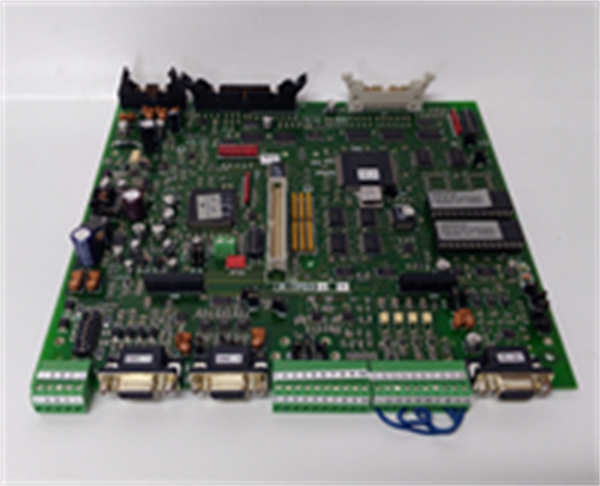
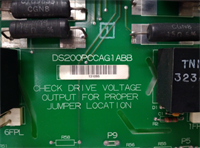
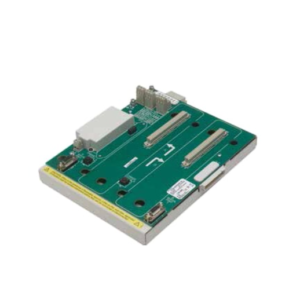
GE R-TPD3
Lifecycle Status and Migration Strategy
GE has discontinued the R-TPD3 as part of its transition to the fully digital Mark VIe platform, which replaces discrete trip modules with integrated, SIL3-certified I/O modules (e.g., IC698RM001 redundancy module + IS215TRPDH1B). No factory support, recalibration, or repair services are offered. Continued use carries significant operational and compliance risk, particularly as original spares dwindle.
As a short-term mitigation, maintain at least two fully tested spares and implement surge suppression on all DC control lines. For long-term sustainability, GE’s official migration path is a full upgrade to Mark VIe, which consolidates protection, control, and HMI into a single architecture with built-in diagnostics and cybersecurity. While costly, this eliminates reliance on obsolete discrete hardware. Alternatively, some operators have implemented third-party “drop-in” replacements using programmable safety relays (e.g., PILZ PNOZmulti or Rockwell GuardLogix), but these require extensive re-validation to meet turbine code requirements and may not satisfy OEM warranty conditions. Engineering review and utility regulator consultation are strongly recommended before pursuing non-OEM alternatives.