 Tel:
Tel:  Email:
  WhatsApp:
 Description
Technical Specifications (For Spare Part Verification)
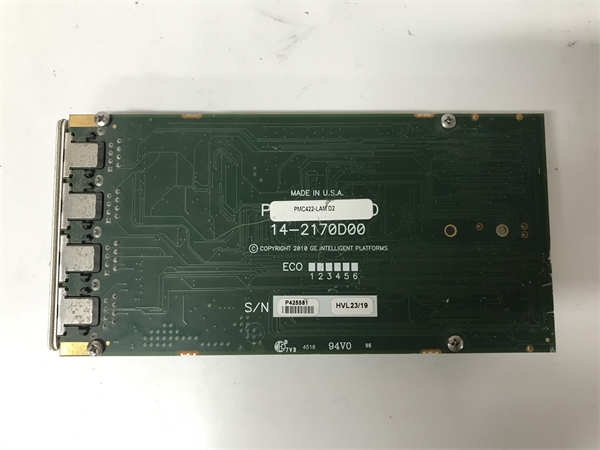
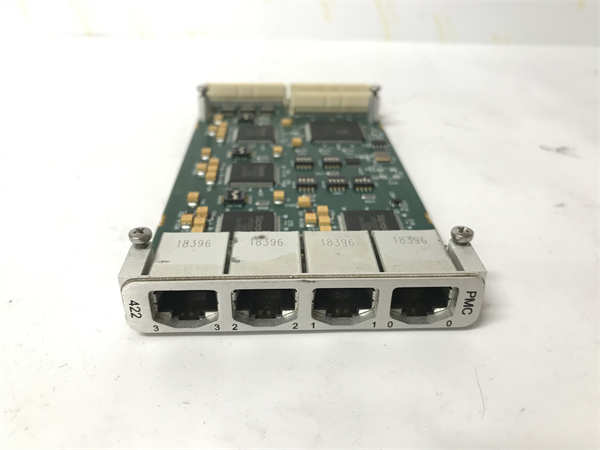
- Product Model: PMC422-LAM D2
- Manufacturer: GE Multilin (General Electric)
- Product Family: Multilin PMC420 series
- Protection Functions: Thermal overload, phase imbalance, ground fault, stall, jam, under/over voltage, under/over frequency
- Current Inputs: 3-phase CT inputs (1A or 5A selectable), built-in ground fault sensing (residual or core-balance)
- Control Outputs: 3 programmable Form-C relays (for trip, alarm, auxiliary functions)
- Communication Interface: D2 protocol over RS-485 (proprietary GE legacy protocol)
- Display: Integrated LCD with keypad for local configuration and monitoring
- Power Supply: 24–240 VAC/VDC (universal input)
- Standards Compliance: UL 508, CSA C22.2 No. 14, IEC 60255
- Firmware Dependency: Configuration requires Multilin Handheld or older versions of Enervista Launchpad (v4.x or earlier)
System Role and Downtime Impact
The GE PMC422-LAM D2 is typically installed in motor control centers (MCCs) or switchgear lineups as the primary protective device for critical process motors—such as pumps, compressors, or fans in oil & gas, water treatment, or power generation facilities. It not only provides essential thermal and electrical fault protection but also enables remote monitoring via its D2 serial interface, often integrated into legacy SCADA or DCS systems through protocol converters. Because it combines protection, metering, and control in a single unit, its failure can lead to either nuisance tripping (causing unplanned shutdowns) or, more critically, loss of protection—risking motor burnout during abnormal conditions. In systems where D2 is the sole communication path, relay replacement without compatible firmware or configuration tools can result in extended commissioning delays.
Reliability Analysis and Common Failure Modes
The PMC422-LAM D2 is generally robust due to its industrial design, but units deployed for 15+ years exhibit predictable aging issues. The most common failure mode involves degradation of the internal switching power supply, particularly electrolytic capacitors that lose capacitance over time, leading to intermittent resets, display flickering, or complete power dropout under load. The LCD display itself is another weak point—backlight failure or segment degradation can render local diagnostics unusable, though protection logic often remains functional.
A notable design limitation is reliance on the proprietary D2 protocol, which lacks modern cybersecurity features and is incompatible with native Modbus TCP or IEC 61850 environments without external gateways. Additionally, the relay’s non-volatile memory (used to store settings and event logs) can become corrupted after repeated power cycles or electrostatic discharge events, requiring full reconfiguration.
Recommended preventive actions include:
- Performing annual functional tests using a relay test set to verify trip curves and output contact operation
- Inspecting terminal blocks for signs of overheating or oxidation, especially on CT and power connections
- Backing up relay settings via Enervista software while compatible tools are still available
- Replacing units showing display anomalies or unexplained resets before catastrophic failure occurs
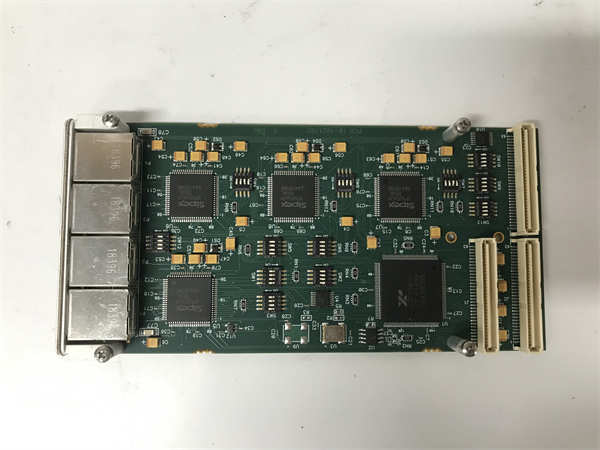
GE PMC422-LAM D2
Lifecycle Status and Migration Strategy
GE Multilin officially discontinued the PMC420 series, including the PMC422-LAM D2, with no direct drop-in replacement offered. Emerson now supports the Multilin 469 or 869 as functional successors, but these use Modbus RTU/TCP or IEC 61850—not D2—and require mechanical adapter kits, new CT wiring, and full re-engineering of protection settings and SCADA integration.
Continued use of the PMC422-LAM D2 carries significant risk: spare units are scarce, calibration certificates are often unavailable, and technical support from the OEM is limited to “as-is” documentation. Some users attempt board-level repairs, but component obsolescence (e.g., custom ASICs) makes this unreliable.
Short-term mitigation includes:
- Securing tested, calibrated spares with known firmware versions
- Implementing redundant monitoring (e.g., external meters or PLC-based backup logic)
- Using D2-to-Modbus protocol converters to bridge to modern HMI systems
For long-term sustainability, a planned migration to the Multilin 469 (for basic motor protection) or 869 (for advanced applications) is advised. This transition requires:
- Updating one-line diagrams and protection coordination studies
- Reconfiguring SCADA data maps
- Retraining maintenance staff on new interfaces
While capital-intensive, this eliminates obsolescence exposure and aligns the asset with current cybersecurity and interoperability standards.