 Tel:
Tel:  Email:
  WhatsApp:
 Description
Technical Specifications (For Spare Parts Verification)
- Full Part Number: PCH1026-2024489791
- Manufacturer: GE Power / GE Digital (Speedtronic product line)
- System Compatibility: Mark VIe distributed control system (used on 6B, 7E, 9E, 9F, and other heavy-duty turbines)
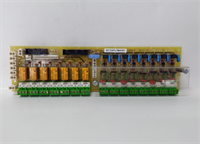
- Module Type: Passive terminal base / wiring interface (not a smart module—relies on mating I/O pack for intelligence)
- Connector Types:
- Field side: Screw terminals or spring-clamp terminals for sensor/actuator wiring
- Controller side: High-density connector (e.g., 50–100 pin) that mates with plug-in I/O modules (e.g., VSVO servo output, TCQA analog input)
- Signal Support: Depends on paired I/O module—can handle analog (4–20 mA, ±10 V), digital I/O, LVDT/R, or pulse inputs
- Mounting: DIN rail or panel-mounted within I/O chassis (typically in remote I/O racks near turbine skid)
- Environmental Rating: Designed for industrial power plant environments (NEMA 1 or IP20 enclosure)
- Key Identifier: The suffix “2024489791” is a GE-specific configuration or serial code—exact match required for mechanical and electrical compatibility
 System Role and Downtime Impact
 System Role and Downtime Impact
The PCH1026-2024489791 serves as the critical wiring backbone in Mark VIe I/O subsystems. While it contains no active electronics itself, it routes all field signals to and from intelligent I/O modules that communicate with the main controller over Ethernet (I/ONET). In applications such as fuel valve positioning, vibration monitoring, or exhaust temperature sensing, a faulty or miswired terminal board can cause:
- False alarms or nuisance trips
- Loss of actuator control (e.g., stuck fuel valves)
- Inaccurate sensor readings leading to derating or shutdown
Because Mark VIe systems are typically deployed in continuous-operation power plants, any unplanned outage due to I/O interface failure can result in lost revenue (100k+/hour) and potential grid reliability penalties. Furthermore, commissioning a replacement requires precise wiring verification—errors can damage expensive I/O packs or field devices.
Reliability Analysis and Common Failure Modes
As a passive component, the PCH1026-2024489791 rarely fails catastrophically, but several degradation mechanisms pose operational risks:
- Terminal Corrosion or Loosening: Vibration from nearby machinery can loosen screw terminals over time, increasing contact resistance and causing intermittent signals—especially problematic for LVDT or thermocouple circuits.
- Connector Wear: Repeated insertion/removal of I/O modules can wear the backplane pins, leading to poor contact, communication timeouts, or “I/O Not Responding” faults in the ToolboxST software.
- Contamination: Dust, oil mist, or moisture ingress can create leakage paths between high-impedance analog terminals, distorting measurements.
- Mechanical Damage: Bent pins, cracked PCB, or broken mounting clips during maintenance can render the board unusable.
Preventive Actions:
- Perform annual torque checks on all terminals
- Use anti-vibration washers or thread-locker on screws in high-vibration zones
- Keep I/O cabinets sealed and climate-controlled
- Maintain detailed wiring diagrams for rapid recovery
Lifecycle Status and Migration Strategy
GE has not formally announced end-of-life for all Mark VIe hardware, but custom-configured terminal boards like PCH1026-2024489791 are increasingly difficult to source. GE’s focus has shifted to Mark VIeS (with enhanced cybersecurity) and Opus platform integration. New orders may be rejected or require engineering change requests.
Short-Term Mitigation:
- Secure 1–2 verified spares from trusted suppliers (validate pinout and revision)
- Document all field wiring with photos and loop diagrams
- Consider using generic terminal blocks as emergency bypass (only for non-critical loops and with engineering approval)
Long-Term Strategy:
- Plan migration to Mark VIeS during major outages—this allows reuse of much existing field wiring while upgrading controllers and I/O packs
- Leverage GE’s Control System Modernization Programs, which offer trade-in credits and pre-engineered upgrade paths
- Evaluate third-party I/O solutions (e.g., from Moore Industries or Turck) for non-safety loops, though integration with Mark VIe requires careful validation