 Tel:
Tel:  Email:
  WhatsApp:
 Description
Technical Specifications (For Spare Part Verification)
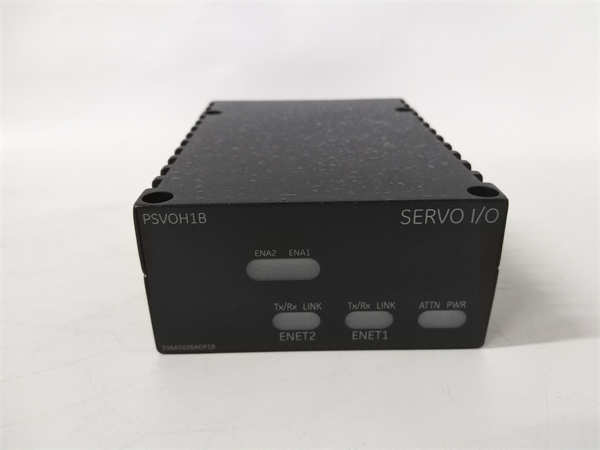
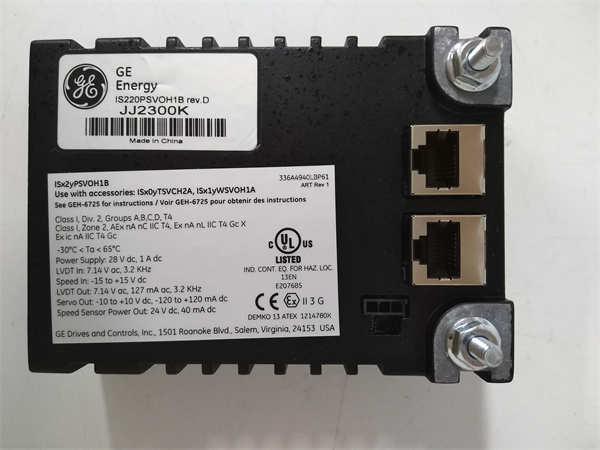
- Product Model: IS220PSVOH1B
- Manufacturer: GE Power / Emerson
- System Platform: Mark VIe Integrated Control System (ICS)
- Function: 4-channel analog servo output (±10 VDC) with LVDT feedback input per channel
- Connector Type: Two 50-pin DIN 41612 backplane connectors (P1/P2)
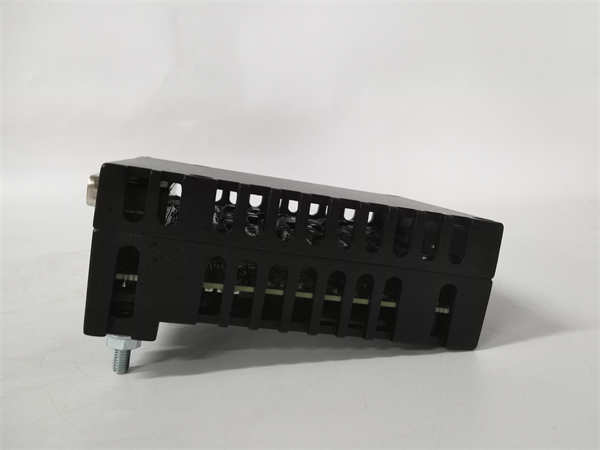
- Terminal Block: Screw-type field wiring terminals for servo coil and LVDT signals
- Diagnostic LEDs: Per-channel status (OK, Fault, Loop Power)
- Redundancy Support: Compatible with TMR (Triple Modular Redundant) configurations
- Firmware Dependency: Requires specific I/O pack version in Mark VIe controller (typically < v05.00)
- Physical Dimensions: 240 mm H x 30 mm W x 220 mm D (standard Mark VIe I/O card size)
System Role and Downtime Impact
The IS220PSVOH1B is a critical I/O interface module in GE’s Mark VIe turbine control architecture. It resides in the I/O core (typically in the core for TMR systems) and directly drives electro-hydraulic servo valves that regulate fuel flow, steam admission, or compressor bleed valves. A failure of this board—whether due to power surge, component drift, or connector degradation—will typically trigger a “Servo Fault” alarm and force a turbine trip via the protective logic solver. In combined-cycle or peaking plants, this results in immediate loss of generation, potential grid penalties, and startup delays ranging from 4 to 24 hours depending on operational protocols. Given its role in safety-critical actuation loops, it is classified as a single-point failure risk in non-redundant configurations.
Reliability Analysis and Common Failure Modes
Despite its robust industrial design, the IS220PSVOH1B exhibits predictable aging patterns common to early-generation Mark VIe I/O modules. The most frequent failure mode is output drift or saturation in one or more channels, often caused by degradation of precision operational amplifiers or reference voltage sources over time. This manifests as unstable valve positioning, hunting, or inability to reach full stroke during calibration.
A key design vulnerability lies in its field-wiring terminal block: repeated thermal cycling and vibration can loosen screw terminals, increasing contact resistance and causing intermittent LVDT feedback errors. Additionally, the board relies on backplane-supplied ±15 VDC and +24 VDC, making it sensitive to power quality issues—voltage sags or transients on the I/O core power rails can corrupt analog outputs without triggering a hard fault.
For preventive maintenance, site engineers should:
- Perform quarterly loop calibration checks using ToolboxST to verify linearity and hysteresis across full stroke
- Inspect and torque all field terminals to 0.5 N·m during outages
- Monitor “Servo Current” and “LVDT Bias” trends in Historian for early signs of drift
- Ensure cabinet cooling maintains ambient temperature below 50°C to slow capacitor aging
GE IS220PSVOH1B
Lifecycle Status and Migration Strategy
GE officially obsoleted the IS220PSVOH1B in favor of the IS220PSVOH2B (and later H3B), which features improved noise immunity, enhanced diagnostics, and compatibility with newer Mark VIe firmware. However, upgrading is not plug-and-play: the H2B/H3B require updated I/O configuration files (.iocfg) and may necessitate re-tuning of servo loop gains due to revised output impedance.
Continued use of the IS220PSVOH1B carries significant risk: no new units are manufactured, factory repair services are discontinued, and counterfeit or improperly refurbished boards have appeared in the gray market. As a temporary measure, facilities may:
- Secure 1–2 verified surplus units from trusted vendors for emergency sparing
- Implement board-level testing upon receipt (including full-loop functional validation)
- Isolate the module from non-essential loads to reduce thermal stress
For long-term sustainability, the recommended path is migration to IS220PSVOH3B as part of a broader Mark VIe I/O modernization. This typically involves:
- Updating the controller firmware to v06.02 or higher
- Re-importing I/O tags into WorkstationST with new device descriptors
- Re-calibrating all associated servo valves due to minor gain differences
While this requires outage planning and engineering effort, it restores OEM supportability and aligns the system with current cybersecurity and diagnostic standards.