 Tel:
Tel:  Email:
  WhatsApp:
 Description
Technical Specifications (For Spare Part Verification)
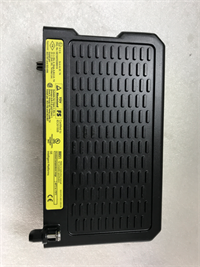
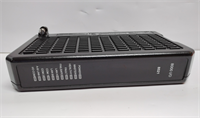
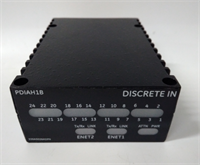
- Product Model: IS220PDIAH1B
- Manufacturer: General Electric (GE Power / GE Vernova)
- Product Family: Mark VIe I/O Packs (IS220 Series)
- Module Type: 16-channel discrete input module
- Input Type: Sinking (current-sinking configuration; field devices source 24 V DC to module)
- Input Voltage Range: 18–32 V DC nominal
- Input Filtering: Hardware debounce and noise filtering (typically ~5 ms)
- Isolation: Channel-to-channel and field-to-system isolation via optocouplers
- Communication Interface: Dual-redundant Fault Tolerant Ethernet (FTE) to Mark VIe controllers
- Diagnostic Features: Per-channel LED indicators, online self-test, fault logging via ToolboxST software
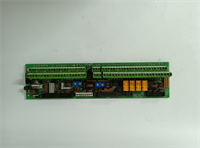
- Power Supply: Powered via backplane from associated terminal board (e.g., IS220PTBAH1B)
- Operating Temperature: 0°C to +60°C ambient
- Compliance: CE, UL, IEC 61508 (SIL2 capable when used in certified safety architecture)
System Role and Downtime Impact
The GE IS220PDIAH1B is a key input interface in Mark VIe distributed control systems deployed on gas turbines, steam turbines, and compressors in power generation and industrial facilities. It reads binary status signals from critical field instrumentation—such as lube oil pressure low switches, bearing vibration high alarms, or valve position confirmations. These signals feed directly into startup permissives, trip logic, and operational interlocks. While the Mark VIe architecture supports controller redundancy, many I/O modules like this one are installed without redundant counterparts due to original design choices. A failure can cause false “open” or “closed” indications, leading to failed startups, nuisance trips, or—more seriously—inability to detect a real fault condition (e.g., missed low oil pressure). In a combined-cycle plant, such an event can result in multi-day outages with significant revenue loss and grid reliability implications.
Reliability Analysis and Common Failure Modes
Despite its robust industrial design, the IS220PDIAH1B is susceptible to several age-related and environmental failure mechanisms. The most common issue is optocoupler degradation, particularly in units exposed to sustained high temperatures inside poorly ventilated I/O enclosures—leading to reduced current transfer ratio and eventual signal dropout. Input channels may also fail due to voltage transients or ground loops if field wiring lacks proper shielding or surge protection. Corrosion at the spring-cage terminal blocks (common in coastal or high-humidity sites) increases contact resistance, causing intermittent or missing signals that mimic field device faults. Additionally, repeated thermal cycling can induce solder fatigue on high-density PCBs, especially around connector pins. As part of preventive maintenance, operators should inspect field wiring for proper grounding and shielding, verify terminal torque annually, and use GE’s ToolboxST software to monitor channel error counters and diagnostic logs. Units held in storage should be powered periodically to maintain component health and firmware integrity.
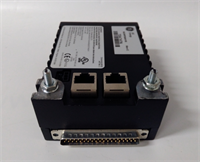
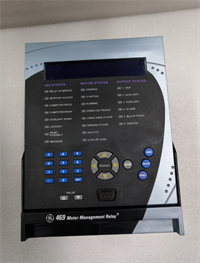
GE IS220PDIAH1B
Lifecycle Status and Migration Strategy
GE has discontinued the IS220PDIAH1B in favor of updated I/O packs with enhanced diagnostics, higher density, and better integration with modern Mark VIe firmware (e.g., IS220PDIAH2B with improved filtering or HART support). While GE continues to provide limited legacy support, new production has ceased, and future software updates may reduce compatibility. Short-term risk mitigation includes strategic procurement of tested spares, implementation of external signal conditioning to protect inputs, and thorough documentation of terminal wiring for rapid replacement. For long-term sustainability, GE recommends migrating to current-generation I/O hardware during planned outages—a process that requires re-engineering terminal block assignments, updating I/O tag databases in the control application, and revalidating all safety-critical logic. Third-party I/O emulators are not recommended for safety-related functions due to lack of certification and deterministic behavior. A formal lifecycle review with GE or an authorized system integrator is advised to evaluate migration feasibility, cost, and operational impact before committing to a path forward.