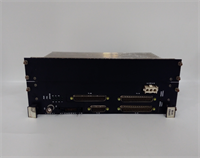
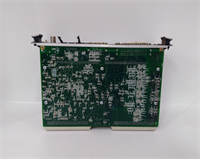
 Tel:
Tel:  Email:
  WhatsApp:
 Description
| Processor Architecture | Intel Pentium III or equivalent embedded VME |
| Memory (DRAM) | 8 MB (Error Checking and Correction enabled) |
| Memory (Flash) | 4 MB non-volatile storage |
| Communication Ports | 3x Ethernet (10/100 Base-T), 1x Serial RS-232 |
| Bus Interface | VME64 32-bit data path |
| Operating Temperature | -30 °C to +65 °C (-22 °F to +149 °F) |
| Power Consumption | 18 W typical @ 5 VDC |
| Watchdog Timer | Hardware-enforced system reset capability |
| LED Indicators | Run, Fault, Comm, Power status per channel |
| Mounting Form Factor | 6U VME Eurocard |
| Firmware Load | EEPROM bootable with fallback image |
| Certification | CE, UL Listed for Industrial Control Equipment |
Application Scenarios & Pain Points
The alarm panel lit up at 3:15 AM when the primary controller failed to handshake with the HMI during a load rejection test. Without a hot-swappable reserve like the IS215VPROH1BD ready in the cabinet, that plant would have faced a 48-hour blackout while waiting for a field engineer to fly in with a spare. This module prevents that downtime by maintaining synchronous state with its partner processor, ready to take over control within one scan cycle if the primary faults.
- Petrochemical Compression: When ambient temperatures spike above 50 °C in desert refineries, older processors often throttle; does your current CPU handle the thermal load without derating?
- Power Generation Peakers: Facilities cycling daily need reliable boot times under 15 seconds to meet grid dispatch requirements, a spec this unit consistently meets.
- Steam Turbine Retrofit: Replacing obsolete Mark V racks requires pin-compatible VME processors to avoid rewiring the entire junction box.
- Offshore Platforms: Space-constrained topside modules demand high-density processing without external cooling fans, relying on conduction cooling through the rack chassis.
Case Study: A mid-sized cogeneration plant in the Gulf Coast experienced intermittent communication drops between their HMI and the main control rack. The on-call instrumentation technician swapped the suspected faulty CPU with a verified GE IS215VPROH1BD from our stock. Within 20 minutes, the redundancy sync lights turned solid green, and the packet loss dropped to zero. The plant manager noted that having the correct ‘D’ revision on-site saved an estimated $180,000 in lost production revenue during peak summer demand.
Quality Control Process (SOP Transparency)
We don’t just box these up; we verify them like we’re installing them in our own rack.
- Inbound Inspection: We trace every GE IS215VPROH1BD back to the OEM packing list or customs documentation. Our team checks the holographic GE label and runs the serial number against known counterfeit databases. Visually, we inspect the VME connector pins for bending and the PCB for any yellowing or heat stress marks near the voltage regulators. All original manuals and factory certs are audited.
- Live Functional Test: We slot the module into a verified Mark VIe VME rack (model RACK-3). Power-on self-check confirms all LEDs sequence correctly. We force a comms handshake over EtherNet/IP and Modbus TCP to ensure port integrity. A full I/O signal sweep validates data throughput. Finally, we run a continuous load test for 24 hours, logging temperature rise to ensure it stays within the 65 °C limit. You get the full test report.
- Electrical Parameters: Using a Fluke 1587 insulation tester, we verify insulation resistance >10 MΩ at 500 V. Ground continuity is checked from the chassis mount to the card ground pin. Hi-pot testing is skipped unless specifically requested for refurbished units to avoid stressing new components unnecessarily.
- Firmware Verification: We read the EEPROM to confirm the exact firmware version (e.g., V04.02). If multiple versions exist, we label the box with the specific build number. DIP switches and jumper settings are photographed and compared against the standard factory default configuration sheet.
- Final QC & Packaging: A senior engineer signs off on the test log. The card goes into an anti-static bag, sealed with humidity control packs. We wrap it in heavy-duty bubble wrap and place it in a double-wall carton with a “QC Passed” label dated today.
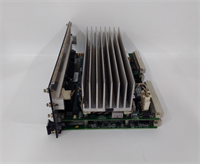
GE IS215VPROH1BD
Installation Pitfalls Guide (“Lessons Learned” Voice)
I’ve seen good engineers burn expensive hardware because they skipped the basics. Here is what actually goes wrong in the field.
- Firmware version mismatch: Swapping a module without checking the firmware can cause a comms timeout or a total system halt. The new card might try to talk a protocol the old I/O packs don’t understand. Always record the existing firmware version before pulling the old card.
- DIP switch / jumper misconfiguration: Factory defaults rarely match your site’s specific node address or termination settings. I once saw a plant down for six hours because someone forgot to move one jumper. Take a photo of the old card’s switch settings. Then take another one.
- Terminal / wiring incompatibility: While the VME form factor is standard, pin definitions for auxiliary ports can change between revisions. Cross-check the wiring diagram for the ‘D’ revision specifically, especially if migrating from older Mark V systems.
- Power supply undersizing: Newer processor revisions sometimes draw slightly more current during boot spikes. Calculate your full rack load with a 20% headroom margin; don’t assume the old PSU specs still apply.
- ESD damage: Skip the wrist strap once, and a $2,000 module can smoke on first power-up. Humidity makes this worse. Ground yourself properly before touching the VME connectors.