 Tel:
Tel:  Email:
  WhatsApp:
 Description
Key Technical Specifications
| Parameter | Specification |
|---|---|
| Processor Architecture | Intel Pentium III or Celeron M (Embedded) |
| Clock Speed | 1.0 GHz to 1.4 GHz (Dependent on revision) |
| Memory (RAM) | 512 MB ECC SDRAM (Non-expandable) |
| Flash Storage | 256 MB CompactFlash or onboard NAND |
| Bus Interface | VME64x (32-bit data, 32-bit address) |
| Operating Temp | -40°C to +70°C (Conduction cooled via front plate) |
| Watchdog Timer | Hardware & Software configurable (Critical for Trip logic) |
| I/O Handshake | Reflective Memory (VMIVME-7697 compatible) |
| Power Consumption | ~12W typical @ 5V DC rail |
| Form Factor | 6U VME Eurocard |
Product Introduction
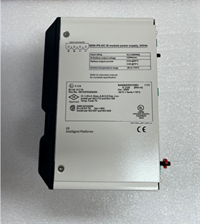
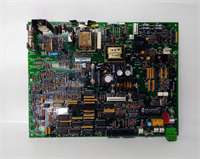
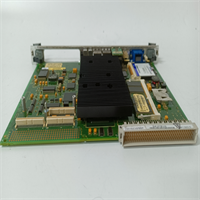
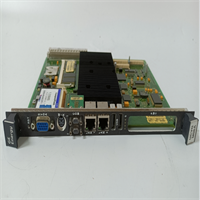
You don’t buy a UCV module because you want to; you buy it because the turbine tripped on a “Controller Comm Fail” alarm at 3 AM, and this board is the brain that stopped the bleed. The IS215UCVGM06A (and its GH1A sibling) isn’t some office server; it’s a hardened VME single-board computer designed to sit inside a Mark VIe simplex or TMR rack, taking vibration and heat that would kill a standard PC in ten minutes. It handles the heavy lifting of control logic execution while talking to I/O packs over the VME backplane.Engineers stick with this specific revision because it bridges the gap between legacy Speedtronic systems and modern Ethernet requirements without needing a full chassis rip-out. It boasts a guaranteed 100,000-hour MTBF in controlled cabinets, but let’s be real—that number only holds if your cabinet cooling fans haven’t failed. This specific revision is notoriously picky about grounding straps on the front bezel; skip that ground, and you’ll see random parity errors that will drive you insane during commissioning.
Quality SOP & Tech Pitfalls (The Reality Check)
The Lab Report (SOP)
Before we ship a unit, we don’t just plug it in and hope.
- Visual Inspection: We check for burnt traces around the voltage regulators and verify the conformal coating isn’t flaking off (a common issue in humid offshore platforms).
- Live Rack Test: The board goes into a dedicated VME test chassis with a known-good backplane. We run a memory stress test for 4 hours minimum.
- Electrical Verification: Using a Fluke 87V, we verify the 5V DC rail draw is within ±5% tolerance under load.
- Firmware Logging: We dump the BIOS and bootloader versions. If it doesn’t match the Mark VIe toolset requirement (usually Toolset >= 3.0), we flag it immediately.
- Sealing: Once passed, it gets bagged with desiccant and static shielding. No exceptions.
The Engineer’s Warning (Pitfalls)
Here is where people get burned. The biggest mistake I see? Ignoring the DIP switch settings. The old board you pulled has a specific configuration for slot ID and termination resistors. If you slide a fresh IS215UCVGM06A in with factory-default switches, the backplane arbitration fails, and the whole rack locks up. I once watched a plant lose 48 hours of production because a tech assumed “new means default is fine.” It never is. Also, watch out for firmware mismatches; if the bootloader is too old for your current ToolboxST software version, the download will timeout every single time.
Installation & Configuration Guide
Time estimate: 30 minutes for a skilled tech.
- Pre-Installation ⚠️
- Shut down the control power to the specific rack. Wait 30 seconds for capacitors to discharge.
- CRITICAL: Take a high-resolution photo of the DIP switches and jumper positions on the failed card before you pull it. Do not rely on memory.
- Removal
- Label every cable connected to the front panel (Ethernet, Serial, USB).
- Release the ejector levers gently. If they stick, do not force them; check for screw obstruction.
- Slide the module out halfway and disconnect the ribbon cable for the front panel I/O if applicable.
- Installation
- COPY THE SWITCHES: Set the DIP switches and jumpers on the new IS215UCVGM06A to match your photo exactly. This prevents 90% of startup failures.
- Align the guide rails and push firmly until the ejector levers engage the chassis edge.
- Reconnect the front panel ribbon cable ensuring pin 1 alignment.
- Power-On & Testing
- Restore power. Watch the LEDs. You should see a rapid flash sequence followed by a steady “Run” light.
- Connect your laptop to the service port. Verify communication via ToolboxST.
- Download the logic project if the checksum doesn’t match. Monitor CPU load for 10 minutes to ensure no thermal throttling.
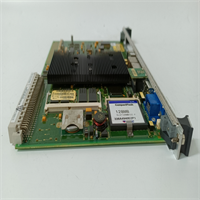
IS215UCVGM06A IS215UCVGH1A VMIVME-7666-111000 GE
Compatible Replacement Models
| Compatibility Tier | Model Number | Notes |
|---|---|---|
| ✅ Drop-in Replacement | IS215UCVGM06A | Exact hardware match. Ensure firmware revision matches existing rack peers. |
| ✅ Drop-in Replacement | IS215UCVGH1A | Later revision. Often pin-compatible but may require a BIOS update before installation. |
| ⚠️ Software Compatible | VMIVME-7666-111000 | Same silicon, different branding (GE vs. VMIC). Requires verifying MAC address burn-in for network licensing. |
| ❌ Hardware Mod Required | IS215UCVBM01A | Different form factor or voltage requirement. Do not attempt without chassis modification. |
Frequently Asked Questions (FAQ)
Q: Can I hot-swap this module while the turbine is running?
A: Absolutely not. This is not a redundant IO pack. Pulling the UCV (Universal Control VME) kills the logic solver for that entire controller. If you are in a Simplex system, the unit trips. If you are in TMR, you lose redundancy and risk a false trip if another leg falters. Always schedule a controlled shutdown.Q: My new board powers up but won’t communicate with ToolboxST. What gives?
A: 9 times out of 10, it’s the IP address or the subnet mask. These boards often ship with a default static IP that doesn’t match your plant’s scheme. You need to use the serial console port (not Ethernet) to break into the bootloader and reassign the IP before the Ethernet port will talk to your laptop.Q: Is the IS215UCVGH1A better than the GM06A?
A: “Better” is marketing speak. The GH1A is a newer revision with updated component sourcing because the original parts went end-of-life. Functionally, they do the same job. However, mixing them in a TMR (Triple Modular Redundant) setup requires OEM validation. Don’t mix revisions in a voting loop unless Emerson says it’s okay.Q: How long does the battery backup last if I pull the card?
A: There isn’t a user-serviceable battery for logic retention on these VME CPUs in the traditional sense. The logic resides in the download station or non-volatile flash. However, the real-time clock (RTC) might drift. If you pull the card for more than a few weeks, expect to reset the system time upon reinstallation.Q: Why is the lead time so long for “New” units?
A: Because GE stopped making these years ago. Anyone selling “New” is selling old stock found in a warehouse somewhere. If someone promises you brand new factory production next week, they are lying. Realistically, you are looking at refurbished units with a 90-day warranty or hunting for surplus. Plan your spares strategy accordingly.