 Tel:
Tel:  Email:
  WhatsApp:
 Description
Technical Specifications (For Spare Parts Verification)
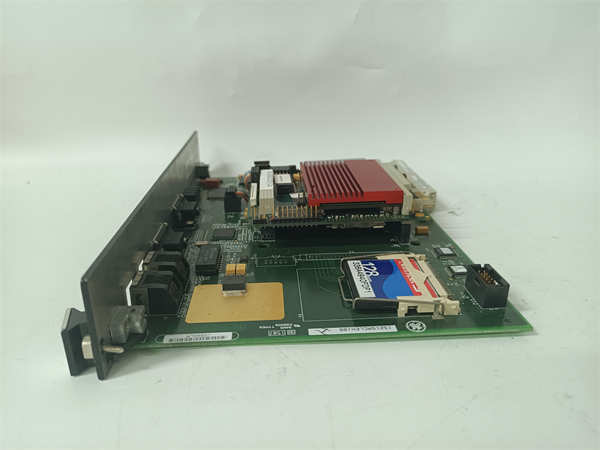
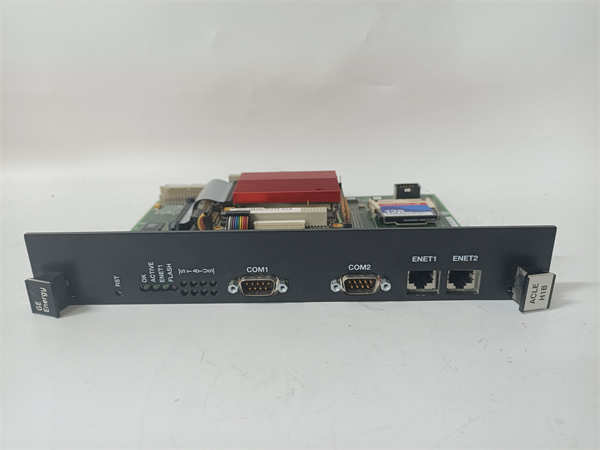
- Product Model: IS215ACLEH1BB
- Manufacturer: GE Vernova
- System Family: Mark VIe Turbine Control System
- Function: Ethernet LAN handler for I/O Pack communication
- Physical Interface: 10/100 Mbps RJ-45 Ethernet port with Link and Activity LEDs
- Protocol Support: Proprietary GE UDP-based I/O protocol; compatible with ToolboxST engineering software
- Mounting: Slot-mounted in IS215-series I/O Pack chassis (e.g., IS215PCCAx)
- Power: Derived from backplane; no external power connection
- Firmware Dependency: Must align with the firmware version of the associated controller (e.g., PCAA, VPRO) and I/O Pack baseplate
- Diagnostic Indicators: Onboard LEDs for power, link status, and activity; faults reported via system-level alarms in ToolboxST
- Revision Notes: H1BB is a later revision than H1AB; not all revisions are backward-compatible due to hardware and firmware changes
GE IS215ACLEH1BB
System Role and Downtime Impact
The IS215ACLEH1BB is integral to the distributed architecture of the Mark VIe system. Each I/O Pack—located near field devices such as speed probes, pressure transmitters, or valve positioners—relies on this module to transmit digitized process data to the central control processors. In non-redundant I/O configurations, a failed ACLEH module severs this link, causing the controller to lose visibility of all signals in that pack. The system typically responds by generating a “COMM FAULT” alarm and may force affected control loops into hold or safe state. If the lost signals include critical parameters like turbine speed or bearing vibration, the protection logic may initiate a controlled shutdown or emergency trip. Recovery requires physical replacement and system resynchronization, leading to operational delays in power generation, oil & gas compression, or industrial drive applications.
Reliability Analysis and Common Failure Modes
Although designed for harsh industrial environments, the IS215ACLEH1BB is now aging, with many units in service beyond 10–12 years. Component degradation is the dominant reliability concern.
Common failure modes include:
- Ethernet PHY or magnetics failure: Results in intermittent or complete loss of network link, often triggered by thermal cycling or voltage transients.
- Backplane connector wear: Repeated insertion/removal or vibration leads to poor contact, causing communication errors or module misidentification.
- Internal capacitor aging: Causes unstable power rails, leading to erratic behavior or boot failures after power cycles.
- Firmware corruption: Can occur during interrupted firmware updates or unexpected power loss, rendering the module unresponsive.
Design limitations include a single Ethernet port (no redundancy at the module level) and minimal onboard diagnostics for network health. Heat buildup in densely packed I/O cabinets further accelerates component stress.
Preventive maintenance recommendations:
- Monitor Ethernet link stability during routine system diagnostics.
- Ensure adequate cabinet ventilation to maintain ambient temperature below 45°C at module level.
- Verify secure mechanical seating in the I/O Pack slot to prevent disconnection from vibration.
- Maintain current system backups to facilitate rapid recovery if replacement is required.
GE IS215ACLEH1BB
Lifecycle Status and Migration Strategy
GE has discontinued the IS215ACLEH1BB as part of its broader transition away from legacy Mark VIe hardware. Official repair services are no longer available, and technical support is restricted to existing documentation. Continued reliance on this module poses significant operational risk due to dwindling spare availability and rising costs.
Short-term risk mitigation includes:
- Procuring and functionally testing matched spares with confirmed firmware compatibility.
- Avoiding unnecessary firmware updates or hot-swaps on aging units.
- Implementing network traffic monitoring to detect early signs of communication degradation.
For long-term sustainability, GE’s strategic path is migration to the Mark VIe Evolution or Advanced Controls Platform (ACP), which feature dual Gigabit Ethernet, cyber-hardened designs, and support for modern protocols (e.g., OPC UA). Such a transition involves:
- Re-evaluation of I/O wiring and termination practices
- Reconfiguration of control applications and HMI integration
- Potential recertification of safety instrumented functions