 Tel:
Tel:  Email:
  WhatsApp:
 Description
Technical Specifications (For Spare Parts Verification)
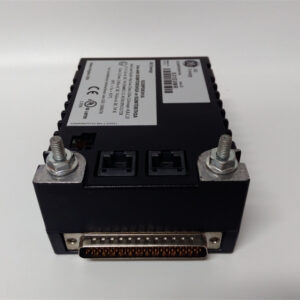
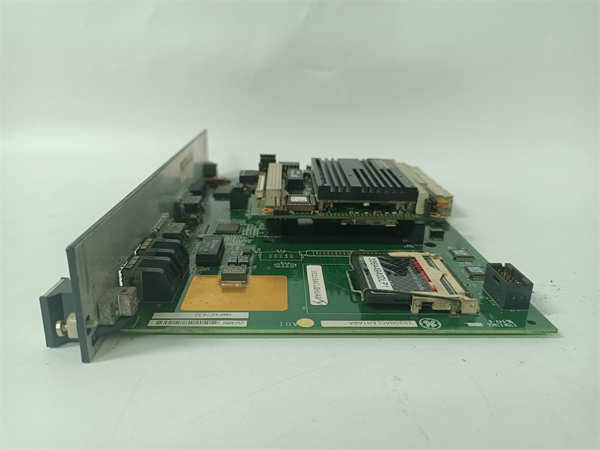
- Product Model: IS215ACLEH1AB / IS200ACLEH1ABA
- Manufacturer: GE Vernova
- System Family: Mark VI (IS200 series) and Mark VIe (IS215 series) Turbine Control Systems
- Function: Ethernet LAN handler for I/O Pack communication
- Physical Interface: 10/100 Mbps RJ-45 Ethernet port with status LEDs
- Protocol Support: Proprietary GE UDP-based I/O protocol over Ethernet; supports ToolboxST connectivity
- Mounting: Slot-mounted in Mark VI I/O Pack (IS200) or Mark VIe I/O Pack (IS215) chassis
- Power: Supplied via backplane; no external power required
- Firmware Dependency: Must match the firmware version of the associated controller (e.g., VCMI, VPRO, or PCAA)
- Diagnostic Indicators: Link/Activity LEDs; fault indicated via system-level alarms in ToolboxST
- Revision Sensitivity: IS215ACLEH1AB is not a direct drop-in replacement for IS200ACLEH1ABA—different pinouts, firmware, and chassis compatibility
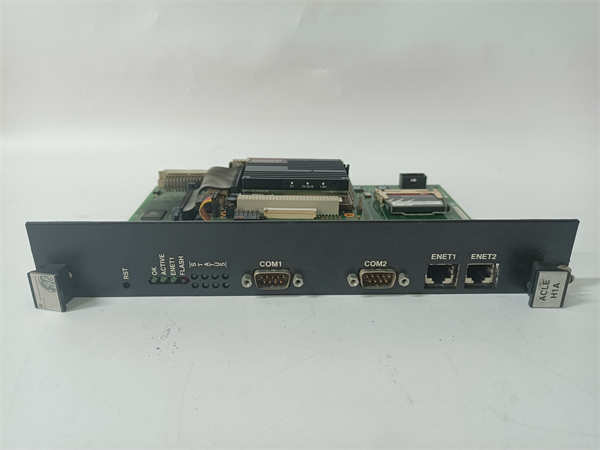
IS215ACLEH1AB IS200ACLEH1ABA
System Role and Downtime Impact
The ACLEH module serves as the communication backbone between the I/O Packs (which house field signal modules) and the central control processors in GE’s turbine control architecture. In a Mark VIe system, for example, multiple I/O Packs distributed near field devices rely on the IS215ACLEH1AB to relay analog and digital data to the main controllers (e.g., PCAA). If this module fails—due to network overload, electrical surge, or component aging—the I/O Pack becomes isolated. The system typically responds by triggering a “COMM FAULT” alarm and may force affected control loops into safe state or manual mode. In non-redundant configurations, this can lead to partial or full turbine trip, especially if critical sensors (e.g., vibration, speed, pressure) lose communication. Recovery requires module replacement and potential re-synchronization, resulting in hours of downtime in power generation or mechanical drive applications.
Reliability Analysis and Common Failure Modes
These modules were designed for industrial environments but are now operating well beyond their intended lifecycle, particularly the IS200ACLEH1ABA (introduced in early 2000s).
Common failure modes include:
- Ethernet PHY chip degradation: Leads to intermittent link drops or complete loss of network connectivity, often worsened by temperature cycling.
- Backplane connector fatigue: Repeated thermal expansion causes micro-cracks in solder joints, resulting in communication errors.
- Power supply ripple sensitivity: Aging capacitors on the module or in the I/O Pack cause voltage instability, corrupting data frames.
- Firmware corruption: Rare but possible after unexpected power loss, rendering the module unresponsive to ToolboxST.
Design limitations include lack of redundant Ethernet ports (single point of failure) and minimal ESD protection on early revisions. The modules also generate internal heat with limited airflow in densely packed I/O cabinets, accelerating component wear.
Preventive maintenance recommendations:
- Inspect Ethernet link stability during routine system health checks.
- Ensure cabinet cooling is adequate (maintain < 45°C ambient at module level).
- Verify secure seating in the I/O Pack slot to prevent vibration-induced disconnection.
- Maintain up-to-date system backups to expedite recovery if replacement is needed.
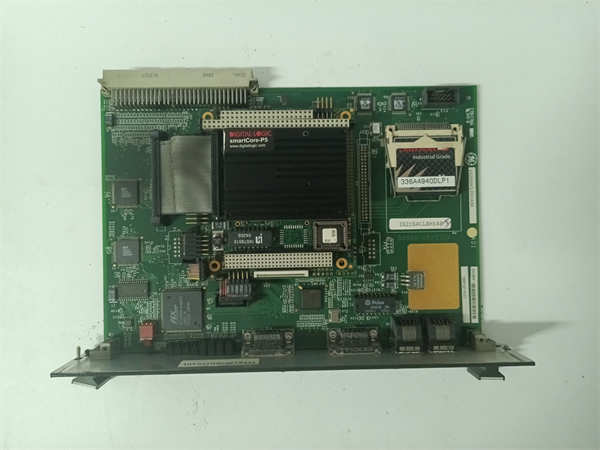
IS215ACLEH1AB IS200ACLEH1ABA
Lifecycle Status and Migration Strategy
Both IS200ACLEH1ABA and IS215ACLEH1AB are officially obsolete. GE no longer manufactures or repairs these modules, and technical support is limited to existing documentation. Continued use carries significant risk: spares are scarce, pricing is volatile, and mismatched revisions can cause system boot failures.
Short-term mitigation strategies:
- Secure matched, tested spares with verified firmware compatibility.
- Avoid hot-swapping unless explicitly supported by the system revision.
- Isolate I/O Packs on dedicated network segments to reduce traffic-induced stress.
For long-term reliability, GE’s strategic direction is migration to the Mark VIeS or Advanced Controls Platform (ACP), which utilize modern, cyber-secure, and redundant communication architectures (e.g., dual Gigabit Ethernet with PRP/HSR). However, such upgrades require:
- Full reassessment of I/O wiring and termination
- Reconfiguration of control logic and HMI integration
- Recertification of safety functions (if applicable)