 Tel:
Tel:  Email:
  WhatsApp:
 Description
Key Technical Specifications
| Parameter | Specification |
|---|---|
| Part Number | IS200TRLYS1B / IS200TRLYS1BGG |
| System Series | Mark V, Mark VI (Speedtronic) |
| Board Type | Discrete Relay Output (DRLY) |
| Relay Type | Plug-in Magnetic Relays (C-Type Contacts) |
| Input Voltage | 24VDC (Nominal) |
| Diagnostic Feature | Coil Current Sensing / Verification |
| Connectors | Terminal Blocks & D-Sub (Data Bus) |
| Function | Switching & Logic Isolation |
| Mounting | I/O Core / DIN Rail |
Product Introduction
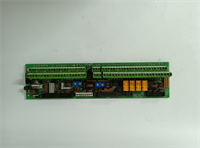
If you are dealing with a GE gas or steam turbine, you know that the “TRLY” board is the muscle behind the brain. The IS200TRLYS1B (often seen as the IS200TRLYS1BGG variant) is a Discrete Relay Output board used in the Speedtronic Mark V and Mark VI control systems. It’s not a fancy processor; it’s a heavy-duty switching board designed to take logic signals from the controller and physically trip relays that start lube oil pumps, open fuel valves, or trigger alarms.What makes this specific board a favorite among field engineers is the coil current diagnostics. Unlike cheaper I/O cards that just assume the relay fired, this board can actually sense if the relay coil is drawing the correct current. If a coil is open or shorted, this board tells you before you end up with a turbine trip. It uses C-type contacts (Form C), giving you flexibility in wiring for Normally Open (NO) or Normally Closed (NC) logic. It’s built to survive the vibration and electrical noise of a turbine skid, but like all GE boards from this era, the connectors are sensitive to corrosion.
Quality SOP & Tech Pitfalls (The Reality Check)
The Lab Report (SOP)
We don’t just ship these in a box.
- Visual Inspection: We look for “socket creep.” The plug-in relays on this board can wiggle loose over years of vibration. We press them back in firmly. We also check the terminal blocks for heat discoloration.
- Live Test: We mount the board on a test rack and simulate a 24VDC logic input. We verify that the specific relay clicks and that the continuity changes across the C-type contacts.
- Diagnosis Check: We simulate an open-coil fault to ensure the board’s internal diagnostic circuit flags the error correctly.
- Cleaning: We clean the data bus connectors (the 3PL/JE connectors) with contact cleaner. Dirty pins here cause “Comm Fail” alarms that drive engineers crazy.
The Engineer’s Warning (Pitfalls)
- The “GG” Suffix Confusion: You will see IS200TRLYS1BGG listed constantly. In the GE world, the suffix often denotes the revision or specific packaging (like conformal coating). The base model IS200TRLYS1B is generally compatible, but check your revision. If your system is old (Mark V), a newer revision might have different firmware or component tolerances.
- Relay Socket Fatigue: The relays on this board are plug-in style. If you pull them out too often with pliers, you damage the socket. Use a proper relay puller or be very gentle. A loose relay causes intermittent faults that are a nightmare to trace.
- Connector Pin Alignment: When mating this board to the I/O core (the backplane), do not force it. The pins are fragile. If you bend a pin on the 3PL connector, you lose communication with the controller core.
Installation & Configuration Guide
Swapping this board requires care because it sits in the heart of the control cabinet.
- Pre-Installation:
- ⚠️ Safety First: Ensure the turbine is in “Stop” mode and logic power (24VDC) is isolated if possible.
- Labeling: The wiring on these terminal blocks is often dense. Take a photo or use a label maker on every wire before you loosen a screw.
- Removal:
- Disconnect the terminal block wiring (or unplug the terminal block if it’s a removable type).
- Unscrew the mounting hardware or release the DIN rail clip.
- Gently pull the board out. Watch out for the data bus connector at the back—it requires a straight pull.
- Installation:
- Jumper Check: Look for hardware jumpers (J1, J2, etc.) on the board. If you are replacing an old board, copy the jumper settings exactly. Default settings might not match your specific turbine application.
- Seat the board onto the rail or backplane. Ensure the data bus connector is fully seated.
- Reconnect wiring according to your photos.
- Power-Up:
- Restore power.
- Check the LED status on the board.
- Perform a “Forced Output” test from the HMI to verify the relay actuates.
Compatible Replacement Models
| Compatibility | Model Number | Notes |
|---|---|---|
| ✅ Drop-in Replacement | IS200TRLYS1BGG | The most common full part number. Direct match. |
| ✅ Direct Swap | IS200TRLYS1B | Base model. Functionally identical for most Mark V/VI applications. |
| ⚠️ Software Compatible | IS200TBCIH1B | Similar discrete board, but verify if it’s “Contact Input” vs “Relay Output”. Do not mix them up. |
| ❌ Hardware Mod | IS200DRLYH1A | Different form factor or revision series. Requires checking compatibility matrices. |
Frequently Asked Questions (FAQ)
Q: What is the difference between IS200TRLYS1B and IS200TRLYS1BGG?
Likely nothing major. The “GG” usually indicates a specific revision, coating, or manufacturing batch. In the GE Speedtronic world, the base part number (TRLYS1B) dictates the function. However, always compare the schematics if you are mixing very old and very new revisions.Q: Can I repair the relays on this board?
Yes. The relays are plug-in magnetic types (like Potter & Brumfield or similar). If one relay is burnt out or stuck, you can pry it off and replace it with a new one of the same part number (check the label on the relay itself, usually 24VDC).Q: Does this board support “Hot Swap”?
No. This is not a redundant, hot-swappable I/O module in the modern sense. Pulling this while the turbine is running will likely cause a logic fault or a trip. You need to shut down the control power to that rack.Q: What does “Coil Sense” mean?
It means the board monitors the electrical current flowing through the relay coil. If the wire breaks (open circuit) or shorts, the board detects that the current is zero or infinite and reports a “Hardware Fault” to the controller, preventing a “silent failure” where the logic says “Trip” but the relay never moves.Q: Is this for Mark V or Mark VI?
Both. The IS200 series was used heavily in the transition from Mark V to Mark VI. The physical board looks the same, but the firmware logic inside the controller might differ. The hardware is generally interchangeable between the two systems.