 Tel:
Tel:  Email:
  WhatsApp:
 Description
Key Technical Specifications
| Parameter | Specification |
|---|---|
| Input Signal Types | J, K, E, T, R, S, B, N (Software selectable) |
| Channel Count | 16 Independent Differential Inputs |
| Resolution | 16-bit |
| Accuracy | ±0.1% of span or ±0.5°C (whichever is greater) |
| Cold Junction Comp | Automatic per channel (±0.5°C typical) |
| Input Impedance | >10 MΩ |
| Common Mode Rejection | >100 dB at 50/60 Hz |
| Dielectric Strength | 500 VAC for 1 minute (Channel to Ground) |
| Operating Temperature | -30°C to +65°C |
| Power Requirement | 24 VDC (supplied via backplane) |
| Firmware Revision | Typically Rev 02 (Verify label on PCB) |
| Connector Type | 37-pin D-Sub (J1/J2) |
 Product Introduction
 Product Introduction
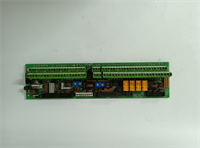
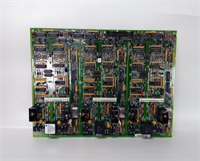
The IS200TCASH1ACB acts as the critical sensory interface for turbine exhaust and bearing temperature monitoring in GE Mark VIe systems. It converts low-level millivolt signals from various thermocouple types into precise digital data for the main controller. This board is essential for protecting gas and steam turbines from overheating events by providing fast, reliable trip logic inputs.The “H1” revision incorporates updated isolation amplifiers that reduce channel-to-channel crosstalk compared to early prototypes. Field logs indicate this version maintains stability even when ambient cabinet temperatures fluctuate rapidly during startup sequences. Each channel features individual cold junction compensation sensors located near the terminal entry points to minimize thermal gradient errors.
Installation & Configuration Guide
Preparation (10 min)
Confirm the target slot in the Mark VIe rack matches the hardware configuration in ToolboxST. Verify the thermocouple types (e.g., Type K for exhaust) match the software definition before installation. Put on an ESD wrist strap; thermocouple input circuits are highly sensitive to static discharge. Check the board label for the firmware revision—mismatches here cause communication faults.Removal (5–10 min)
Disconnect the thermocouple wiring from the terminal block first. Never pull the card while wires are attached to the backshell. Release the top and bottom ejector levers firmly. Slide the board straight out. If resistance is felt, stop and check for guide rail obstruction. Place the old board in an anti-static bag immediately to prevent damage to exposed pins.Installation (10 min)
Align the IS200TCASH1ACB with the rack guides, ensuring the connector pins line up perfectly. Push evenly until the backplane seats; listen for the mechanical engagement click. Close the ejector levers to lock the card in place. Re-terminate the thermocouple wires, observing correct polarity (positive/negative). Torque terminals to 4-5 in-lbs. Loose connections create false high-temp readings.Power-On & Test (10 min)
Energize the control rack. Watch the status LEDs: a solid green “OK” light confirms successful boot. An amber flash suggests a configuration mismatch. Open ToolboxST and go online. Verify all 16 channels show reasonable ambient temperatures (e.g., 20-30°C). Simulate a fault by disconnecting one channel; the system should register an “Open Thermocouple” alarm within 2 seconds.
Troubleshooting Quick Reference
| Symptom | Probable Cause | Action |
|---|---|---|
| Red “Fail” LED lit | Internal hardware fault or bad seat | Reseat the board; if red persists, replace unit. |
| All channels read max scale | Broken cold junction sensor or power loss | Check 24VDC supply to the I/O pack and backplane. |
| Single channel spikes | Poor shielding or loose terminal | Tighten terminal; verify shield grounding at cabinet. |
| “Config Mismatch” error | Firmware rev differs from .io file | Update ToolboxST project file or swap board revision. |
| Temperature drift | Ambient heat affecting CJC sensor | Check cabinet cooling fans; ensure airflow over board. |
Dimensions, Mounting & Wiring Notes
- Dimensions: 160mm (H) x 100mm (D) x 25mm (W) approx.
- Mounting: Slides into standard Mark VIe VCMI/VME backplane slots. Locked by dual ejector levers.
- Wiring: Connects via TBXX terminal blocks (sold separately). Use twisted pair shielded cable for all thermocouple inputs. Ground the shield at the cabinet entry point only.
- Note: The 37-pin D-Sub connectors (J1/J2) carry field signals. Pin 1 is marked on the silkscreen. Polarity is critical; reversing leads results in negative temperature readings. Always double-check against the GE wiring diagram before energizing.
FAQ
Q: Can I mix different thermocouple types on this single board?
Yes, the IS200TCASH1ACB supports mixed types per channel, but you must configure each channel individually in ToolboxST. You cannot set a global type for the whole card. Ensure the software definition matches the physical wire connected to each specific terminal.Q: My board reads 900°C when the turbine is cold. What’s wrong?
This usually indicates an open circuit or reversed polarity. Check the terminal connections first. If wiring is tight, measure the resistance across the input; an infinite reading means the thermocouple wire is broken upstream. It rarely means the board itself is fried.Q: How do I know if the firmware version is compatible with my existing system?
Look at the white sticker on the board faceplate for the “Rev” number (e.g., 02, 03). Compare this to the firmware version specified in your current ToolboxST project file. If they differ, you may need to update the project file or request a board with the matching revision from us.Q: Is the terminal block included with the purchase?
No. The IS200TCASH1ACB ships as the circuit board only. You must reuse your existing TBXX terminal blocks or order them separately. The terminal block part number depends on your specific cabinet wiring setup (e.g., screw clamp vs. spring).Q: We need 10 units for a plant overhaul. Can you fulfill that?
We currently have 3 units in immediate stock. For larger quantities, we can source additional New Surplus units from our network within 3-5 business days. Contact us directly to reserve a batch for your project timeline.Q: Does this board require external cold junction compensation?
No. The board has built-in temperature sensors near the input connectors for automatic cold junction compensation (CJC) on every channel. External CJC boxes are obsolete for this model. Just ensure the cabinet ambient temperature is stable for best accuracy.