 Tel:
Tel:  Email:
  WhatsApp:
 Description
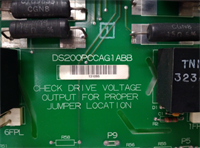
Nothing kills a control system startup faster than a noisy power rail causing random I/O dropouts. The GE IS200PSCDG1A acts as the localized power heart for Mark VIe I/O packs, taking the raw 24V DC from the cabinet bus and generating the clean, isolated voltages required by sensitive analog and digital circuits.This converter board distinguishes itself with tight load regulation and built-in thermal shutdown, preventing a single shorted sensor from taking down an entire controller rack. In our experience retrofitting older Mark V systems to Mark VIe, the IS200PSCDG1A handles voltage sags better than third-party equivalents, maintaining output stability even when input dips to 18V. Just remember: while it’s robust, it’s not a substitute for a properly sized main UPS.
 Key Technical Specifications
 Key Technical Specifications
| Parameter | Value |
|---|---|
| Compatible System | GE Mark VIe (Simpléx & TMR) |
| Function | DC-DC Power Converter |
| Input Voltage | 24 V DC (Nominal), 18–30 V DC (Range) |
| Output Voltages | +5 V, +12 V, -12 V, +3.3 V (Isolated) |
| Total Output Power | 50 W (Max continuous) |
| Efficiency | > 85% (Typical at full load) |
| Line Regulation | < 0.5% (Full load variation) |
| Load Regulation | < 1.0% (0–100% load step) |
| Protection | Over-current, Over-voltage, Thermal shutdown |
| Operating Temperature | -30 °C to +70 °C |
| Mounting Style | Integrated into I/O Pack backplane |
| Connector Type | High-density board-to-board interface |
| Weight | 0.35 kg (approx.) |
Application Scenarios & Pain Points
The alarm panel lights up with “I/O Pack Fault,” but the controller is fine. You swap the whole pack, and the problem returns in an hour. Often, the culprit isn’t the I/O circuitry itself but the failing power converter board inside the pack that can’t handle the transient load of a switching valve. The GE IS200PSCDG1A is designed specifically to survive these spikes without dropping the logic voltage.
- Gas Turbine Control Cabinets: Vibration and heat are constant enemies here. The conformal coating on this revision helps, but ensure your cabinet cooling fans are actually moving air.
- What if the input voltage fluctuates? Many plants have 24V supplies that wander between 22V and 28V. This board compensates automatically, but sustained operation below 19V will trigger undervoltage lockout.
- Hydroelectric Penstock Gates: Moisture ingress can corrode the input terminals. Regular thermographic scans can spot hot spots on the converter before it fails completely.
- Chemical Injection Skids: Corrosive gases attack component leads. The IS200PSCDG1A uses lead-free solder which is more brittle; avoid mechanical stress during installation.
- Steel Mill Rolling Mills: Massive motor starts cause huge voltage dips. If your main DC bus isn’t buffered with capacitors, even this rugged converter might hiccup.
Case Study:
A paper mill in the Pacific Northwest kept experiencing unexplained trips on their dryer section controls. The maintenance team replaced three entire I/O packs over a month, blaming the analog input cards. Finally, a senior tech pulled the power board and tested the ripple voltage under load. The old IS200PSCDG1A units had degraded capacitors causing 200mV of ripple on the 5V rail—enough to confuse the microprocessor. Replacing just the power boards with fresh stock solved the issue instantly. They saved $15,000 in unnecessary pack replacements. Sometimes the smallest component causes the biggest headache.
Quality Control Process (SOP Transparency)
Power supplies lie until you put a load on them. We don’t trust a simple multimeter check.
- Inbound Inspection: We verify the source traceability via OEM packing lists. Counterfeit power boards often use inferior capacitors that look identical externally. We inspect the PCB for any signs of reflow repair or burnt components. The GE logo should be laser-etched, not printed.
- Live Functional Test: We install the board into a test fixture simulating a Mark VIe I/O pack. We apply a variable 24V input (sweeping 18V to 30V) and measure all output rails. Then comes the critical part: we apply a dynamic electronic load, stepping from 10% to 100% capacity in 1ms intervals. If the 5V rail dips below 4.75V, it fails. We run this cycle for 2 hours while monitoring internal temperature.
- Electrical Parameters: Using a Hi-Pot tester, we verify isolation between input and output grounds (typically 500V DC for 1 minute). We also measure ripple and noise on the output; it must be under 50mV peak-to-peak. Any hum above that indicates a failing filter cap.
- Firmware/Logic Verification: While mostly analog, some revisions have monitoring logic. We check the status pin behavior to ensure it reports “OK” only when all rails are within tolerance. We photograph the date code and batch number for your records.
- Final QC & Packaging: After passing the load test, we let the unit cool before sealing. It goes into an anti-static bag, then bubble wrap, then a rigid box. The QC sticker includes the load test graph summary. Ask us for the video; we have it ready.
Installation Pitfalls Guide (“Lessons Learned” Voice)
Power issues are tricky because the symptoms often appear somewhere else entirely. Here is how to avoid chasing ghosts.
- Input polarity reversal: It sounds obvious, but in a hurry, swapping the positive and negative 24V leads happens. The IS200PSCDG1A has protection diodes, but they can blow if the surge is high enough. Double-check polarity with a meter before seating the board.
- Inrush current overload: If you plug this board into a live backplane with large downstream capacitors already charged, the inrush spike can trip the main cabinet breaker. Ideally, power down the rack before swapping. If you must hot-swap, ensure the main supply has enough headroom.
- Thermal paste application: Some revisions require thermal contact with the chassis for cooling. If you see a bare metal pad on the board, it needs to touch the cage. Don’t leave an air gap there, or it will cook itself in a week.
- Ground loop creation: The output grounds are isolated for a reason. Do not externally jumper the negative output to the cabinet ground unless the schematic explicitly calls for it. Doing so creates a ground loop that introduces noise into your analog signals.
- Ignoring the “soft start” delay: When you power up, the board takes about 50-100ms to stabilize. If your controller logic tries to read I/O immediately upon reset, it might see garbage data. Ensure your system sequence allows for this power-up settling time.