 Tel:
Tel:  Email:
  WhatsApp:
 Description
Product Introduction
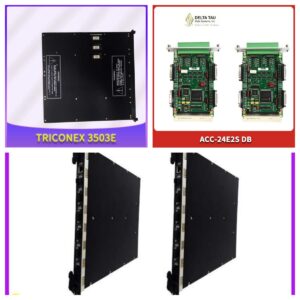
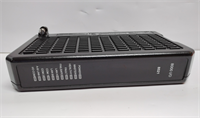
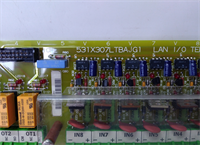
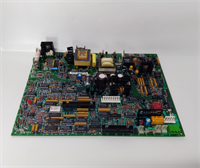
Auxiliary drives in a power plant don’t operate in isolation; they require precise speed and torque commands from the main turbine controller, and the GE IS200JPDVG1A is the dedicated hardware bridge that makes this communication possible. Designed specifically for the Speedtronic Mark VI and VIe architectures, this board handles the critical signal conversion between the controller’s digital logic and the analog or serial interfaces of large industrial VFDs. You won’t use this for simple discrete on/off tasks; it’s engineered for continuous process control where signal fidelity dictates motor performance.Finding authentic replacements for these drive interface boards has become increasingly difficult as GE shifts focus to newer platforms, making existing stock a vital asset for plant longevity. Unlike generic I/O cards, the IS200JPDVG1A includes specialized filtering circuitry to reject electrical noise generated by nearby high-voltage drives, ensuring stable feedback loops even in electrically noisy environments. To be frank, installing this without configuring the correct scaling parameters in the toolbox software will result in erratic motor behavior, so ensure your engineering team has the latest parameter files ready. Its robust construction allows it to withstand the thermal cycling common in gas turbine enclosures.
 Key Technical Specifications
 Key Technical Specifications
| Parameter | Value |
|---|---|
| Part Number | IS200JPDVG1A |
| Revision | G1A (Hardware Revision A) |
| Application | GE Speedtronic Mark VI / Mark VIe Control System |
| Function | Drive Interface & Joint Processor I/O |
| Analog Inputs | 16 Channels (Configurable) |
| Signal Range | 4-20 mA, 0-10 V DC, ±10 V DC |
| Communication | RS-485 Serial (Modbus RTU Support) |
| Resolution | 16-bit Analog-to-Digital Conversion |
| Update Rate | ≤ 10 ms per channel scan |
| Operating Voltage | 24 V DC (Logic), Isolated Power Rails |
| Mounting | Eurocard Form Factor, Backplane Mount |
| Environmental Temp | -30°C to +65°C (Operating) |
| Isolation | Channel-to-Channel and Channel-to-Logic Isolation |
| Indicator LEDs | Comm Status, Channel Fault, Power Good |
Application Scenarios & Pain Points
Imagine a combined cycle plant where the condensate pump suddenly ramps to full speed because the control signal drifted to 20mA erroneously, causing a pressure surge that trips the entire steam cycle. This nightmare scenario often traces back to a failing drive interface board that can no longer maintain signal integrity against electromagnetic interference. The GE IS200JPDVG1A is deployed specifically to prevent these drift issues, providing the stable, isolated pathway needed for critical auxiliary motors like lube oil pumps, turning gear motors, and cooling fans. When these drives lose accurate command signals, the risk of mechanical damage or process shutdown skyrockets.
- Gas Turbine Auxiliaries: Operators use this board to modulate hydraulic pump speeds based on real-time lubrication pressure demands, preventing cavitation.
- What if the communication protocol doesn’t match? If your VFD expects Modbus ASCII but the IS200JPDVG1A is configured for RTU, the drive will ignore all speed commands and default to a safe stop, halting production.
- Steam Plant Feedwater Systems: Precise control of feedwater pump velocity is essential during load changes; this module ensures the analog feedback loop remains tight within a 2% error margin.
- Wind Turbine Pitch Control: Some older wind farm installations utilize Mark VI systems to manage blade pitch motors, relying on this board for high-speed torque adjustments.
- Compressor Stations: In pipeline applications, anti-surge valves are driven by motors controlled via this interface, reacting within 500ms to prevent flow reversal.
Case Study: A mid-sized independent power producer in Ohio experienced intermittent “loss of feedback” alarms on their main lube oil pump drive. The maintenance team initially replaced the VFD itself, assuming the motor controller was faulty, but the alarms persisted. Upon reviewing historical trend data, they noticed the analog signal from the control system was exhibiting high-frequency noise spikes. A physical inspection of the rack revealed the original drive interface board had degraded capacitors. Swapping in a tested IS200JPDVG1A immediately stabilized the signal. The engineer on duty noted that the entire troubleshooting delay cost them four hours of potential generation, easily avoided by having a verified spare on hand.
Quality Control Process (SOP Transparency)
We treat every GE IS200JPDVG1A as a mission-critical component, subjecting it to a validation regimen that mirrors OEM standards before it ships. Our Inbound Inspection begins with strict source tracing; we verify the lot number against original GE shipping documents and inspect the holographic security labels to rule out counterfeits, which are prevalent in the drive I/O market. Under magnification, we examine the PCB for any signs of thermal stress, such as discolored solder joints or swollen capacitors, and ensure all terminal pins are straight and free of oxidation.The Live Functional Test is conducted on a live Speedtronic Mark VI simulator rack. We power up the board and monitor the initialization sequence via the status LEDs, ensuring no internal fault codes are present. Using a calibrated signal generator, we inject precise 4-20mA and 0-10V signals into all 16 channels and verify the digital values read by the controller match within a 0.1% tolerance. We also establish an RS-485 connection to a test VFD emulator to confirm successful Modbus handshake and register读写 (read/write) operations. The unit undergoes a 24-hour burn-in at full load to detect any thermal instability.For Electrical Parameters, we perform a hi-pot test at 500V DC to verify isolation integrity between the analog channels and the logic backplane, requiring a minimum resistance of 100 MΩ. Ground continuity is checked to ensure less than 0.05 Ω resistance. During Firmware Verification, we read the onboard memory checksum and cross-reference it with the GE database for revision G1A compatibility. We document all jumper settings and include a detailed test report with oscilloscope traces in the package. Finally, the board is sealed in a static-shielding bag with humidity indicators and packed in reinforced cartons.
 Installation Pitfalls Guide (“Lessons Learned” Voice)
 Installation Pitfalls Guide (“Lessons Learned” Voice)
Replacing a drive interface board like the IS200JPDVG1A seems straightforward until you realize that a single wiring error can send a motor into an uncontrolled overspeed condition. I’ve witnessed seasoned engineers make simple mistakes that cost days of downtime. Here is what you need to watch out for based on real field failures.
- Firmware Version Mismatch: The Mark VI system is sensitive to firmware alignment between the processor and I/O boards. Installing an IS200JPDVG1A with a newer firmware revision than the main controller can cause the rack to reject the board entirely, resulting in a “Module Missing” fault. ❗ Always check the firmware version of the failed unit and match it exactly with the replacement.
- DIP Switch / Jumper Misconfiguration: This board supports multiple signal types (voltage vs. current) which are often selected via jumpers or DIP switches. Leaving these in the factory default position when your site uses 4-20mA loops will result in zero readings or saturated signals. Take a photo of the old board’s jumper settings before you pull it. Then take another one. Verify every position.
- Terminal / Wiring Incompatibility: While the connector looks standard, the pin assignment for the RS-485 port can vary depending on the specific drive manufacturer’s integration. Swapping A and B lines is a classic error that prevents communication. Double-check the wiring diagram specific to your VFD model, not just the generic GE manual.
- Power Supply Undersizing: Drive I/O boards can draw significant current, especially when driving multiple active circuits. If your rack power supply is near its limit, adding this board might cause a voltage sag that resets the entire control system. Calculate the total amperage of your rack and ensure you have a 20% safety margin.
- ESD Damage: The analog input circuits are highly sensitive to electrostatic discharge. Touching the connector pins without a wrist strap can introduce latent damage that causes signal drift weeks later. It’s a small step that saves expensive headaches—ground yourself before handling the card.