 Tel:
Tel:  Email:
  WhatsApp:
 Description
Product Introduction
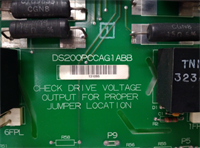
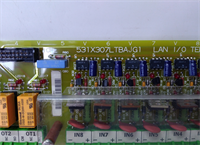
When a gas turbine trips due to a loss of control power, the culprit is often a failed distribution board deep in the rack. The GE IS200JPDSG1A serves as the critical heartbeat for the Mark VIe system, routing protected 24VDC to sensitive I/O packs that monitor flame, speed, and vibration.This board handles up to 16 individual output channels with integrated fuse or electronic protection, ensuring a short circuit on one sensor doesn’t black out the entire controller. Unlike earlier Mark V components, the IS200JPDSG1A features improved diagnostic LEDs that pinpoint faulted channels instantly. To be frank, swapping this card requires careful attention to the backplane alignment, but its reliability record in combined cycle plants is exceptional.
 Key Technical Specifications
| Parameter | Value |
|---|---|
| Part Number | IS200JPDSG1A |
| System Compatibility | GE Speedtronic Mark VIe |
| Input Voltage | 24 VDC (Nominal) |
| Voltage Range | 18–32 VDC |
| Output Channels | 16 Independent Protected Circuits |
| Protection Type | Electronic Circuit Breaker / Fuse (Config dependent) |
| Current Rating | 5 A per channel (Typical) |
| Total Load Capacity | 40 A Max (Aggregate) |
| Diagnostic Indicators | Per-Channel Fault LEDs + Global Status |
| Communication | Backplane Interface to PCCA/PCCB |
| Operating Temp | -30 °C to +65 °C |
| Mounting | DIN Rail or Rack Mount (Mark VIe Chassis) |
| Weight | 0.8 kg |
Application Scenarios & Pain Points
It’s 3 a.m. during a peak demand period, and the HMI flashes “Control Power Loss” on three separate I/O packs simultaneously. The plant engineer rushes to the Mark VIe cabinet and sees the red fault LED glowing on the power distribution board. Without immediate replacement, the turbine remains in a forced outage, costing thousands per hour. The GE IS200JPDSG1A is the specific fix, restoring isolated power to those packs and allowing a safe restart within 45 minutes.
- Combined Cycle Power Plants: Why risk a total shutdown? This board isolates faults in the HRSG control section, keeping the steam turbine running even if a gas turbine sensor shorts out.
- Offshore Platforms: Space is tight and vibration is high. The IS200JPDSG1A is designed to withstand the harsh motion of floating production units while maintaining stable 24VDC to critical safety systems.
- Pipeline Compressor Stations: Remote sites often suffer from dirty power. The input filtering on this unit smooths out voltage spikes from local generators, preventing nuisance trips of the compressor logic.
- Petrochemical Refineries: Can you afford a blind spot in your flare system? By providing redundant-capable power paths, this board ensures fire and gas detectors stay online during electrical disturbances.
- Wind Turbine Farms: In cold climates, heating elements draw significant current. This distribution board manages the load without overheating, even when ambient temperatures drop below -20 °C.
Case Study: A combined cycle facility in Texas experienced intermittent communication losses with their vibration monitoring system. The team suspected the I/O pack first, replacing two units with no success. Finally, they tested the GE IS200JPDSG1A and found one channel was dropping voltage under load due to an internal component failure. Swapping in a new unit resolved the issue immediately. The total downtime was kept under two hours, saving an estimated $150,000 in lost generation revenue.
Quality Control Process (SOP Transparency)
We treat power distribution boards with extra caution since hidden faults can destroy downstream I/O.
- Inbound Inspection: We verify the GE hologram and check the revision letter (A, B, etc.) against the order. Visual inspection focuses on the backplane pins—bent pins are a common shipping issue we catch early. We also look for any signs of thermal stress on the voltage regulators.
- Live Functional Test: We install the IS200JPDSG1A into a verified Mark VIe test rack. Using a variable DC power supply, we ramp the input from 18V to 32V to confirm undervoltage/overvoltage lockout functions correctly. We then load each of the 16 channels with a resistive bank to verify current limiting.
- Electrical Parameters: A Fluke 87V multimeter measures the output voltage stability under 50% and 100% load. We perform a hipot test (if applicable per OEM spec) to ensure isolation between input and output grounds exceeds 500 VDC.
- Firmware/Logic Verification: While this is primarily hardware, some revisions have programmable trip points. We read the configuration via the service port (if accessible) or verify the hard-wired jumper settings match the standard factory default for general use.
- Final QC & Packaging: After passing the load test, we photograph the lit LEDs showing “OK” status. The board is sealed in an anti-static bag with humidity indicators, then packed in a rigid box with foam corners to protect the delicate backplane connectors.
Installation Pitfalls Guide (“Lessons Learned” Voice)
Power distribution seems simple until you blow up a $5,000 I/O pack. I’ve seen it happen more than once.
- Firmware/Revision Mismatch: ❗ Check the revision letter. Early versions of the JPDSG had different trip curves. If you mix revisions in a redundant setup, one board might trip while the other holds, causing a system imbalance. Always match the revision of the existing healthy board.
- Backplane Pin Damage: The connectors on Mark VIe boards are fragile. Don’t force it. If the board doesn’t slide in smoothly, pull it out and check the alignment. Bending a single power pin can short the entire 24V bus, frying the main controller.
- Terminal Wiring Incompatibility: When replacing an old board, verify the wire gauge. Newer terminals might accept only specific sizes. Loose connections here lead to arcing and heat. Torque the screws to exactly 0.5 Nm—no guessing.
- Power Supply Undersizing: Adding a new board increases the total load. Ensure your main 24VDC power supply has enough headroom. We saw a case where a failing supply dipped voltage when the new board initialized, causing a false “Undervoltage” fault on the whole rack.
- ESD Damage: These boards contain sensitive protection ICs. ❗ Ground yourself. Touching the edge connector without a wrist strap can degrade the internal MOSFETs, leading to premature failure weeks later. It’s a silent killer.