 Tel:
Tel:  Email:
  WhatsApp:
 Description
Product Introduction
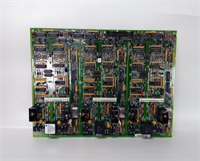
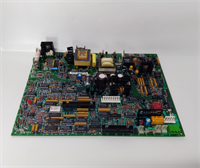
A turbine trip due to power loss on a single I/O rack can cost a plant thousands of dollars per minute. The GE IS200JPDHG1A prevents this scenario by acting as the central nervous system for 24V DC distribution in Mark VIe cabinets. It isn’t just a terminal block; it provides fused protection and status monitoring for every downstream branch circuit.Reliability is the main driver here. This board handles up to 16 individual output channels, each with its own fuse and LED status indicator. Honestly, the ability to hot-swap faulty I/O packs without taking down the entire controller depends on the stability of this JPDH board. While newer iterations exist, most existing Frame 9E and 7FA units rely specifically on the IS200JPDHG1A architecture. Replacing it with an unverified alternative risks compatibility issues with the backplane signaling. Stick to the genuine part to maintain system integrity.
 Key Technical Specifications
 Key Technical Specifications
| Parameter | Value |
|---|---|
| Function | 24V DC Power Distribution |
| Input Voltage | 24V DC (Nominal) |
| Output Channels | 16 Independent Circuits |
| Protection | Individual Fuse per Channel |
| Indicators | LED Status per Output (Green/Red) |
| Mounting | DIN Rail or Cabinet Backplane |
| Connector Type | Phoenix Contact or Molex (Verify specific revision) |
| System Compatibility | GE Speedtronic Mark VIe |
| Operating Temp | -30 °C to +65 °C |
| Certification | CE, UL Listed (Component) |
| Revision | Typically Rev A or B (Check label) |
| Weight | Approx. 1.2 kg |
Application Scenarios & Pain Points
The alarm panel lights up: “I/O Rack Power Fault.” The turbine is still running, but you’ve lost redundancy on a critical temperature monitoring loop. If that second path fails, the unit trips. The GE IS200JPDHG1A is the component you swap out to restore full redundancy before the next startup window closes. It sits quietly in the cabinet until a short circuit or fuse blow occurs, then it becomes the most important piece of hardware in the room.
- Gas Turbine Combustion Monitoring: Losing power to thermocouple inputs means flying blind. Can you risk running baseload without full sensor coverage?
- Steam Valve Actuation: Hydraulic solenoid valves need clean, fused 24V power. A spike here could cause a false closure.
- Generator Excitation Systems: Stable voltage is non-negotiable for AVR logic. This board isolates noise from the main bus.
- Balance of Plant (BOP): From water treatment to hydrogen cooling, auxiliary skids rely on this distribution for logic continuity.
- Retrofits and Upgrades: Migrating from Mark V to Mark VIe? You will need these boards to interface with new I/O packs.
Field Case Note:
A combined cycle plant in Texas faced a recurring nuisance trip on their HRSG fan controls. The maintenance team kept replacing fuses, thinking it was a load issue. Finally, they pulled the GE IS200JPDHG1A and found a hairline crack in the internal bus trace causing intermittent resistance. Swapping in a verified spare from our inventory solved the issue instantly. The engineer later admitted they almost ordered a whole new I/O rack before checking the distribution board. That quick diagnosis saved them $40,000 in unnecessary hardware and 18 hours of downtime.
Quality Control Process (SOP Transparency)
We treat power distribution boards with extra caution since hidden cracks can lead to catastrophic failures. Our process starts with source verification. We demand OEM packing lists or customs docs to prove the GE IS200JPDHG1A didn’t come from a scrapped unit exposed to corrosive gases. Visually, we inspect the PCB under magnification for any signs of thermal stress, burnt traces, or re-soldered joints. The conformal coating must be intact and uniform.For functional testing, we mount the board in a simulated Mark VIe rack setup. We apply a regulated 24V DC source and measure the voltage drop across each of the 16 output terminals using a Fluke 87V multimeter. Every channel must read within 0.1V of the input. We intentionally blow a test fuse on one channel to verify the LED status indicator changes correctly and that the fault doesn’t propagate to adjacent channels. We also check the backplane connectivity with a continuity tester. After a 2-hour load test with resistive banks, we log the temperature rise. If it passes, we record the serial number, bag it in anti-static material, and label it with the QC date. Test reports are available on request.
 Installation Pitfalls Guide (“Lessons Learned” Voice)
 Installation Pitfalls Guide (“Lessons Learned” Voice)
Power distribution seems simple until you get it wrong and take down a unit. I’ve seen seasoned techs make these exact mistakes during outages.
- Fuse Rating Mismatch ❗
Replacing a blown fuse with a higher amp rating “just to get it running” is a fire hazard. The fuse is sized for the wire gauge and load. Fix: Always use the exact OEM specified fuse rating. Keep a kit of spares on hand. Don’t improvise. - Torque Specification Neglect ❗
Loose terminals heat up. Vibrations in a turbine hall are constant. A loose connection on the main 24V feed can arc and melt the connector. Fix: Use a calibrated torque screwdriver. Tighten to the manufacturer’s spec (usually printed on the terminal block). Check them again after 24 hours of operation. - Polarity Reversal ❗
Wiring the 24V input backwards can destroy the entire board and potentially feed reverse voltage into connected I/O packs. Fix: Double-check polarity with a multimeter before closing the breaker. Look for the “+” and “-” markings twice. - Ignoring LED Status Codes ❗
A dim green LED often indicates a marginal voltage drop or a high-resistance connection, not just “on.” Fix: Don’t ignore subtle indicators. Investigate why an LED isn’t bright green before assuming the board is fine. - ESD Sensitivity ❗
Even though it’s a power board, the status monitoring circuitry is sensitive. Touching the components without grounding can fry the logic that reports faults to the controller. Fix: Wear your wrist strap. Ground yourself on the cabinet frame before handling the board.