 Tel:
Tel:  Email:
  WhatsApp:
 Description
Product Introduction
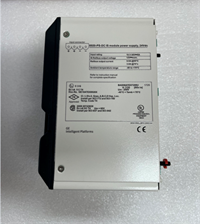
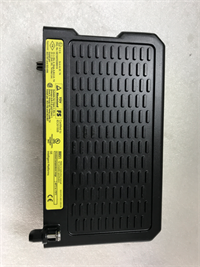
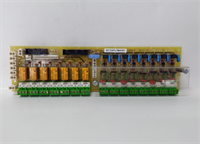
When a gas turbine trips due to a false gate signal, the cost isn’t just lost generation; it’s the frantic search for a specific driver board that matches the firmware revision. The GE IS200GDDDG1A serves as the critical interface between the low-voltage control logic and the high-power IGBTs in the Mark VIe excitation system.This board handles the heavy lifting of signal isolation and amplification, ensuring that switching commands arrive at the power semiconductors with precise timing. Unlike generic drivers, the IS200GDDDG1A includes built-in desaturation detection that shuts down the channel within microseconds of a fault, preventing catastrophic bridge failures. We’ve seen this specific revision hold up better in high-humidity environments compared to earlier “F” series variants, though you should always verify the humidity rating against your specific cabinet conditions.
 Key Technical Specifications
| Parameter | Value |
|---|---|
| Compatible System | GE Mark VIe (Simpléx & TMR) |
| Function | IGBT Gate Driver Interface |
| Input Logic Level | 24 V DC (TTL compatible) |
| Output Drive Voltage | +15 V / -8 V (Typical) |
| Peak Output Current | ±2 A (Pulse) |
| Propagation Delay | < 2.0 µs (Max) |
| Isolation Voltage | 2500 V RMS (Optical) |
| Protection Features | Desaturation detection, Under-voltage lockout |
| Operating Temperature | -30 °C to +70 °C |
| Mounting Style | DIN Rail or Backplane (Slot specific) |
| Connector Type | High-density Euro-style terminal block |
| Weight | 0.45 kg (approx.) |
Application Scenarios & Pain Points
The phone rings at 3 a.m. because Unit 4 won’t sync. The diagnostic screen flashes “Gate Driver Fault” on the excitation bridge, and the backup board in the storeroom is a different revision that doesn’t seat correctly. This is where having the exact GE IS200GDDDG1A matters; swapping in a non-compatible driver can cause phase imbalance or immediate re-tripping.
- Combined Cycle Power Plants: These boards are the heartbeat of the static excitation system. If one channel drifts, the whole generator voltage regulation wobbles.
- What happens if the cooling fan fails? Without proper airflow, the driver’s thermal sensors will trip the unit before the IGBTs even melt, but repeated thermal cycling cracks the solder joints.
- Offshore Platforms: Salt air corrosion eats standard connectors. The conformal coating on the “A” revision offers slightly better protection, but don’t rely on it alone without cabinet pressurization.
- Hydroelectric Stations: Frequent start-stop cycles stress the gate drive capacitors. Monitoring the charge time via the controller can predict failure weeks in advance.
- Industrial Compressors: High vibration environments require locking washers on the terminal blocks; we’ve seen loose wires cause intermittent firing angles that look like software bugs.
Case Study:
A petrochemical plant in Texas faced recurring trips on their main compressor drive. The maintenance team swapped three different “compatible” driver boards over two weeks, each time getting a different fault code. Finally, they installed a verified GE IS200GDDDG1A with the matching firmware load. The issue wasn’t the logic; it was the propagation delay variance in the third-party clones causing shoot-through during high-load transients. The unit has run continuously for 18 months since the swap. Sometimes, the cheap part costs the most.
Quality Control Process (SOP Transparency)
We don’t just box it up and hope for the best. Every GE IS200GDDDG1A goes through a rigorous check because gate drivers are unforgiving.
- Inbound Inspection: We trace the serial number back to the OEM packing list or customs documentation. Counterfeit boards often have blurry holograms or misspelled “General Electric” logos—we check both. Visually, we look for any signs of rework: uneven solder blobs, flux residue, or yellowing around the optical isolators. If the factory cert is missing, we flag it immediately.
- Live Functional Test: We mount the board in a live Mark VIe rack (usually a TMR configuration). Power-up isn’t enough; we watch the LED sequence. Does the “Ready” light stabilize within 2 seconds? We inject a simulated 24 V logic pulse and measure the output at the gate terminal with an oscilloscope. No handshake? It fails. We run a continuous toggle test for 4 hours while logging temperature rise on the driver ICs.
- Electrical Parameters: Using a Fluke 1587 insulation tester, we verify isolation resistance between the logic side and power side. It must read >10 MΩ at 500 V DC. We also check ground continuity to ensure the chassis ground path isn’t compromised.
- Firmware Verification: Even hardware boards have embedded logic. We read the onboard EPROM version and record it. If it’s v1.2 and your system needs v1.4, we tell you before shipping. We photograph any DIP switch settings so you know exactly how it arrived.
- Final QC & Packaging: Once it passes, a human signs the test sheet. We seal it in an anti-static bag (pink poly), wrap it in bubble wrap, and place it in a double-wall carton. The “QC Passed” label includes the date and the technician’s ID. We can share the test video or photos on request—just ask.
Installation Pitfalls Guide (“Lessons Learned” Voice)
I’ve watched good technicians burn expensive boards because they skipped one small step. Don’t be that guy.
- Firmware version mismatch: You plug in the new board, and the controller throws a “Communication Timeout.” Why? The new IS200GDDDG1A has a newer internal logic version that the old controller firmware doesn’t recognize. Always record the firmware version of the failed unit before pulling it. Well, technically you can update the controller, but that requires a outage you might not have.
- DIP switch / jumper misconfiguration: Factory defaults are rarely your site settings. Maybe the current limit jumper is set to “High” instead of “Low.” Take a photo. Then take another one. Compare the old board’s switch positions pixel-by-pixel before touching the new one.
- Terminal / wiring incompatibility: Pin definitions change. On some revisions, the “Fault Reset” pin moves from terminal 4 to terminal 6. Cross-check the wiring diagram specific to the “A” revision, not the generic manual. One wrong wire sends 24 V into a 5 V logic input—poof.
- Power supply undersizing: Gate drivers draw significant current during switching. If your 24 V DC supply is already loaded to 90%, adding this board might cause a voltage dip that triggers undervoltage locks on other cards. Calculate the full rack load with at least 20% headroom.
- ESD damage: You skip the wrist strap because “it’s just a quick swap.” Static electricity doesn’t care about your hurry. A $2,000 module can smoke on first power-up because you touched the connector pins while walking across a carpeted floor. Don’t underestimate this.