
 Tel:
Tel:  Email:
  WhatsApp:
 Description
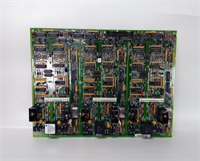
When a gas turbine hits a critical fault, the control system has milliseconds to cut fuel and stop the machine; the GE IS200ERBPG1A is the specific hardware component that physically executes that trip command. This board serves as the final safety link in the Speedtronic Mark VI architecture, converting logic signals from the primary controllers into high-current relay actions. You won’t find this module handling routine analog data logging—it exists solely for fail-safe operations where reliability is non-negotiable.Most maintenance teams keep a spare on the shelf because lead times for new OEM units have stretched beyond acceptable limits for critical power generation assets. Unlike standard digital output cards, the IS200ERBPG1A features hardened relay contacts rated for inductive loads, ensuring they don’t weld shut during a high-stress event. Honestly, swapping this board without verifying the firmware revision of the associated TMR controllers can cause synchronization headaches, so always check your system version before installation. Its design isolates the trip circuit from common I/O noise, a detail that prevents nuisance trips during grid disturbances.
 Key Technical Specifications
 Key Technical Specifications
| Parameter | Value |
|---|---|
| Part Number | IS200ERBPG1A |
| Revision | G1A (Hardware Revision A) |
| Application | GE Speedtronic Mark VI Turbine Control System |
| Function | Emergency Relay Output (Trip) |
| Output Channels | 8 Independent Relay Contacts |
| Contact Rating | 5 A @ 250 V AC / 30 V DC (Resistive) |
| Operating Voltage | 24 V DC to 125 V DC (Logic Supply) |
| Architecture | Supports Triple Modular Redundancy (TMR) |
| Mounting | Eurocard Form Factor, DIN Rail or Backplane |
| Environmental Temp | -30°C to +65°C (Operating) |
| Isolation | Galvanic Isolation between Logic and Power |
| Indicator LEDs | Per-channel Status + Fault Indication |
Application Scenarios & Pain Points
The 2 a.m. page never comes when the plant is running smoothly; it arrives when a vibration sensor spikes and the turbine refuses to trip because a relay contact is stuck. In those moments, the difference between a controlled coast-down and a catastrophic mechanical failure rests entirely on the functionality of boards like the GE IS200ERBPG1A. We see this most often in aging combined-cycle plants where original components have exceeded their design life, leading to increased contact resistance or coil failures. This module is specifically engineered to handle the high-inrush currents of trip solenoids without degrading over thousands of cycles.
- Power Generation: Gas turbine operators rely on this board to isolate fuel valves instantly during overspeed events, preventing shaft destruction.
- What happens if you skip redundancy checks? If you install a single board in a TMR-configured rack without matching the firmware of the other two lanes, the voting logic will flag a mismatch and force a system halt.
- Petrochemical Compressors: Critical compressor trains use these relays to trigger blow-down valves, ensuring process safety during sudden power loss scenarios.
- Steam Turbines: Facilities operating at temperatures exceeding 500°C depend on this hardware to close steam admission valves within 200ms of a fault detection.
- Water Treatment Pump Stations: While less common here, some large-scale booster pumps utilize Mark VI systems for speed control, requiring reliable emergency stops to prevent pipe bursts.
Case Study: A regional power provider in Texas faced repeated nuisance trips on Unit 4 during summer peak loads. The on-call engineer initially suspected sensor noise, but a deep dive into the event logs revealed intermittent communication timeouts on the emergency relay board. Upon physical inspection, the original IS200ERBPG1A showed signs of thermal stress on the relay driver transistors. Replacing the unit with a verified new surplus part eliminated the false trips immediately. The total downtime avoided was estimated at 36 hours, saving roughly $150,000 in lost generation revenue. The fix wasn’t complex, but having the correct spare available made all the difference.
Quality Control Process (SOP Transparency)
We don’t just box these up and hope for the best; every GE IS200ERBPG1A goes through a rigorous validation protocol before it leaves our facility. First, during Inbound Inspection, we trace the serial number against OEM shipping manifests and verify the holographic authenticity labels—counterfeit Mark VI boards are unfortunately common in the secondary market. We perform a visual audit under 10x magnification to check for pin corrosion, reflow solder marks, or yellowing on the PCB substrate, which indicates heat damage.Next comes the Live Functional Test. We install the board into a dedicated GE Mark VI test rack equipped with a TMR controller trio. After powering up, we monitor the boot sequence LEDs to ensure the board initializes without fault codes. We then simulate emergency trip conditions by forcing logic states from the controller and measuring the actual relay closure time with a digital oscilloscope. The unit must complete 50 consecutive trip/reset cycles without hesitation. We also run a 24-hour continuous load test at 80% of the rated current to log temperature rise; if the board exceeds 45°C above ambient, it fails.For Electrical Parameters, we use a Fluke 1587 Insulation Tester to measure isolation resistance between the logic side and relay contacts, ensuring values exceed 50 MΩ at 500V DC. Ground continuity is verified to be under 0.1 Ω. Finally, Firmware Verification involves reading the onboard EPROM checksum and comparing it against the GE database for revision G1A. We photograph any DIP switch settings and include a printed test report with the shipment. Once passed, the board is sealed in an anti-static bag with desiccant and packed in double-walled corrugated cardboard.
Installation Pitfalls Guide (“Lessons Learned” Voice)
I’ve seen too many good technicians burn out a perfectly functional replacement board because they rushed the swap. The GE IS200ERBPG1A isn’t a plug-and-play USB drive; it’s part of a safety-critical voting system. Here are the specific traps to avoid based on field experience.
- Firmware Version Mismatch: Don’t assume a newer hardware revision means better performance. In TMR systems, all three lanes must run identical firmware versions. If your existing lanes are on v3.1 and the new IS200ERBPG1A ships with v3.2, the controller will reject the board and trip the system. ❗ Always record the firmware version of the failed unit before removal and request a match from your supplier.
- DIP Switch / Jumper Misconfiguration: These boards often have factory-default jumper settings for voltage selection or termination that rarely match your specific site configuration. I once watched a team install a board, power up, and fry the input circuitry because they didn’t transfer the jumper block from the old unit. Take a photo. Then take another one. Verify every single pin position before pulling the old card.
- Terminal / Wiring Incompatibility: While the form factor is standard, the terminal block pinout can vary slightly between revisions or custom configurations. Cross-check the wiring diagram specific to your turbine model (e.g., Frame 7FA vs. 9E). Connecting a 125V DC trip signal to a logic-rated pin will destroy the board instantly.
- Power Supply Undersizing: Emergency relay boards draw significant inrush current when energizing multiple trip coils simultaneously. If your rack power supply is already loaded to 90%, adding a new board might cause a voltage dip that resets the entire controller. Calculate your total rack load and ensure you have at least 20% headroom.
- ESD Damage: It sounds basic, but skipping the wrist strap in a dry control room is a gamble. Static discharge can damage the sensitive driver ICs on the IS200ERBPG1A, causing latent failures that only show up months later during an actual emergency. Ground yourself before touching the edges of the card.