 Tel:
Tel:  Email:
  WhatsApp:
 Description
Key Technical Specifications (For Spare Part Verification)
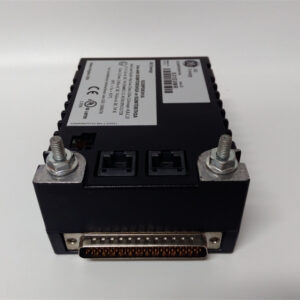
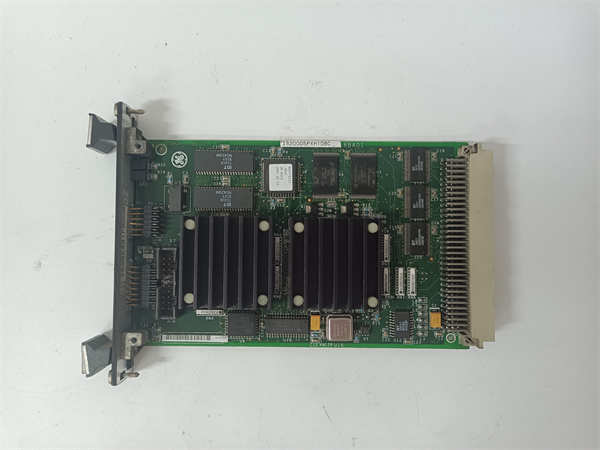
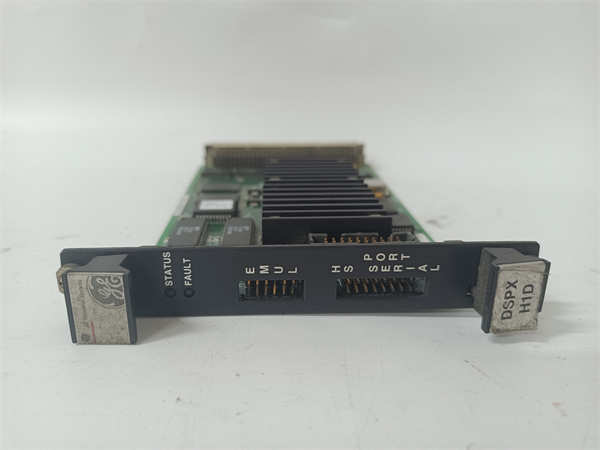
- Product Model: IS200DSPXH1DBC
- Manufacturer: GE Vernova
- System Family: Mark VIe Turbine Control System
- Module Type: Digital Signal Processor (DSP) Expansion Module
- Primary Application: Real-time vibration monitoring, shaft speed, phase reference, and blade pass detection
- Analog Inputs: Typically 4–8 differential channels (±10 V range), 24-bit resolution
- Sampling Rate: Configurable up to 100 kS/s per channel
- Signal Conditioning: Built-in anti-aliasing filters, programmable gain
- Backplane Interface: Proprietary high-speed parallel bus to main controller
- Power Supply: +5 V, ±12 V from Mark VIe chassis power modules
- Firmware Dependency: Requires matching configuration in ToolboxST project database
- Diagnostic Indicators: LEDs for power, activity, and fault status
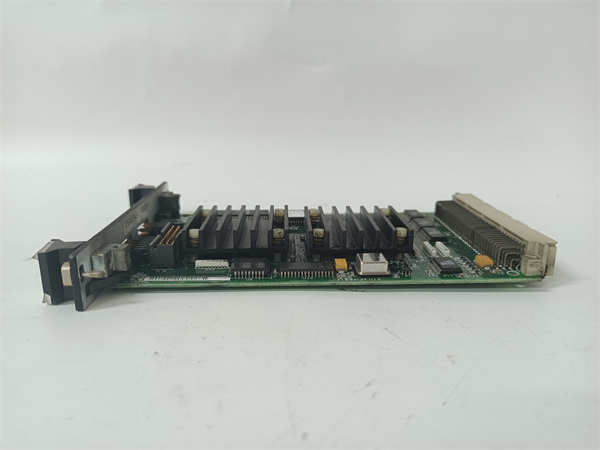
- Mounting: Standard Mark VIe I/O rack slot
-

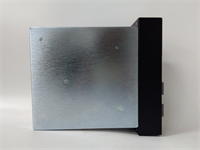
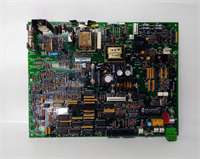
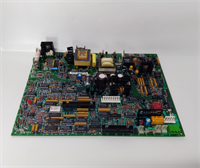
GE IS200DSPXH1DBC
System Role and Downtime Impact
The IS200DSPXH1DBC is deployed in mission-critical applications such as gas turbines, steam turbines, and centrifugal compressors where real-time mechanical integrity monitoring is essential. It processes raw signals from proximity probes and magnetic pickups to compute key parameters like 1X amplitude, shaft orbit, and overspeed conditions. These outputs feed directly into the turbine’s protective interlock logic. A failure of this module can result in:
- Loss of vibration-based trip functionality, increasing risk of mechanical damage,
- Forced operation in a degraded or manual mode, or
- Automatic turbine trip if the system detects loss of DSP communication or data validity.
In combined-cycle or peaking power plants, such an event can lead to unplanned downtime with significant financial and operational consequences.
Reliability Analysis and Common Failure Modes
Although engineered for industrial environments, this module exhibits predictable aging patterns due to its reliance on precision analog circuitry and dense digital logic.
- Common Failure Modes:
- Drift in analog front-end components (e.g., instrumentation amplifiers), causing inaccurate vibration readings.
- Corruption of FPGA bitstream or boot memory due to repeated power cycles or EMI exposure, leading to startup failure.
- Intermittent backplane connectivity from connector wear or thermal fatigue at the edge fingers.
- Design Weaknesses:
- Minimal on-board transient suppression on analog inputs—vulnerable to ground loops or RFI without proper external shielding.
- Non-modular design: no field-serviceable subcomponents; entire unit must be replaced upon failure.
- Preventive Maintenance Recommendations:
- Conduct annual signal injection tests using calibrated function generators to verify amplitude and frequency response accuracy.
- Ensure all probe cables are properly shielded and grounded at a single point to avoid noise coupling.
- Monitor internal cabinet temperature; sustained operation above 50°C accelerates capacitor and semiconductor degradation.
- Archive the exact DSP configuration file (.dcm or equivalent) to enable rapid reconfiguration of replacement units.
-
GE IS200DSPXH1DBC
Lifecycle Status and Migration Strategy
GE no longer manufactures or supports the IS200DSPXH1DBC. The “DBC” suffix identifies it as an early revision incompatible with newer Mark VIe I/O architectures that integrate high-speed processing into multifunction modules.
- Interim Solutions:
- Procure only from vendors who provide full functional test reports, including FFT validation, sampling stability, and backplane handshake verification.
- Deploy redundant external machinery protection systems (e.g., Bently Nevada 3500) as a parallel safeguard for high-value assets.
- Migration Path:
- GE’s strategic direction favors migration to Mark VIeS, which supports virtualized I/O and edge analytics with improved cybersecurity.
- For existing sites, recommended actions include:
- Replacing analog proximity probes with smart sensors that output digital data (e.g., via HART or Ethernet), reducing dependency on legacy DSP hardware.
- Consolidating high-speed monitoring functions into currently supported I/O types (e.g., IS200AAMLH1) during scheduled outages.
- Updating the ToolboxST application to eliminate obsolete DSP-specific logic blocks.
- Until full migration is feasible, maintaining a minimum of two fully validated spares per critical turbine train is essential to mitigate operational risk.