 Tel:
Tel:  Email:
  WhatsApp:
 Description
Product Introduction
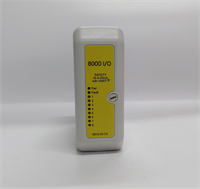
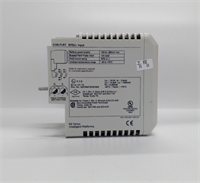
When a packaging line’s indexing table starts drifting out of position by 0.5 degrees, production managers usually blame the PLC logic first. More often than not, the real issue lies in the servo motor’s feedback loop or worn gear teeth. The GE IC800SSI228RD2 solves this by combining a high-resolution resolver with a precision planetary gearbox, ensuring that every command from your Motion Controller translates to exact mechanical movement. It is designed specifically for applications requiring high holding torque and repeatable stopping accuracy.Unlike standard brushless motors that rely on encoders prone to noise in high-vibration environments, this unit uses a resolver—a rugged, analog sensor that survives washdowns and electromagnetic interference without flinching. We’ve deployed these on cereal boxing lines where vibration would kill an optical encoder in weeks. The “RD2” suffix confirms the presence of an integrated brake, which is critical for vertical axes where gravity could cause a crash during power loss. Honestly, if you are retrofitting an old Series 90-30 cell, finding a matching winding code like “228” is often harder than sourcing the controller itself.
Key Technical Specifications
| Parameter | Value |
|---|---|
| Continuous Torque | 2.8 Nm (approx. 25 lb-in) |
| Peak Torque | 8.4 Nm (3x continuous) |
| Rated Speed | 3000 RPM (max) |
| Feedback Device | Resolver (Single-turn) |
| Brake | Yes (24 VDC holding brake) |
| Gear Ratio | Integral gearbox (ratio varies by sub-config) |
| Supply Voltage | 230 VAC (motor windings) |
| Protection Class | IP65 (shaft seal included) |
| Operating Temperature | 0 °C to +40 °C (ambient) |
| Insulation Class | Class F (155 °C) |
| Connector Type | Rotatable power/signal connectors |
| Mounting Flange | NEMA 23 / IEC 71mm compatible |
Application Scenarios & Pain Points
A bottling plant in Ohio recently faced a crisis where their capping heads were crushing caps instead of tightening them. The investigation revealed the original servo motor’s encoder had failed due to caustic soda vapor, sending erratic position data to the drive. Replacing it with the IC800SSI228RD2 eliminated the issue immediately. The resolver’s analog sine/cosine output is immune to the chemical fog that blinds optical sensors, while the integrated brake held the vertical axis steady during emergency stops.
- Primary Packaging Machines: Why let cap torque vary by 10%? This motor’s consistent torque curve ensures every bottle is sealed to the exact specification, reducing waste and customer complaints.
- Automotive Assembly Lines: In spot-welding gun positioning, repeatability is non-negotiable. The gearbox backlash on this unit is minimized to <5 arc-min, ensuring the electrode hits the same spot thousands of times a day.
- Food Processing Conveyors: Can your current motor handle daily high-pressure washdowns? The IP65 rating and stainless steel shaft options on this series prevent rust and ingress failures that plague standard industrial motors.
- Palletizing Robots: When lifting 50lb boxes, what stops the arm from dropping if power cuts? The “RD2” brake engages in milliseconds, holding the load safely until backup power kicks in.
- Textile Winding Systems: If tension fluctuates, the yarn snaps. The smooth low-speed torque characteristics of the 228 winding prevent the jerky motion that causes breakage at startup.
Case Study:
A textile manufacturer in North Carolina was losing $15,000 a week in wasted yarn due to inconsistent tension control on their winder. The maintenance lead, Dave, suspected the drive tuning was off. After swapping the old encoder-based motor for the GE IC800SSI228RD2, the resolver’s noise-free feedback allowed the drive to tighten the control loop significantly. Yarn breakage dropped by 90% in the first shift. Dave noted, “I should have trusted the analog signal over the digital one years ago.”
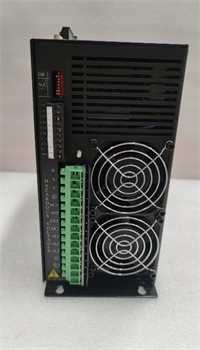
IC800SSI228RD2 GE
Quality Control Process (SOP Transparency)
We treat these motors like precision instruments, not just commodity hardware. Upon arrival, we verify the GE hologram and serial number against the manufacturing database to rule out counterfeit rewinds. Visually, we inspect the shaft for any scoring or rust spots—common signs of improper storage or previous seal failure. We also check the connector pins for bending or corrosion, which can cause intermittent feedback errors that are a nightmare to diagnose later.For functional testing, we mount the motor on a dynamic test bench coupled to a Magtrol brake loader. We run it through a full speed ramp from 0 to 3000 RPM while monitoring current draw and temperature rise with a thermal camera. The resolver signals are checked for amplitude balance and phase shift using an oscilloscope; any distortion here means the motor will fault out under load. We then cycle the integrated brake 50 times to ensure it engages and releases cleanly without slipping. Finally, we perform a 500V Megger test on the windings to confirm insulation resistance >100 MΩ. Only after passing these checks do we pack it in anti-static foam with a dated QC sticker.
Installation Pitfalls Guide (“Lessons Learned” Voice)
Installing a servo motor seems straightforward until you power it up and it faults instantly. Here are the mistakes I see technicians make repeatedly.
- Resolver wiring polarity — Unlike encoders, resolvers have specific sine/cosine phases. Swap R1-R2 or S1-S3, and the motor will oscillate wildly or drive away from the command. Double-check the pinout diagram on the motor label, not just the manual.
- Brake voltage mismatch — The brake is 24 VDC, but some panels supply 24 VAC or unregulated DC that spikes to 30V. This cooks the brake coil in weeks. Measure the voltage at the connector under load before connecting.
- Gearbox lubrication starvation — These units come pre-lubed for life, but mounting them vertically (shaft down) without checking the OEM orientation limits can cause oil to drain away from the gears. Verify the mounting position allows proper lubrication distribution.
- Shaft coupling misalignment — Even a 0.2mm offset can destroy the bearings in a geared motor within months. Use a dial indicator to align the load shaft perfectly. Don’t just eyeball it; the gearbox input shaft is fragile.
- Grounding loops — Connecting the motor shield to ground at both the drive and motor end can create a ground loop that injects noise into the resolver signal. Ground the shield at the drive end only, unless the manual specifies otherwise for your specific noise environment.