 Tel:
Tel:  Email:
  WhatsApp:
 Description
Technical Specifications (For Spare Part Verification)
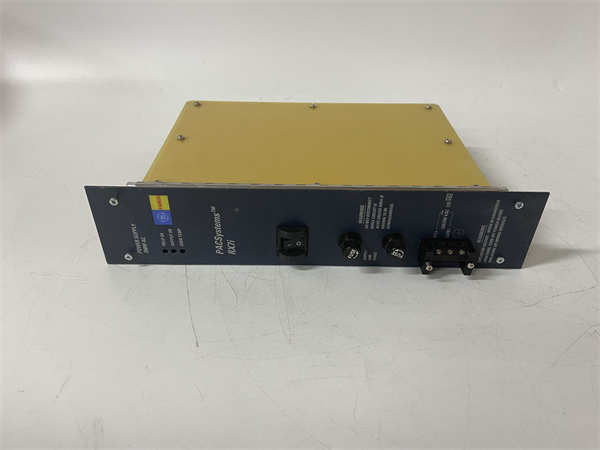
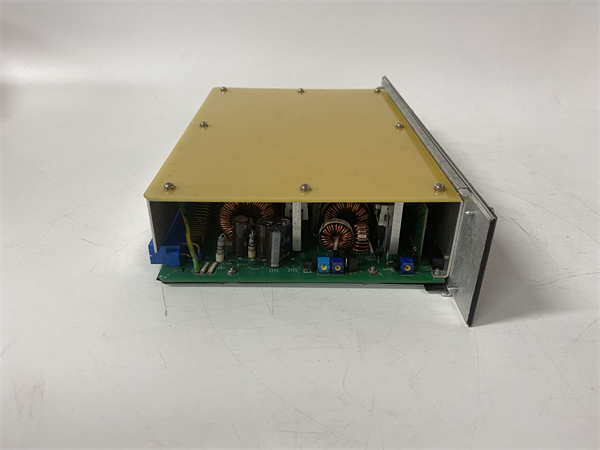
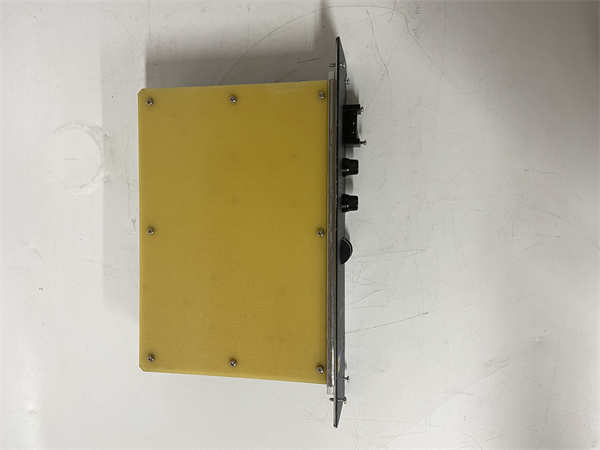
- Product Model: IC698PSA350D
- Manufacturer: GE Automation / GE Power (Mark VIe product line)
- System Family: Mark VIe Integrated Control System (ICS) – used in aeroderivative & heavy-duty gas turbines (e.g., 7FA, 9E, LM6000)
- Output Power: 350 W continuous
- Input Voltage:
- AC: 100–240 VAC, 50/60 Hz (auto-ranging)
- DC: Optional 125 VDC or 250 VDC input (field-configurable via jumpers)
- Output Voltages:
- +28 VDC @ 10 A (for I/O Pack backplane)
- +5 VDC auxiliary (for logic circuits)
- Isolated, regulated, with overvoltage/overcurrent protection
- Redundancy: Supports 1+1 or 2+1 redundant operation via shared DC bus; hot-swappable
- Efficiency: >85% typical
- Cooling: Forced air (fan-assisted); requires proper airflow in Mark VIe chassis
- Mounting: Slide-in module for standard Mark VIe I/O Pack enclosure (e.g., IC698CHSxxx chassis)
- LED Indicators:
- GREEN: Normal operation
- RED: Fault (overtemp, overvoltage, fan failure)
- AMBER: Input present but output inhibited
- Certifications: CE, UL, CSA; designed for use in SIL 2/3 applications per IEC 61508 when deployed in redundant configuration
System Role and Downtime Impact
The IC698PSA350D is a foundational power component in GE’s Mark VIe control architecture—deployed globally in power generation, oil & gas compression, and cogeneration plants. It powers the I/O Terminal Boards (Packs) that interface directly with field devices: speed probes, vibration sensors, fuel valves, and flame detectors. In redundant configurations, two or three units share the load, allowing one to fail without system impact. However, in non-redundant or degraded systems, a single power supply failure can:
- Cause loss of all I/O on one or more packs, triggering alarms or turbine trips
- Lead to controller watchdog resets due to brownout conditions
- Result in inability to start the turbine during critical demand periods
Given that many Mark VIe systems protect multi-hundred-megawatt assets, even a brief unplanned outage can cost 500,000+ per hour in lost revenue or penalty fees.
Reliability Analysis and Common Failure Modes
Despite robust industrial design, the IC698PSA350D exhibits predictable wear patterns after 10–15 years of service:
- Fan failure: The most common issue—bearing wear leads to overheating and thermal shutdown
- Electrolytic capacitor degradation: Causes output ripple, voltage droop under load, or sudden shutdown
- Input surge damage: From lightning or switching transients on plant AC/DC buses (especially in remote sites)
- Corrosion on terminal blocks: In high-humidity or marine environments, increasing contact resistance
Key vulnerabilities:
- Fan is not user-serviceable—entire module must be replaced
- No remote health monitoring (beyond basic OK/fault LED)
- Sensitive to restricted airflow—dust buildup in filter trays accelerates overheating
Preventive Maintenance Recommendations:
- Clean inlet air filters quarterly
- Perform annual thermographic scan of power supply vents and terminals
- Log output voltage trends via Mark VIe ToolboxST® (deviation >±2% warrants investigation)
- Maintain at least one fully tested spare per turbine, stored in climate-controlled conditions
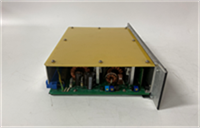
IC698PSA350D GE
Lifecycle Status and Migration Strategy
While GE has not announced formal obsolescence for the IC698PSA350D, the broader Mark VIe platform is being succeeded by Mark VIeS (with enhanced cybersecurity and cloud integration). However, given the installed base of >10,000 Mark VIe systems worldwide, GE continues limited production—but with strategic constraints.
Short-Term Actions:
- Secure spares now: Lead times are increasing; avoid emergency procurement
- Verify redundancy: Ensure all critical I/O packs are powered by ≥2 supplies
- Use genuine GE units only: Third-party clones lack proper isolation and certification for safety loops
Long-Term Strategy:
- Plan for Mark VIeS upgrade: Includes modern power architecture with predictive diagnostics
- Implement condition monitoring: Use external power quality loggers to detect early degradation
- Include in FMEA: Treat power supply as a single-point vulnerability in non-redundant cabinets
✅ Best Practice: During major outages, replace all IC698PSA350D units >10 years old—even if functional—to avoid infant mortality from aged components.
Cross-Reference & Documentation
- GE Manual: Mark VIe Power Supply Modules Manual (GEH-6721)
- Related Parts:
- IC698PSA350C (earlier revision)
- IC698CHS005 / IC698CHS009 (chassis that house this supply)
- ToolboxST Monitoring Point:
PS_Voltage_OK,PS_Temp,PS_Fan_Status(if supported by firmware)
In summary, the IC698PSA350D may appear to be “just a power supply,” but in the context of a Mark VIe safety system, it is a mission-critical component whose reliability directly impacts plant availability, safety, and compliance. Proactive sparing and maintenance are essential for operators managing aging—but still vital—turbine fleets.