 Tel:
Tel:  Email:
  WhatsApp:
 Description
Product Introduction
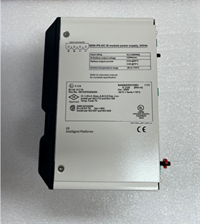
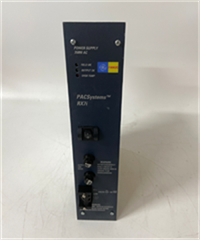
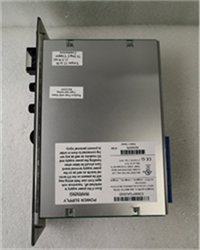
The heart of any large PLC system is its power supply, and the GE IC698PSA350 is built to handle the most demanding loads. In complex RX7i installations—such as those controlling gas turbines or entire refinery units—the backplane can be fully populated with high-speed CPUs, Ethernet modules, and dozens of I/O cards. A standard power supply would buckle under this load, leading to voltage dips and system crashes. The 350 series delivers a robust 35 Amps, ensuring that even during peak transient loads (like simultaneous output switching), the voltage remains rock-solid.We recently assisted a steel mill where their rolling mill controller was experiencing mysterious “random resets” during heavy load cycles. Diagnostics revealed that the original 20A power supply was sagging below 4.75V when the hydraulic valve banks activated. Upgrading to the IC698PSA350 eliminated the voltage drop entirely. The “-D” revision we supplied featured improved thermal dissipation, allowing it to run cooler in the hot mill environment. To be frank, undersizing a power supply in an RX7i system is a common but catastrophic error; the 35A capacity of the PSA350 isn’t just about running more cards, it’s about providing the headroom needed for system stability and future expansion.
Key Technical Specifications
| Parameter | Value |
|---|---|
| Part Number | IC698PSA350 (Suffix -D denotes Revision D) |
| System Compatibility | GE PACSystems RX7i (Universal Backplane) |
| Input Voltage | 120 / 240 VAC (Auto-ranging, 47-63 Hz) |
| Output Voltage | 5.0 VDC (Logic), 3.3 VDC (CPU/Comms) |
| Total Current Capacity | 35 Amps (Combined 5V/3.3V load) |
| Efficiency | > 85% (Typical) |
| Power Factor Correction | Active PFC (Complies with EN61000-3-2) |
| Mounting | RX7i Universal Backplane Slot (Left-most slot recommended) |
| Cooling | Convection / Forced Air (Dependent on rack fan unit) |
| Indicators | PWR OK (Green), FAULT (Red), OVERLOAD (Yellow) |
| Redundancy | Supported (Requires two units and redundancy kit/cabling) |
| Operating Temperature | 0 °C to 60 °C (Derating may apply above 50°C) |
| Certifications | UL, CE, CSA, ATEX (System level) |
| Status | Active / Legacy Support (Critical Infrastructure Spare) |
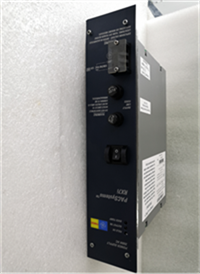
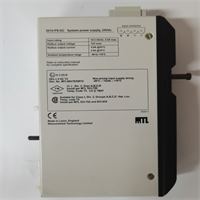
IC698PSA350D GE
Application Scenarios & Pain Points
A combined-cycle power plant faced a near-miss incident when a single power supply failed during a grid disturbance, taking down the entire turbine control rack because they hadn’t installed a redundant pair. The replacement strategy involved installing two IC698PSA350 units in a redundant configuration. Now, if one unit fails, the other instantly picks up the full 35A load without any interruption to the CPU or I/O. This module is vital because it prevents the “single point of failure” that plagues older PLC architectures.
- Oil & Gas Refineries: Large distillation columns require hundreds of I/O points for temperature and pressure monitoring. The 35A capacity of the PSA350 ensures all these inputs remain powered and stable, even during electrical storms or plant-wide voltage sags.
- Automotive Stamping Presses: These machines draw massive current spikes when solenoids fire. The PSA350’s high transient response prevents the PLC from resetting mid-cycle, which could damage expensive dies or cause safety hazards.
- Water/Wastewater Treatment: Used in main pump stations where reliability is key. The wide input voltage range handles the dirty power often found in remote utility substations.
- Pharmaceutical Manufacturing: Ensures continuous operation of bioreactor controls. The clean, regulated output prevents noise from affecting sensitive analog measurement modules.
Case Study:
A major automotive assembly plant in Detroit operates a body-in-white welding line controlled by a massive GE RX7i system spanning three 12-slot racks. The line began suffering from intermittent communication losses between the robot controllers and the main PLC. After weeks of troubleshooting network cables and switches, the maintenance team finally checked the power quality at the backplane. They discovered that the original power supplies (older 20A models) were degraded and could no longer sustain the voltage under the load of the new high-speed Ethernet modules added the previous year. The team replaced the primary supplies in all three racks with IC698PSA350-D units. The increased amperage headroom stabilized the backplane voltage, and the communication errors vanished immediately. The upgrade cost less than 5,000 but prevented an estimated 200,000/hour downtime risk during peak production.Lessons Learned: Installation Pitfalls
- Load Calculation & Derating — Just because it’s a “35A” supply doesn’t mean you can load it to 35A at 60°C. ❗ You must perform a detailed load calculation summing the current draw of every module in the rack (CPUs, I/O, Comms). Then, apply the temperature derating curve from the manual. If your rack runs hot (common in enclosed cabinets), the effective capacity might drop to 25A. Overloading leads to premature failure or nuisance overload trips.
- Redundancy Wiring Configuration — When using two PSA350 units for redundancy, the wiring must be exact. ❗ Simply plugging them in isn’t enough; you often need specific jumper settings or redundancy cables (depending on the specific RX7i backplane generation) to enable the “load sharing” mode. If wired incorrectly, one supply might try to take 100% of the load while the other sits idle, defeating the purpose of redundancy and risking overload on the active unit.
- Input Voltage Selection (Jumpers/Terminals) — While many modern supplies are auto-ranging, some revisions or specific installation codes require verifying the input terminal connections for 120V vs 240V. ❗ Connecting 240V to a terminal block configured/jumpered for 120V (if applicable to specific sub-models) will instantly destroy the unit. Always verify the input wiring diagram on the side label before energizing.
- Backplane Slot Placement — The power supply should ideally be placed in the left-most slot (Slot 1) of the RX7i rack to minimize voltage drop across the backplane traces to the furthest modules. ❗ Placing it in the middle or right side can cause modules on the far end to receive insufficient voltage, leading to erratic behavior that is incredibly hard to diagnose.
- Inrush Current & Breaker Sizing — The PSA350 has a significant inrush current when first powered on. ❗ If the branch circuit breaker is sized too tightly (e.g., exactly at the steady-state current), it may trip instantly upon startup. Ensure the upstream breaker is sized to handle the inrush (typically Type C or D curve breakers are recommended for industrial PLC power supplies) and that the wiring gauge is sufficient for the peak draw.